Wednesday, March 01, 2006

Another Day Another Doctor

Another little problem creeps up on me, requiring a visit to the ophthalmologist (that's one of the big words I know with four consecutive consonants).

At the office, a modern one in a glass-fronted medical building in the heart of downtown, the receptionists are several, and all are busy. Not efficiently busy, but busily busy with businesslike busyness.

The office has eight doctors, of which it appears four are partners, and the other four are not. The partners are middle-aged Anglo and Jewish males, the non-partners are younger Asian women. The receptionists and billing clerks are mainly Latina and Asian women in their twenties and thirties. Please do not read anything into the demographics of this office, which is a real money-maker with its attached optical shop selling designer frames and specialty lenses. At least they have not yet, I don't think, outsourced anything to South Asia.

One of the receptionists eventually takes my medical insurance identification card for photocopying, and tells me to take a seat. Over there. I do. The magazines on the large coffee table in the reception area are the current crop. I pick up the March issue of the National Geographic. Immediately after I settle into a chair to look at Viktor Yushchenko's dioxin-damaged face, and start reading about the problems in the Ukraine, a pregnant nurse calls out my name and asks for my glasses.

I put the magazine down, get up, hand her my glasses, and blindly follow her vague waddle into one of the inner exam rooms.

Soon a Chinese woman doctor comes in to do the refraction (which, incidentally, my insurance does not cover, and has to be paid for in cash or plastic before I leave).

Hands me a black plastic paddle. Cover your left eye. Can you read this?

Yes.

Now, cover your right eye. What's the smallest text you can read?

E-Z-P-O.

Swings the swivelling multi-lensed machine over my face. I position my eyes at the eyepieces. She clicks once. That's one. Clicks again. That's two.

No response.

She tries again. One, two. Which one is clearer?

Two.

Another two clicks: One and two, which one's better?

One.

Again, one, two.

And so it goes for about fifteen sets of one-two's, until I tell her that there's no difference between one and two.

Turns out my eyesight has not changed since last year.
Eyedrops to dilate the pupils, then she sends me out to the waiting area. It takes about twenty minutes for the drops to do their stuff.

Eventually I am summoned back to be examined by one of the partner doctors. Gives me the glaucoma test, the bright white light lasering into my eye while I try to focus without blinking, on the tip of his nose.

I tell him about the little bump I see on my right eyeball, near the tearduct. He checks it out.

Is it bothering you? he asks.

Not really.

He does not think it's anything to worry about. If it gets bigger or starts bothering me, then I am to see him again. Shakes my hand, leads me to the payment desk. Latina clerk takes my credit card.

I go out into the street. The day is sunny and seems extra brilliant. But that's only because my pupils are still dilated from those eyedrops.

Monday, February 27, 2006

Rain

A sooty grey curtain of rain hangs over the eastern hills and towards the north. During the afternoon and into the evening, heavy downpours followed brief periods of calm. Moments ago a gust of wind rattled my window. In the distance the sound of a jet plane preparing for take-off at San Francisco International — a deep-throated sound, like the rumble of thunder. Behind the next-door neighbor's house, a cat's plaintive mewling.

The weather forecast is for rain and more rain, and gusty winds. Flooding may occur in places.

* * * * *

The woman who cuts my hair is Vietnamese. I made an appointment for a haircut at her salon this morning, as she is leaving for her homeland tomorrow for two weeks' vacation. She tells me that she has a sister and a brother still living there, in a small village near the Mekong Delta. She has been in this country for about twenty years, yet she is still a stranger here.

* * * * *

The Games

Used to be that we looked forward after the closing ceremonies of the Olympic Games to the next ones in four years' time.  When we were somewhat younger, we did.  Just as we looked forward to the next Presidential election.  The Games and the election fell in the same year, the former in the summer, the latter in the fall.  Seems life was a lot less complicated then. When we were younger, it seemed that way.  Yes, indeed.

Since those times, as we know, they've shifted the schedule for the Winter Games to two years after the Summer Games, so now we watch the Games every two years, and the just-concluded 2006 Winter Games in Torino will be followed by the 2008 Summer Games in Beijing.  Fine and good.  Olympic mania now occurs biennially.

As someone who has never been a great enthusiast of the Games (except maybe for the swimming and diving events in summer), it occurs to me that scheduling the Olympics every couple of years may be linked to the possibility that, as the television audience gets younger, the sponsors need to keep everyone interested by holding the events at shorter and shorter intervals.

Who is to say that, some years from now, we won't be watching Olympic Games of one kind or another annually?  Heck, they already have snowboarding events to attract the younger crowd.

I'm only kidding, surely.  Yes, I am.


The Match

When you are a kid, personal qualities like physical bravery and skill at sports are much esteemed, and are regarded with pride by their owner, his peers, and his parents. Contrariwise, qualities of the opposite ilk are looked upon with scorn, and their possessor may be ignored (as in not being picked to participate in team games) or mocked, or bullied, and otherwise harshly judged. Sometimes even by otherwise caring parents.

As a boy, I was not good at sports. While I did not consider myself a coward, I avoided violent confrontations as much as possible. Having worn thick glasses from an early age, and being fond of reading, I was considered the archetypal nerd, and on more than a few occasions, I had to suffer the consequences of my pacifist and bookish temperament. Nothing very severe. Just an occasional reminder that there were tougher guys in the neighborhood than one's self. So long as there was no personal damage that might be noticed by one's parents, one tended to keep such matters private.

I had an epiphany of a sort when I was nine years old. A neighbor kid had been harassing me for some time, and eventually it became clear that avoidance of confrontation was no longer an option. Tough and wiry, this kid was the sort who would make trouble simply for the sake of making trouble, and then delight in the pain it caused to others.

In the neighborhood there also lived an older boy, the Organizer, who possessed definite qualities of leadership and organization. It was this individual who, seeing the possibilities of a spectacle that might entertain himself and his comrades, arranged one evening for a supervised showdown between my harasser and myself. The Organizer would act as referee. He had a whistle instead of a gong.

The venue was our street. The crowd gathered at the appointed hour. Rudimentary rules were established, and a makeshift boxing ring was made by four boys holding ropes to form a square. There were no gloves. No kicking or blows below the belt. Not exactly according to the Marquis of Queensbury rules, this event nevertheless had all the aspects, to my nine-year-old eyes, of the Real Thing.

We danced around, my opponent and I, sizing each other up. With my glasses off, he had the advantage. I saw him only as a blur in the twilight. I think he struck the first glancing blow at me. He was skinny, determined, fast on his feet. I was just as skinny, and a bit bewildered, but I had a slightly longer reach. Somehow I hit him in the face, and the fight was over. He ran crying home.

I think the spectators were disappointed, including my younger brother, who was one of the rope holders. I think they were expecting at least a nosebleed or some evidence that it had been the Real Thing. But the Organizer came over and held up my hand. I had triumphed over my harasser. Once and for all.

Maybe it had been just one lucky punch. But, boy, did I feel good after that!

Saturday, February 25, 2006

Just a couple of photos

For today, I'm just showing two recent photographs.

Wednesday, February 22, 2006

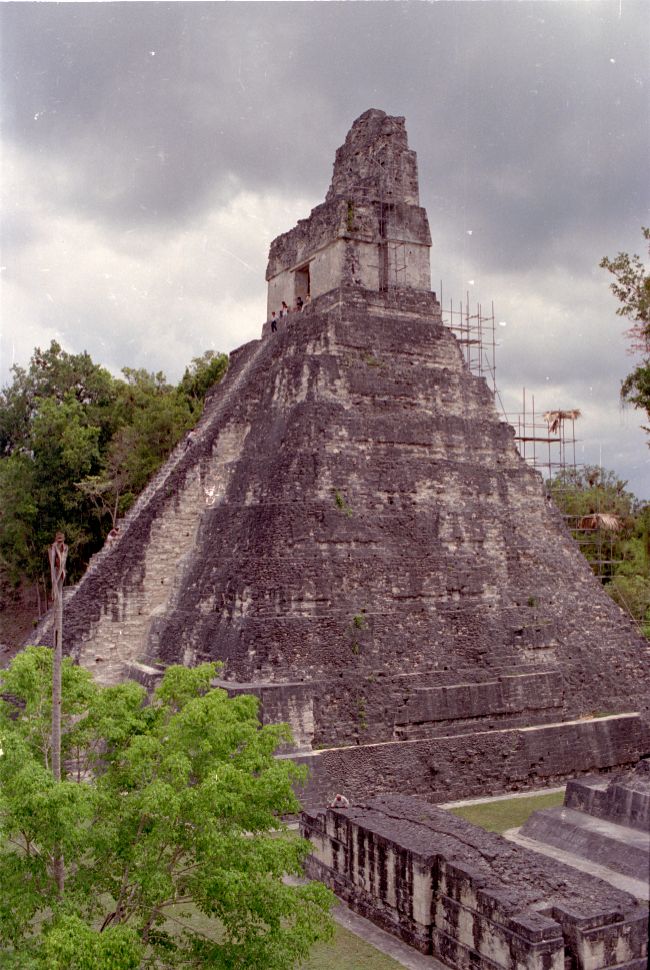
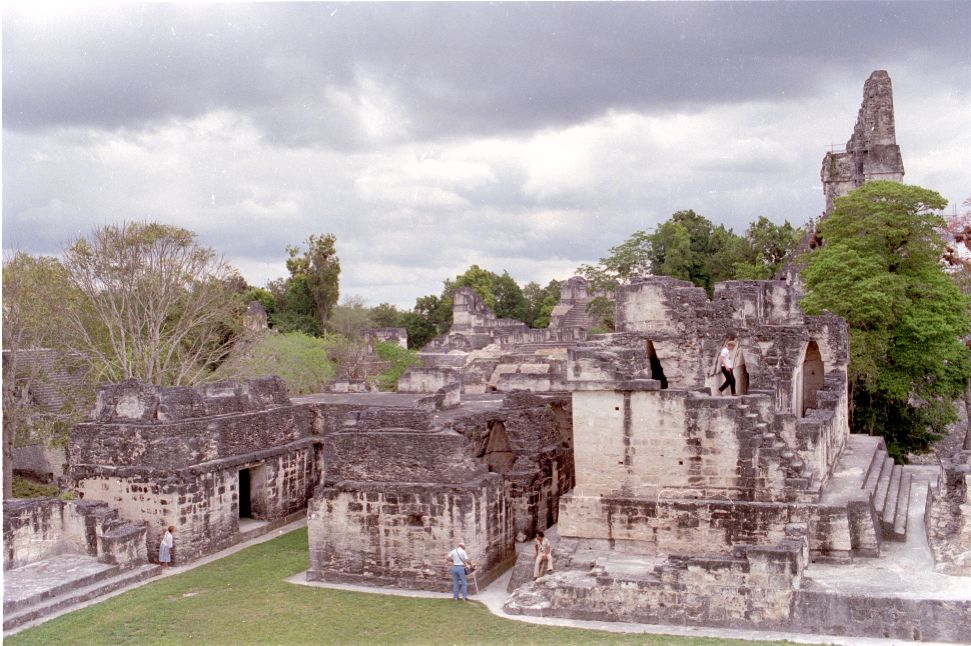
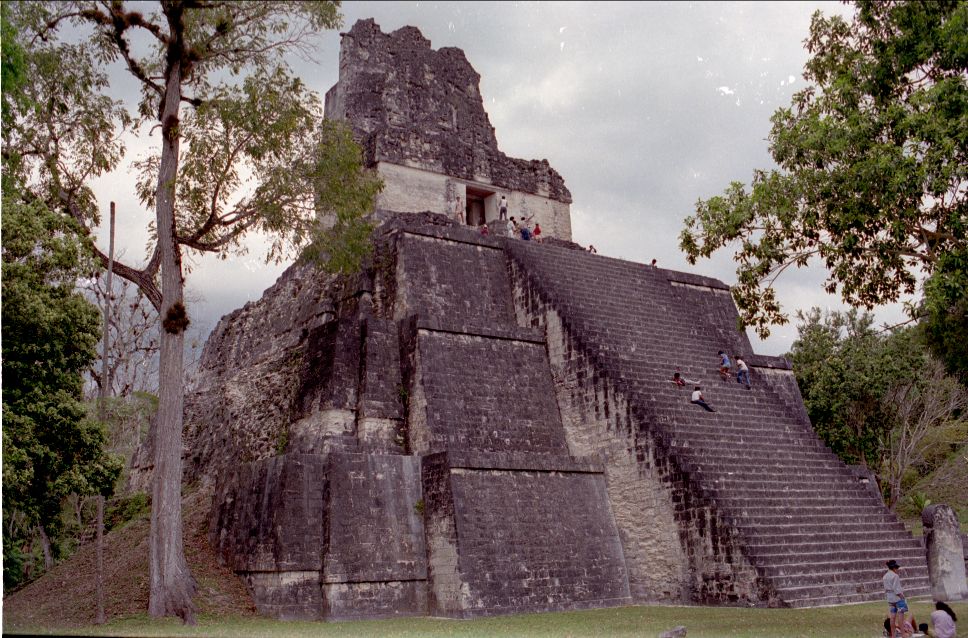
Tikal, Guatemala

In the early Eighties, I visited Central America a number of times on business. On one trip, I took in the Mayan ruins at Tikal in Guatemala. A few years later, my wife and I, in company with another couple, visited other pre-Columbian sites in Mexico, including Monte Alban, Uxmal, Palenque, and Chichen Itza. If I can find my diaries of those trips, I will post some entries and more photos in this blog.

These photos are of Tikal. They were scanned from my color slides.


Computers

While the knocking and thumping noises resume in the remodelling at our house, and before I leave for my daily walk, let me share with you a few thoughts about computers.

Having first made the computer's acquaintance nearly twenty years ago—my original computer was a Macintosh SE with 2Mb of RAM, a 20 MB hard drive, and a tiny screen about the size of a jewel-box for a CD—and having spent a fair portion of each day with keyboard and mouse, I am nowadays completely lost without it.

It has become as necessary to my lifestyle as food and companionship.

The best thing about my computer is the link it gives me via the Internet to other people. It sounds utterly ridiculous, but often the only way for me not to forget something is for my wife to send me an email from her computer in the bedroom upstairs to mine in the den downstairs.

During power outages the appliance I miss the most is the computer. Yes, it's another machine, just like a toaster or a stove or a telephone, only more complex, but it has become such a part of my existence that its absence from it would be unthinkable.

Recently I joined a Internet forum which shares ideas and tips about the many things that can go wrong, or right, with computers. I had a problem with my computer that I had been unable to clear up for a long time, one that resulted from my trying to partition my hard drive so that I would have exclusive space for video editing. It was my first attempt at partitioning, and it screwed up my hard drive so that I ended up with a number of gigabytes that were inaccessible, completely beyond my reach, or so I thought.

I submitted my question to the forum — how to reclaim the unallocated chunk of hard drive space and merge it to my main volume. In a very short time came the answer—brief, succinct, and perfectly understandable. In a jiffy, the drive was fixed. Profuse thanks to all concerned. No need to go out and buy an external hard drive.

The forum I signed on to is bleepingcomputer.com. Very helpful and knowledgeable people there. Give it a try if you have computer problems.


Tuesday, February 21, 2006

One man, one job

The guy doing our bathroom is back today, and the pounding on the walls has resumed.  The day is cold and clear, but I managed to get up a sweat during my one-hour three-mile walk.  Electronic replies are owed to a couple of my overseas friends, and I intend after this blog is posted to fulfill my e-mail obligations.

*          *          *          *          *

Interruptions and unforeseen events of one sort or another have made it impractical to complete some projects that have been awaiting my attention.  These nonessential projects call for a lot of sitting, and a lot of time.  Both these prerequisites are problematical given the tough demands the tasks will make on my lower back and the dearth of continuous hours that may realistically be allocated to them.

I'm speaking of organizing and scanning old photographs to turn them into digital files, and ultimately into DVDs to be shared with family members and friends.  Likewise, the conversion to DVD of old movie films and videotapes of birthdays, weddings, vacations, and other events over the course of many decades.  

In themselves, the projects can usually be fun, but the cost in sedentary man-hours to complete them in a fashion that will sustain viewers' interest, and not bore them into a stupor after the first several minutes, is quite heavy.  Especially when it is, and has to be, a one-man job.

Scanning old slides and negatives, or prints, requires on average about a minute per photograph, at least on the equipment I use.  And when you have these in the thousands, to sort, catalog, identify, scan and import into a computer's drive, clean electronically, assemble the parts into a story that makes sense, add titles, narration, and music, and finally burn onto a DVD, you have yourself quite a job.

Then there are the old 8mm movies, where you have to set up an old, clattering projector and screen to play them back, and videotape them with the projector running.  Then you digitally transfer the video to also be edited on the computer, and add the transitions, and titles, and music to make the finished product worth watching, while cutting out all the badly exposed or scratched parts.

Did I say the projects could be fun?  It's beginning to sound more and more like work.

*          *          *          *          *

For dinner today I made a Tuscan leek and bean soup, accompanied by garlic toast.  

No, definitely no Chinese food for awhile.


Sunday, February 19, 2006

Just a Few Words

We had the company of good friends and family members this holiday weekend.  Their visits offered opportunities to dine out and to chat into the small hours, about books and movies and religion and a social event (so-called) that we attended together yesterday.

The so-called social event was a meeting, rancorous at times, that centered upon the refurbishing of a building purchased some while ago as a gathering place for the members of several clubs having interests that might in a perfect world be called common.  But as with most such meetings, where large egos and intransigent attitudes hold sway, the opposing sides held forth in lengthy pronouncements and disquisitions over the right way or the best way or the wrong way to approach the multifarious problems facing the group and to address solutions that might prove in the end to be workable.

The committee charged with the task of running things came under fire as not having been properly constituted, as not being transparent in their dealings, as not having sufficient, or even any, accountability towards the membership of the clubs in question, as acting dictatorially, etc. etc.  On the other side, the critics were upbraided as being singularly unjust in their criticism of a hard-working committee whose members were serving, indefatigably, assiduously, and to the best of their ability, in the best interests of the aforementioned critics.  And in a voluntary capacity, to boot.

At times the arguments became heated and strident; challenges were met with counter-challenges; shouted accusations replaced civil discourse; and the persistent pounding of the president's gavel added to the general din. One could be forgiven for suggesting that the scene reminded one of a parliamentary session in an uncivilized Third World locale.

When the emotions reached an unbearable level, resignations were offered. Spouses of committee members, irate at the iniquitous treatment accorded their mates, forbade their continuing to serve in any capacity whatever, now and forever.  Faces reddened with passion, voices broke, tears were on the point of being shed.

A lunch break provided a period of calm, as the attendees refueled for the afternoon session.

At the appointed resumption time, in an increasingly chilly room as the afternoon shadows started to lengthen, the assembly continued its deliberations. Well-meaning persons stroked ruffled feathers, speaking in gentle tones to the injured parties, some still holding inelastic views, and in this wise they attempted to foster a return to correct parliamentary procedure, and a move towards the slow process of healing, if indeed that were possible, given the level of acrimony so far displayed.  

Whether resignations will be withdrawn, whether newly agreed-upon procedures will actually be put in place to the satisfaction of all, or whether proposed reforms will take hold, only time will tell.


Friday, February 17, 2006

Doctors


It's been a while since your last visit, says the doctor. Here, take this (he hands me a clipboard with some blank forms on it, and a ballpoint pen) and fill it out, please.  It's to update any changes in your medical history.  Sit over there.  Take your time.

The doctor is an oral surgeon whom I last saw some five or six years ago.  The blank form I am required to complete is three pages long.  The last page is legal boilerplate stuff with a place for a signature and a date at the bottom.  Most of the text on the page is about my being legally responsible for the doctor's charges, even if I have dental insurance coverage, which I do. Should there be problems with my insurer, it does not concern the doctor, who will look to the patient for remedy. The legalese also allows the doctor and his agents to share my medical information with others who may have legitimate reasons to have access to it.

The doctor's attractive receptionist has not yet arrived.  It is a very early appointment that I have, eight o'clock in the morning.  That is why the good doctor has to sit at the receptionist's desk himself, handing out clipboard and questionnaire and pen.  On the receptionist's desk is a framed photograph of a dark-haired toddler.  Probably the woman's child, I figure, and maybe the reason she has not yet shown up for work.

I was looking forward to seeing the receptionist, who has large eyes with thick lashes and is physically very well-endowed.

The questionnaire is not difficult to fill out.  I know the names of my medications, and their dosage.  For the majority of the ailments listed on the questionnaire I can truthfully check the box for No. For the handful of questions where the answer must be checked Yes, brief explanations can be offered by using letters of the alphabet, which after many years of consulting doctors I have learned to recognize. (HTTP, USB, LPT, NTSC etc.  Just kidding, just kidding, these are not them.)

Actually, all things considered, my health is pretty good for a guy my age.  Sure, there are the usual bits here and there that may not be working like I would wish them to, but on the whole the ol' corpus is holding together in a seemly manner.  

I try to be consistent with my daily walk, do my best to keep active, get fresh air and sunshine whenever possible. Eat well.  Think good thoughts.

So now the oral surgeon examines xrays of the troublesome tooth.  Not a crack, he tells me, not an abscess, no root canal job called for. Let's wait and see. Don't bite down on that side, give it a rest. Take Tylenol for pain, see me in a month, unless something else shows up before.

Sigh of relief.   On my part.

I go out to the reception area. The receptionist has not yet arrived.  It is after nine A.M.  The doctor puts me down in his appointment book for a date in mid-March.

You prefer early morning? he says without looking up.  

I am on the point of asking him what time his receptionist comes to work, but that would have been too awkward a question to put to him, for various reasons.  Instead I answer simply that early morning is fine.

How about 9:30, he says.  

Fine, I reply.

In time, his bill will show up in the mail.

Tuesday, February 14, 2006

Yesterday, today, and tomorrow


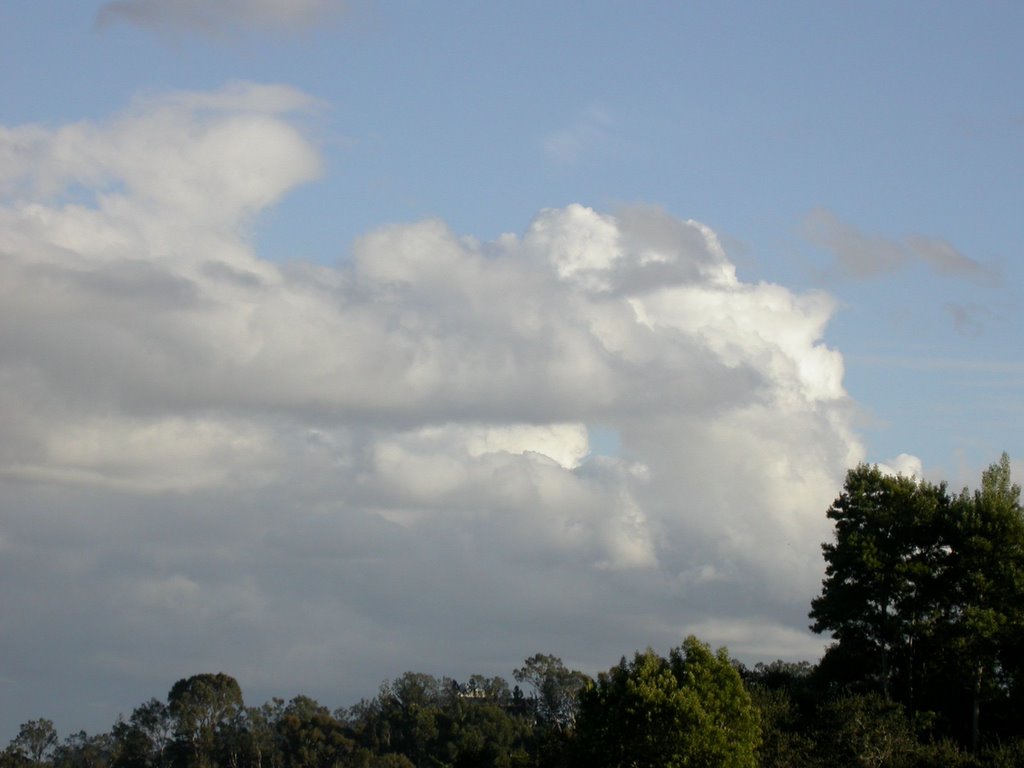
Yesterday the Northern California sky put on a breathtaking display of puffy clouds from horizon to horizon. Yesterday the daytime temperatures were still in the seventies.

Today the skies are clear, the clouds have been swept away by a stiff breeze, and the mercury (or whatever they use nowadays in thermometers) has fallen by a dozen or more degrees F. The fragrant blossoms of the flowering plum tree outside our kitchen window have been blown hither and thither, carpeting a part of our redwood deck in bright pink.

So from an early spring we are now back to a cold and windy February. And the prospect of rain hangs in the chill air. The moisture-laden cumulonimbus clouds can be expected here around this weekend. As I type this, the wind is whistling through the dark trees outside.


* * * * *

The double issue of The New Yorker, for February 13 and 20, has some fine articles. "Hutong Karma" by Peter Hessler, is about life in a Beijing alleyway, and Joan Acocella's piece "The Saintly Sinner" covers the many lives of Mary Magdalene. And the ever-reliable Haruki Murakami is also there with his short story "A Shinagawa Monkey," a subtly-rendered Kafkaesque tale worthy of inclusion in next year's Best American Short Stories.

* * * * *

A different workman was here today, preparing to install a new bathroom window. There was much pounding of hammers and rasping of files, producing enough vibrations to tilt my oil paintings into a cartoonish arrangement on the walls of the adjoining room.

* * * * *

Depending on one's political perspective, the current furor over the Vice-President's hunting accident, where he peppered a companion with birdshot, is either the White House press corps going out for blood against the Administration, or another example of the Administration's unseemly secrecy and hubris in not keeping the public informed. Perhaps one day we will find the answer somewhere between these two extremes.

* * * * *

My tooth hurts like the dickens. Surgery may be in the cards, but I sincerely hope not.

Monday, February 13, 2006

Remodel - Act One

The workmen came today to begin the job of tearing up our bathroom.  The foreman departed right after he gave directions to the young fellow he left here by himself.  In about 4 hours the kid had gotten everything stripped away: wallpaper, sheetrock, insulation, sink, faucets, countertop, toilet bowl and tank, light fixtures, hardwood floor.
Everything had been piled onto the back of the battered pickup parked outside.

At the moment, the bathroom looks as it might have looked in the final phase of the construction of this house, thirty-some years ago.

The workman (the one I call 'the kid') speaks very little English, and my high-school Spanish is woefully inadequate in dealing with the rapid-fire Spanish a native speaker speaks.  One wonders whether Spanish is always rendered in this rapid-fire fashion, as when the foreman talks to the kid.  Once in a while, fooling with the television remote, I may chance upon a Spanish-language channel.  Usually the program is a variety show which includes comic skits performed by chubby mustachioed men in checked jackets and beautiful young women in absurdly skimpy clothing.  The jokes exchanged are very, very rapid-fire.  Judging from the laughter and applause, the studio audience does not miss any of them.

The kid asks if he can use my phone to call his foreman on the latter's cell phone.  "TelĂ©fono" is not hard to recognize. I understand that the job is done, at least for today, and the kid would like to know when the foreman will be coming to pick him up.  The pickup outside is not his, and so he can't drive it.  He can only load it with the debris, which the foreman will eventually take to the dump.

The kid says, "Cuarenta minutos."  Forty minutes.  Okay, so he waits.  Forty minutes becomes an hour, then ninety minutes.  The kid asks again for the telĂ©fono.  He is apologetic, this kid, and patient besides.  He has had no lunch, and I have nothing to offer him except a banana. Gracias, señor, he says.

The foreman finally shows up.  He inspects the job.  His cell phone rings two or three times in the five minutes of the inspection. Evidently he has other jobs going simultaneously, and our bathroom is just one small piece of his world.

They are coming back early tomorrow.  I hope the kid brings a lunch box with him.

Saturday, February 11, 2006

La Niña and the Quake

Please don't be alarmed if there's no posting in The Daily Muse for several days. Or even a week. The reason is that things have been going on around here, only some of which are within the writer's control.

The 'within the writer's control' items mainly have to do with his willingness to apportion the time to this blog — time to sit down at this desk and compose a suitable entry that might maintain his readers' interest for a minute or so. The 'outside-the-writer's control' items include the evening periods of inaccessibilty to our Internet provider (a major factor this past week, and a cause for continued annoyance that may cause a long-overdue change); the diurnal obligations that most of us have, such as grocery shopping, meal preparation, feeding and sleeping.

But coming up next week will be a major disruption, when the guest bathroom is being remodeled, and a new floor is to be put on our entrance hall. The project is supposed to last two weeks, so the fellow tells us who will do the job. We'll see.

For the past several days the outside daytime temperatures have been in the mid-seventies Fahrenheit. And even the nights have been in the sixties. We are made to understand through the news media that the reason for this fine weather we've been having on the West Coast is the result of La Niña.

The severe winters we have had in past years, the climatologists tell us, were the result of El Niño, a phenomenon associated with the warming of the eastern Pacific Ocean waters, and the interaction near our shores of those very warm waters with cold Artic air descending from the north. Well, it seems that these things go in cycles, and we are coming in for some years where the Las Niñas, producing the opposite effect in our weather, will predominate.

Where Los Niños could generate terrible flooding and landslides, Las Niñas may be the reason for the spate of wild fires that have threatened homes down south.

And so it goes, the pendulum swinging from one extreme to the other. And all this happening in Earthquake Country, to boot.

Speaking of which, when I visited the San Francisco Museum of Modern Art this past Wednesday to see the Chuck Close portraits, I also saw the exhibition of photographs of the Great 1906 Earthquake and Fire. A truly remarkable set of photos.

The centenary of the Quake is April 18, 2006.


Thursday, February 09, 2006

Chuck Close


Yesterday I visited the San Francisco Museum of Modern Art, where the self-portraits of the American artist Chuck Close are on exhibit. The works range from small sketches to giant oils and composite photographs. They cover the entire spectrum of his idiosyncratic self-portraits from 1967 to 2005.

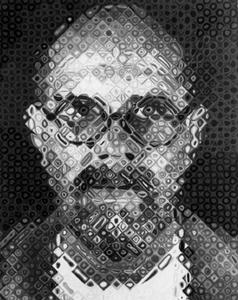
Close is known for his use of circles, ovals, and diamond shapes in variegated colors to construct his portraits. He has also experimented with all kinds of media, including plugs of handmade paper in different shades of grey that he attaches to a canvas or a panel.

Most of his self-portraits are head-on views, as though he had been set up for a passport photo; there are a few done in profile, as in a police mug shot. All are finely crafted, and engage the viewer in a way that is, for me, almost impossible to describe. You see the artist first as a young man with long, unruly hair, and a cigarette pointing straight out at the viewer. Each succeeding portrait becomes a variation of the first large one, and these variations progress through the years until you see him as a man in his sixties, balding and jowly and always somewhat stern. A life unfolds in a face over a span of thirty-eight years.

I've included two monochromatic images for comparison. These small images do not do justice to the large ones at the exhibition, and certainly not to the vibrant application of spots of color that Close has made his own.

The show has been at SFMOMA since last November; there is still time to see it before it closes at the end of February.

Tuesday, February 07, 2006

Little Beaver and the Streamliner

Went to see my dentist this morning for the semi-annual cleaning and checkup.  Leafing through the current issue of the National Geographic magazine in his waiting room, I began to mull over how the changes in the magazine over the years reflected the changes in this country. As a young man, I subscribed to the magazine and looked forward each month to the arrival of the familiar yellow-bordered cover picture in my mailbox.

In those far-off days the advertisers were companies like TWA, and Burlington Railroad, and Matson Lines, and Studebaker automobiles.  All gone.  Long vanished from the Big Board.

The America in those ads was exemplified (for me, anyway) by the black and white illustration of a sleek streamlined train speeding through a Southwest desert landscape, in the foreground of which stood a little Native American boy, who could have been a model for Little Beaver, the sidekick of the cowboy Red Ryder in the comic book.

The boy in the ad is waving at the last car, the observation car, of the speeding train, from whose windows a white family, mother in hat and gloves, father with a fedora, and their two kids, a boy and a girl around the Indian boy's age, are all waving back.

The Southwest setting of the tableau is shown in a few artful strokes of the illustrator's pen  — a streamlined saguaro cactus near the Native American kid, one or two streamlined stratus clouds overhead, and radiating lines to represent a setting sun.

These days when we think of Native Americans, it's unlikely we'll think of Little Beavers waving at passing streamliners filled with vacationing white families.  Chances are we'll be thinking of Indian casinos and the vast sums that have been paid to lobbyists and politicians, and federal indictments that have come and may yet come.

Monday, February 06, 2006

Shopping at Big Box Stores


Most of the time I enjoy shopping at those so-called Big Box stores, like Costco.  For several reasons.  

The prices are usually quite inexpensive when compared to retail supermarkets and stores in shopping malls.  

The place is so big that you do a lot of walking, which is good exercise.

There are usually ladies, and sometimes gents as well, serving free hot and cold samples of food items at the ends of the aisles. For those of meager appetite, it is possible if the timing is right to manage to eat a light meal by moving from one server to another.

You can find a number of electronic gadgets there, if electronic gadgets interest you, as they do me.  Just the giant televisions alone can occupy one's interest for a fair amount of time.  Likewise the digital cameras, laptop computers, cordless phones, and so on.

Unfortunately these Big Box stores also have some limitations.  On an average weekend, they can be very crowded, and the checkout lines are usually long (even with a full complement of checkers who are well-trained and fast).  Very often the lines are so long and winding that it's difficult to get into line with one's shopping cart.  (They also have large flatbed carts for people buying the big items, like leather sofas and even beds.  I suppose that's why these stores are referred to as 'Big Box stores'. )

Some shoppers behave in the Big Box store in a way that they would not in a regular store.  Here are some examples of such behavior:

Transferring all the best-looking fruit from a number of cardboard cartons to replace the less-than-perfect ones in the shopper's own carton.

A wife standing in a checkout line with an almost empty cart, communicating with her spouse by cell phone to find and fill her cart with a host of other items, just so she can preserve her place in line.

Leaving empty (or sometimes not empty) paper cups and food containers on any available flat surface, including on top of cartons and furniture, instead of dropping them in nearby trash bins.

You don't see shoppers doing stuff like that at Safeway or Macy's.  I wonder why.


Sunday, February 05, 2006

Super Sunday

Being that it was such a lovely day today, and not being a football fan, I drove into San Francisco. It's something that I rarely do because of the terrible parking in the City.
Here are some photos of the downtown and Chinatown areas that I think turned out pretty well.

You can click on the images to enlarge them.


A view northward up Kearny Street


The meeting of Stockton and Columbus Streets


Diners in the window of the Panta Rei Ristorante


Chinatown residents watching a chess game


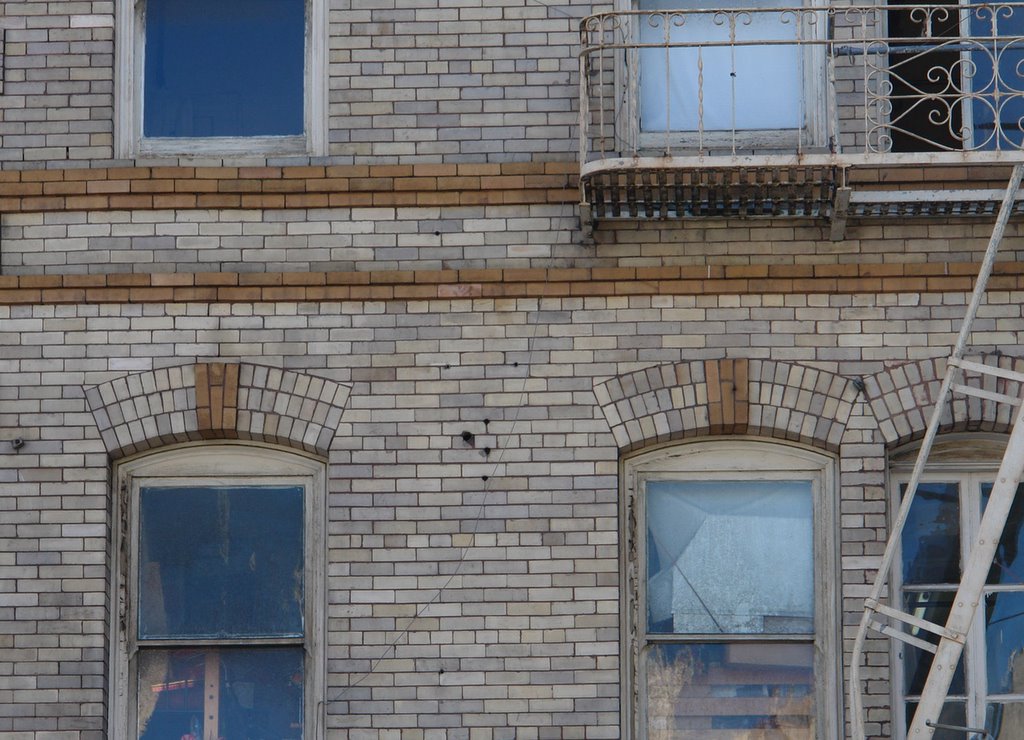
An old apartment building in Chinatown


Another apartment building nearby


A Victorian building in North Beach


The Transamerica pyramid, one of the
City's most recognizable features


The tip of Coit Tower seen from
Washington Square in North Beach

Saturday, February 04, 2006

Saturday's Pictures


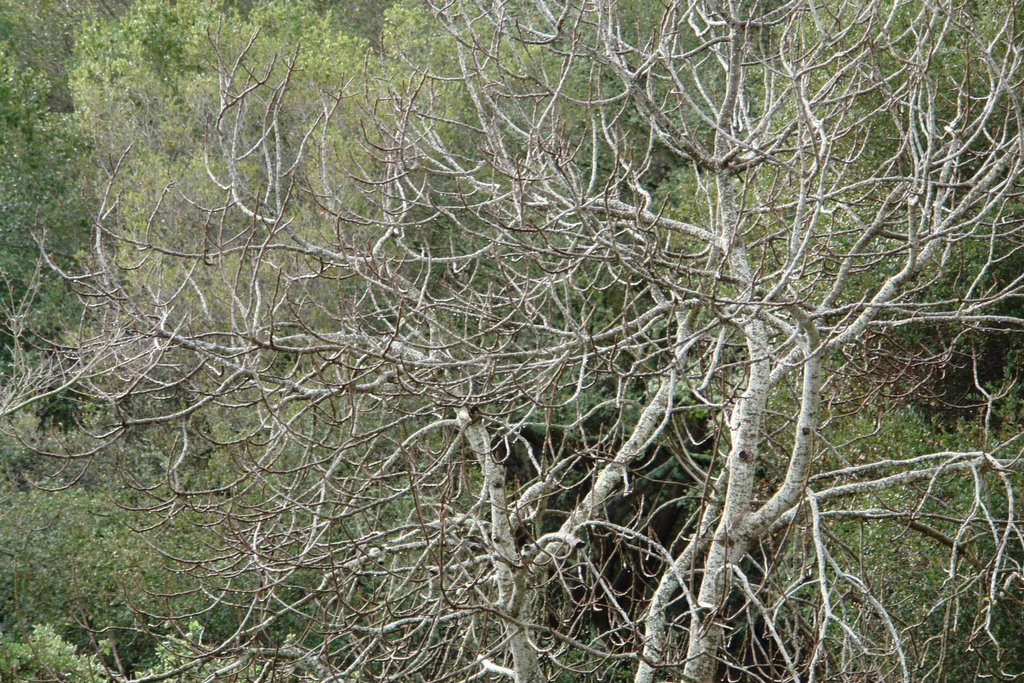
Fig Tree in Winter


Evening Rush Hour

Wednesday, February 01, 2006

Dull, dull, dull

It's a dull, drizzly, overcast day here in the Bay Area. There has been such a lot of moisture of late that moss has begun to appear in the sidewalk cracks and beneath the gutter downspouts. Yet how can I complain, when my friends in Seattle haven't had a respite from the rain for weeks on end.

Weather like this is fine for curling up with a good book, but I have miles to go before I sleep.

* * *

I thought that last night's State of the Union address by President Bush, and his speech today in Nashville, were uninspiring. What I'd been hoping for from our Commander-in- Chief was a more sweeping vision than we saw, delivered with greater panache. There were some good moments in last night's address, as when he spoke directly to the people of Iran, but overall I would just give him a B-. (And I don't expect he'll ever learn to pronounce 'nuclear'.)

Monday, January 30, 2006

Saki without Sake

I'm having a grand time re-reading the works of H.H.Munro ("Saki"). His Edwardian sensibilities and sardonic humor are just the sort of qualities I enjoy in his fiction. Their admirable brevity, too, of course.

Novels are fine, but to really 'get into' a novel, when reading just a chapter is likely nowadays to put me to sleep, seems to me too big an investment in time. Or so it would appear, for the nonce, while we're at home, with a myriad little chores to attend to. On an ocean cruise, yes, novels would be just the thing. (It could just be a case of the old attention span getting shorter with age, ja?)

Lately I've taken to resurrecting the great masters of the short story from their resting-places in my library -- Jorge Luis Borges, and Antonio Tabucchi; once in a while Alberto Moravia; Richard Yates, Andre Dubus, and Raymond Carver; John Updike's early stuff; and my favorite at college, Donald Barthelme.

I am putting aside Chekhov and de Maupassant for the time being. Will get back to them later, along with James Joyce's 'Dubliners'.

Saturday, January 28, 2006

Thursday, January 26, 2006

Mozart & A Bad Cough

Today is the 250th anniversary of the birth of Wolfgang Amadeus Mozart.

I'm feeling better after having been laid low by bronchitis this past week. The cough has not yet subsided completely, but it is now not half as severe as it was two or three days ago, when each bark that emerged from my midsection sounded like the dying bellow of some prehistoric beast in a deep cave.

The weather has been mostly fine, though a bit cold for my taste, and there have been spells of rain.

Hope I shall be able to resume my morning walks before long.

* * * * *

Ketchup bottles nowadays are plastic, and some of them come upside-down, with the flip-top as the bottle's base. It's actually quite a sensible design, this upside-down bottle, for it saves the user the trouble of having to pound on the bottle (especially a half-empty one) to get the ketchup out. Mustard, sandwich spread, and mayonnaise containers have also taken on the upside-down configuration, and others are bound to follow suit.

This is the kind of ergonomic thinking ("outside the box", to use the currently fashionable cliché) that is the hallmark of American innovativeness in packaging.

Monday, January 23, 2006

Television Viewing

Finally, finally our big-screen TV is fully installed, after today's running of the speaker wires under the house and to the back of the room for the surround speakers.  The wires are now hidden from view (before today they lay under the carpet).  The entire project has taken several months from start to finish, partly due to the delayed arrival of certain electronic components, and partly to the busy work schedules of the parties involved.  

Meanwhile we have been enjoying the television and the excellent audio system, although mainly in the simple viewing of cable news channels rather than of rented movies, which is what we had originally intended the system to be used for.

We do not yet subscribe to high-definition TV, but will do so before long, as our friends tell us there is a significant improvement in the image quality.  

Television viewing in general is an activity that is better appreciated with age.  Nowadays there are so many channels, broadcast, cable, and satellite, not to mention pay-per-view and other premium offerings, that it really is overkill.

Time was when we would sit quietly of an evening after supper to listen to music on the stereo.  Seldom do we do that these days.  There always seems to be something interesting on television to trump the stereo.  Besides, a person can now listen to high quality music via the computer speakers if so inclined.  

The times they are a-changing.

*          *          *

I notice that British television reporters, especially those who speak the Queen's English with an accent other than the 'standard' Oxbridge, will consistently pronounce the word 'drawing' as though there were an extra 'r' after the 'w' — as in 'drawring'.  It grates as much to these old ears as does George Bush's 'nucular'.    

Saturday, January 21, 2006

Remembering Magritte

Chair legs and Shadows
Window composition
Motel

Wednesday, January 18, 2006

Another Doctor's Office

The nurses in the doctor's office are cheerful this morning.  The doctor is late coming in, and the nurses tell the patients that he will be in as soon he gets out of surgery.  

Meanwhile the receptionist, a young Asian woman with a ponytail, is busy answering phone calls.  In between calls, she pulls on her rubber gloves to gingerly pick up a plastic ziplock baggie with someone's specimen in a cylinder inside.  She holds the baggie by its very edge and at arm's length to take it into the back and out of sight.

A bowlegged man in his sixties comes in and stands at the receptionist's window waiting for her return. Beside the window is a long picture frame with a 'Peanuts' comic strip in it.  The edge of the frame extends several inches over the frosted glass of the receptionist's window.  Whoever had put the frame up evidently misjudged its width but had made no attempt to reposition it.

When the receptionist is seated once again, after having exchanged a number of light-hearted and non-work-related remarks with the cheerful nurses, and taken a bite of some confection that one of her office mates has brought in to share, she turns to the waiting man and asks him if he has still the same address, phone number, and medical insurance coverage that are shown on his chart.  He grunts in assent, in a voice that is barely audible.

On the other walls in the waiting room are mediocre art reproductions — one is of a pinkish sunlit terrace with a balustrade overlooking what appears to be a Mediterranean town, a boat marina in the distance, some flowers in urns in the foreground.  The perspective is poorly rendered, the buildings having a vanishing point that does not correspond with that of the yacht-filled marina in the background; it is not an intentional distortion of the scene, it is simply poor drawing.

The magazines in the waiting room are several months old.  On a low table in a corner of the room is a tray with a small stack of paper, on each of which is a photocopy of a word puzzle, and next to it a pencil holder with five or six stubby yellow pencils.  These waiting room accessories suggest that waiting there can be a lengthy process.

In the examination room, where one is finally admitted after having been weighed, there are a chair, a stool for the doctor, an examination table with a pull-out extension, and upper and lower cupboards against one wall with a Formica countertop surmounting the lower cupboard.  On the wall by the examination table is attached a wire frame holding the blood-pressure measuring sleeve, and the blood-pressure gauge next to it.

On the countertop are glass jars with metal lids — they contain cottonwool balls, wooden tongue depressors, and Q-tips.  Next to them are a bottle of alcohol, a flashlight, a stethoscope, and brochures about various ailments in which the doctor is specialized. There are no magazines in the examination room.

On the wall opposite the door is a large plastic relief map of the human torso, with its entire gastrointestinal system exposed, and each gland, organ, and feature identified. Diseased components are shown in fine rosy, purplish, or bilious yellow detail.

It is many minutes before the doctos shows up.  

Monday, January 16, 2006

Yesterday's weather

Yesterday the weather here in the San Francisco Bay Area was as close to perfect as one would be likely to find anywhere, anytime.  After the previous day's thunderstorms, the air was crisp, and visibility was so clear that you could see for tens of miles in every direction from our high vantage point. I am sure that the air quality must have been one for the record books in terms of purity.

Meanwhile, up in Seattle, they have had continuous rainfall for twenty-seven days, which if uninterrupted for the next six, will result in the toppling of the previous record for the longest period of unceasing rainfall, and possibly also the record for the largest volume of precipitation. My Seattleite friends must be growing gills by now.

Yesterday was my brother-in-law's birthday, and we were invited to his home in the East Bay for dinner, an event attended as well by his children, their spouses and their children, some of them mere toddlers.

Friday, January 13, 2006

The Art of Copying

Like the Japanese in the early years of the last century, the Chinese today have perfected the art of copying.  The originals of the items copied are often upmarket objects of high value.  I was shown a Montblanc men’s watch with the signature transparent back that allows the intricate movement to be seen.  It would take an expert to tell the fake from the real thing.

The same is true of high-fashion clothing with famous names like Gucci, Louis Vuitton, Chanel and others.  As also with fountain pens, electronic gadgets, and a myriad of brand-name products that originally came from Western Europe and North America.  

But nowadays many (and perhaps one might even say, most) of the manufactures with familiar brand names from Western Europe and North America are in fact made in China.  I just bought a set of KEF loudspeakers to replace the ones of the same brand I bought years ago that had been made in England.  The new KEFs are made in China.  Do they sound genuine?  Do the people at KEF exercise quality control to ensure that the Chinese-made speakers are as true to their specs as the old British-made ones?
Can one even tell the difference from the sound they produce?  Yes, yes, and no.  At least, that's what I think.

So why would someone buy a genuine Cartier fountain pen or Rolex watch (if indeed one can be assured of its genuineness by a gilt certificate of authenticity) at about fifty or sixty times the price of a well-made fake?  Might it be just for snob value?

And So It Goes

I finish reading this morning's newspaper, and am about to take it out to the garage to place it in the paper recycling bin, which is full from all the junk mail that has accumulated over the past three weeks when we were away on our trip.  So I commandeer the plastics recycling bin, which is only half-full, moving the plastics in it to the metal recycling bin, also half-full, and transfer the excess paper from the overfilled paper recycling bin to the plastics recycling bin.  

As I turn to leave the garage I notice that the suitcases from our recent trip have not yet been stored away.  They normally reside in the upper rack of the storage shelves against the far garage wall that I had built sixteen years ago when I retired.  I will need a stepladder to get them up there where they belong.  The stepladder is behind my wife's car, and cannot be moved unless I move the car out of the garage.  Of course, I could just open the garage door and back the car out just enough for me to get to the stepladder, but that would mean that the car would be half in and half out of the garage, with the bottom of the garage door over the midsection of the car.  

I decide that it is not a good strategy to do this. See, some years before, the garage door had slipped down without warning and made a mark, not quite a dent, but rather a noticeable abrasion, on the trunk lid of an older car we had then.  

I find that I do not have my car keys with me.  I am still in my pajamas and robe.

I go back into the house to get the car keys.  On the way to the bedroom I notice a pile of junk mail, not in the recycling bin yet because they contain questionable items bearing my name and address that really need to be shredded in the paper shredder, which is located conveniently by the table in the entrance vestibule.  Identity theft is a major concern these days, and so I try to shred everything that has my name and address on it.  I turn on the shredder and feed the pieces of mail into it, not more than six sheets at a time because the gears will bind if you overload the shredder. The process takes about six minutes, and when finished I discover that the bin beneath the shredder is full.  To make things easier on myself I normally line the bin with a plastic bag.  This time I had not done so.  

Just emptying the shredded contents of the shredder bin into the paper recycling bin, without using a plastic bag, is not a good idea.  The shreds can get blown away.  There were times when I found that, after being left out the night before the trash pickup, the uncontained paper shreds would end up all over the flower beds and the front lawn.  It was not a pleasant sight.

So I return to the garage for a large plastic bag to contain the paper shreds, and empty the contents of the shredder bin into the bag.  Then I hunt through the kitchen drawers to find a twist tie to secure it, before taking the whole thing out to the garage.  

By this time our monthly delivery of bottled water has arrived, and the six blue five-gallon bottles are sitting just outside the garage entrance.  To get the car out I must move the bottles out of the way, and into the garage.  Moving the bottles one at a time takes about three minutes, as the darn things are heavy, and my back is not as flexible as it once was.

Now I can get into the car, start the engine, and back it out onto the driveway and out of harm's way.  Now I can get the stepladder. Now I can store the suitcases where they belong.

Oh, did I mention this?  On one of my trips back into the house I noticed that one of my paintings on the wall behind the couch was a little crooked. So with a plastic bag filled with shredded paper in one hand, and car keys in the other, I had to go over and straighten it.

And so the morning goes.  

Thursday, January 12, 2006

Wednesday, January 11, 2006

Hong Kong Holiday


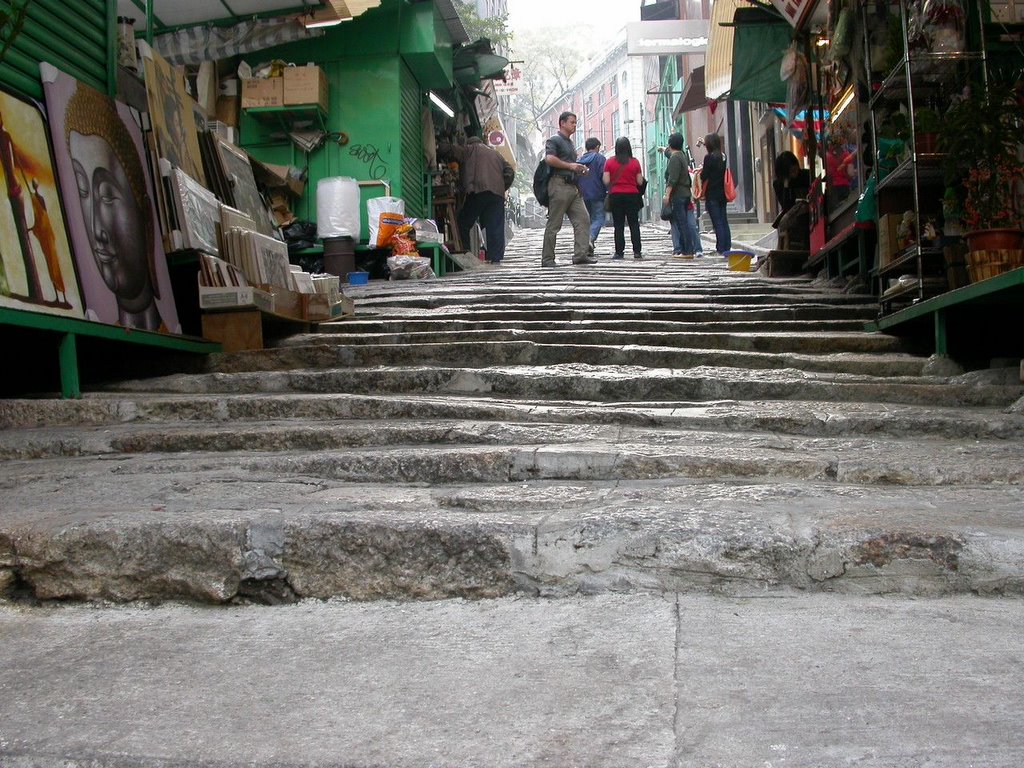
So here is the reason that there have been no new postings to this blog for the past three weeks.  I have been away, spending the holidays in Hong Kong.  My wife and I were last there six years ago, and there have been astonishing changes to the city in the interim. And this Christmas we decided to take our granddaughters along with our son and his fiancĂ©e for a Christmas visit.

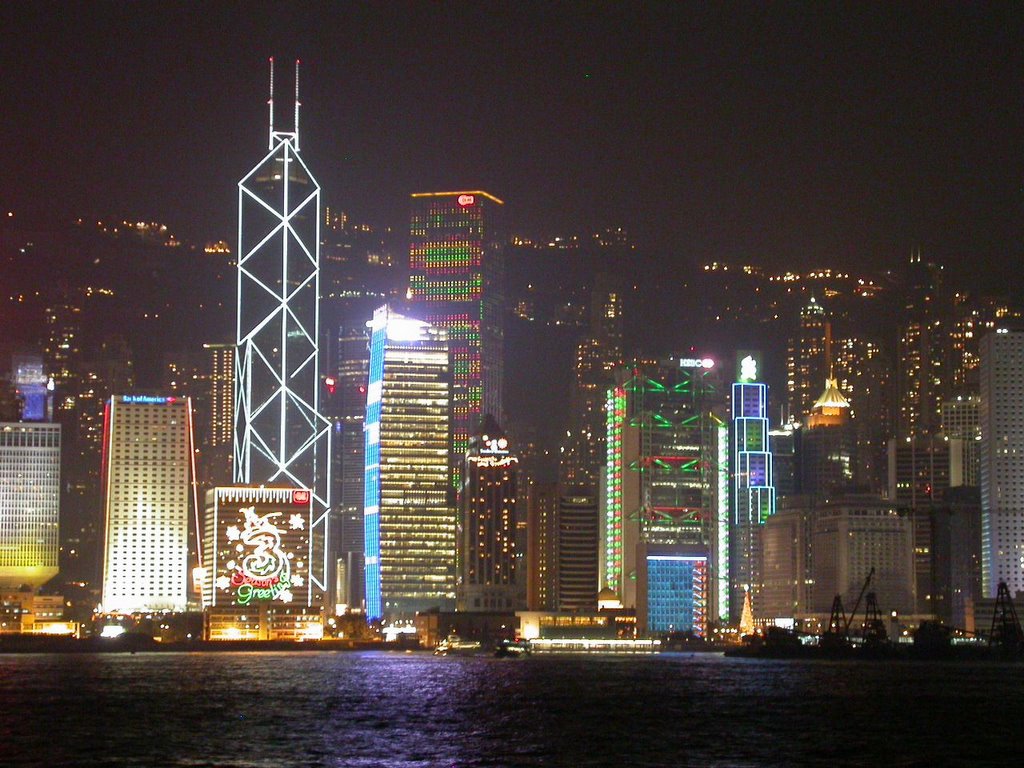
Hong Kong literally sparkles during the holiday season, and the tall buildings fronting the harbor are ablaze with elaborate Christmas illuminations the likes of which one seldom sees anywhere else.  Imagine the power usage in a metropolis where at all hours of the night there are enough neon signs and other lighting to read a newspaper by.  At Christmastime, multiply this by a factor of five or six.  You can take hand-held pictures at night with a digital camera, sans flash, and they'll turn out okay.

Our hotel was some distance away from the city center on Hong Kong Island, and our room overlooked the Happy Valley racecourse, where on race days there may be tens if not hundreds of thousands of gamblers in the stands.  Horse racing is the only legal form of gambling in Hong Kong, unlike neighboring Macau with its many Las Vegas style casinos.

We have good friends who are longtime residents of Hong Kong, and their presence and their hospitality made our visit all the more enjoyable. There were more luncheons and dinners (whether at their homes or in the myriad fine restaurants and clubs in different parts of the city and on the adjoining mainland of Kowloon) than any respectable gourmand could wish for.

And then there was shopping.  Yes, indeed.  It being Christmas, the stores were well and truly stocked.  All the designer houses bearing names familiar to those who keep track of such things were represented, and since our last visit there, shopping malls of great size and extravagance have sprouted in places where none had existed before.  Hong Kong in the old days (by which I mean the Fifties and Sixties) was a true shoppers' paradise, and there were many bargains to be found, in Swiss watches, fine hand-tailored Italian silk suits and brand name Japanese cameras, for example.  Today it is still a shoppers' paradise, but the bargains are no longer there, unless one takes into account the knock-off Swiss watches, Montblanc fountain pens, and designer goods that come across from China (and are illegal to bring back into the U.S.).

When the rest of the family came some days after us, we did the usual tourist things — went up to Victoria Peak on the Peak Tram for the spectacular panoramas of the city, the mainland and the harbor; rode the famous "Star" Ferry several times; traveled the very modern and efficient bus and Mass Transit Railway systems, and the Kowloon-Canton Railway line to the New Territories.

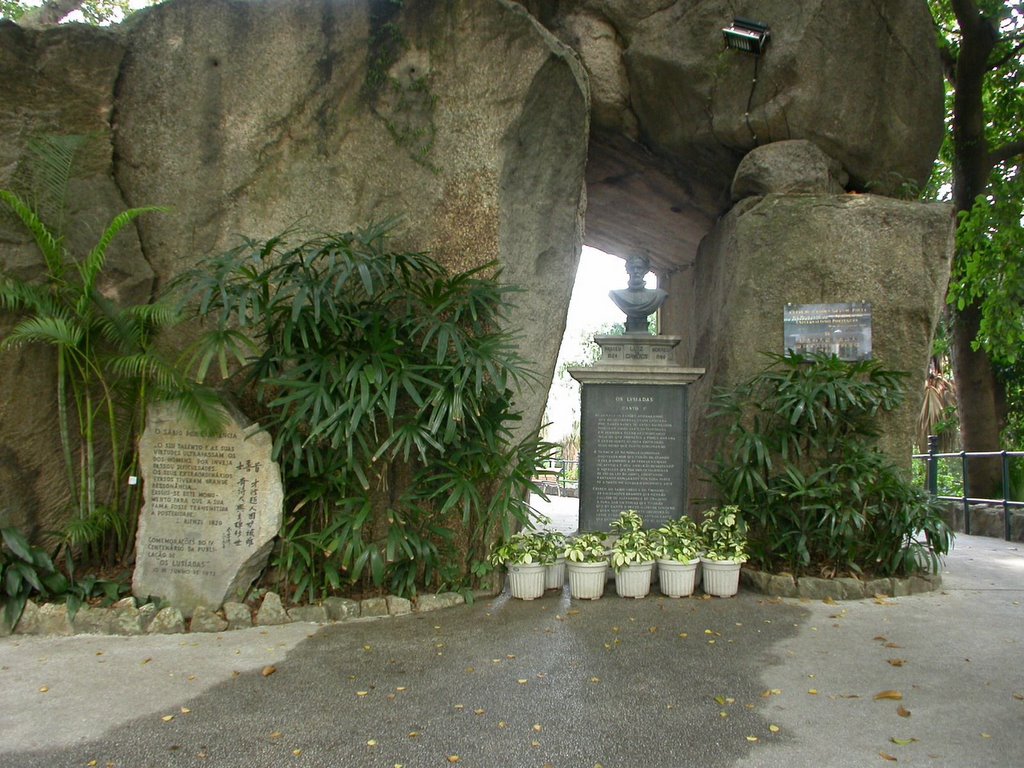
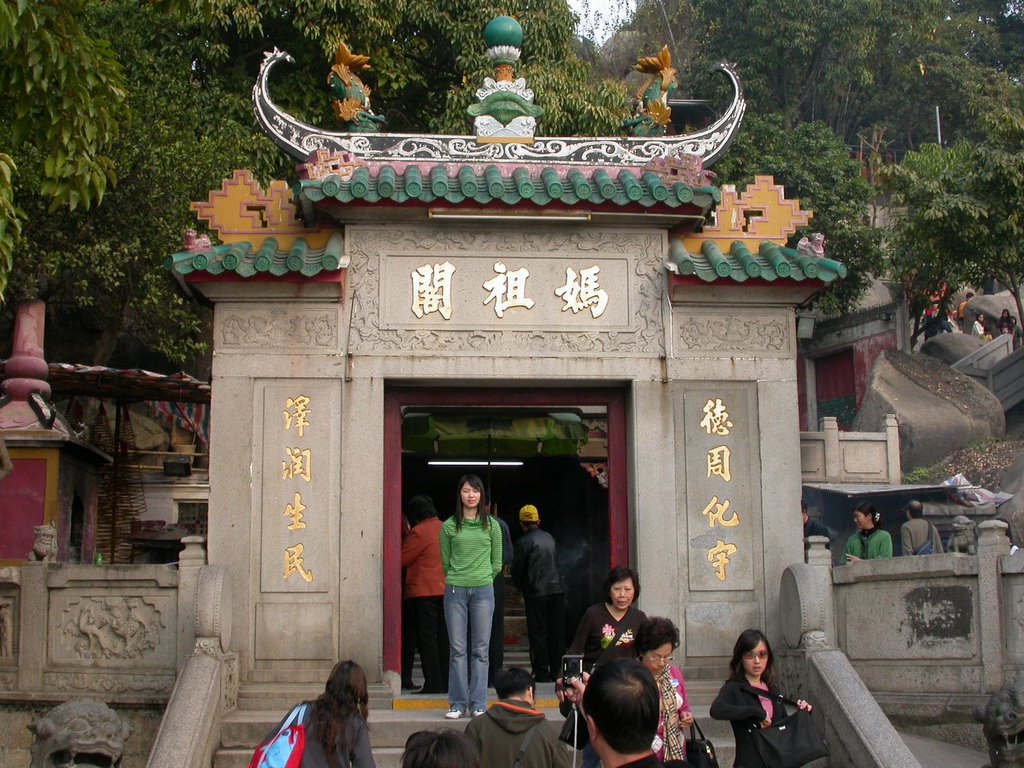
And then we took a one-day trip to neighboring Macau, the former Portuguese-administered territory on the opposite (western) side of the Pearl River estuary from Hong Kong.  The jetfoil took 45 minutes to cover the 40 or so miles, compared to the old ferries we remembered from the 1950s, which took 3 hours for the crossing. We hired a van on arrival to take us around the city, which in reality is only a few square miles in area.  The tour included the main sights of the newly-refurbished city, especially the parts that represented its four-hundred-plus years of colonial history as the first settlement by Europeans on the China coast.  We noted the plethora of new casinos, some now American-owned, the many new high-rise buildings, the land reclamations (not as extensive as Hong Kong's but still tending to overwhelm the once-charming Praia Grande), and as with Hong Kong, the exuberant Christmas decorations and illuminations around the main square.

Macau is known for its fine restaurants, serving cuisines from China as well as from Portugal, and all points in between.  Indeed, Macanese cuisine is considered by many culinary experts to be among the best fusion cuisine to be found anywhere in the world, encompassing as it does the spices of South East Asia with the freshness and delicacy of Chinese cooking and the wholesome Mediterranean fare of Portugal.

Our return to Hong Kong in late evening was an experience in waiting that might have been forestalled had we bought two-way jetfoil tickets at the outset.  Instead we had to contend with long lines of returning gamblers anxious to get back to Hong Kong as soon as possible.

After our granddaughters left for home, we went to stay with our good friends for a few days at their comfortable home in a bucolic part of the countryside of Kowloon known as the New Territories. The term 'New' derives from the fact that the Territories were ceded to the British for 99 years in 1898, some 56 years after they first acquired the island of Hong Kong.  In 1997, as we know, the former British Crown Colony was returned to China and became a Special Administrative Region, as was Portuguese-administered Macau two and a half years later.

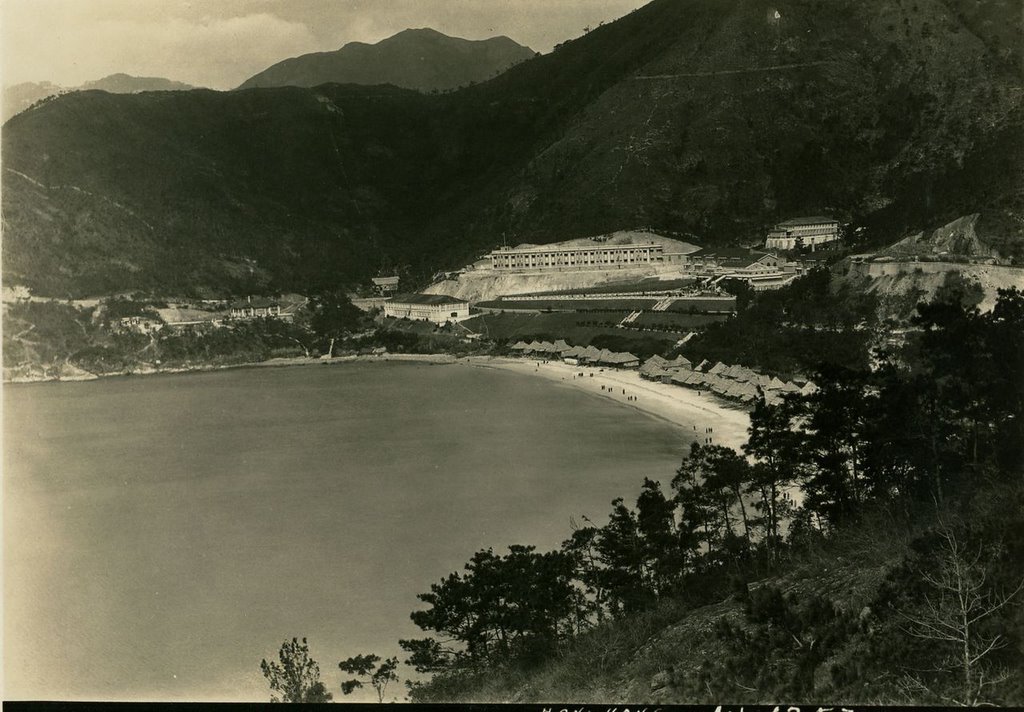
As we neared the end of our visit, our hosts took us in their cabin cruiser for a leisurely afternoon cruise around the lovely bays and beaches of a serene and unspoiled part of Hong Kong.  The excursion showed us a face of the territory that few tourists ever have a chance to visit, and we were most grateful for this fresh experience.

It was quite warm in Hong Kong for the better part of our stay, with temperatures in the 70oF range, and only turned colder the day we left.

Our flight back to San Francisco took about eleven hours, a shade under the time it took for us to get to Hong Kong.  The jetstream must have helped speed us home.