Wednesday, May 03, 2006

About Lenses

The wide-angle lens is the one I prefer for taking street photos, mainly because of the great depth of field it allows.  Even with the electronic auto-focus feature now so common in cameras, it's possible if one is not careful to take photos which may turn out to be out of focus.  

This is where the wide-angle lens comes into its own.  The focusing with this lens does not have to be right on target, because the depth of field coverage will get everything sharp from infinity down to a few feet.

My zoom lens's widest setting is 24mm (35mm photography equivalent), which is wide enough for most needs, and may even be a bit too wide if you're concerned about vertical distortion.  I happen to like this kind of distortion which can be quite effective for certain shots.

One other thing that a wide angle lens can do is to distort facial features in portraits and close-ups.  It's okay when used for fun photos, but can be less than kind to the subject for regular portrait shots, especially when frontally posed, because of the distortion of the nose.  

For good portraits a longer than normal focal length lens is preferred — in 35mm terms, a focal length of 70 to 100mm is ideal.  It has the advantage of throwing the background out of focus so that the emphasis is on the subject, without including distracting background detail.


Tuesday, May 02, 2006

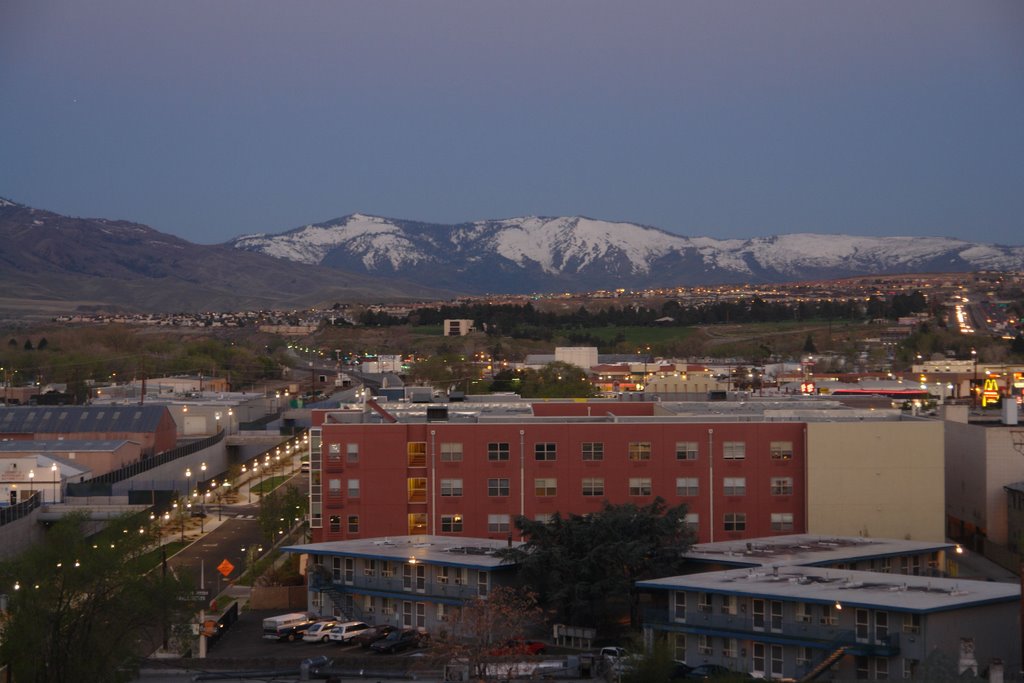
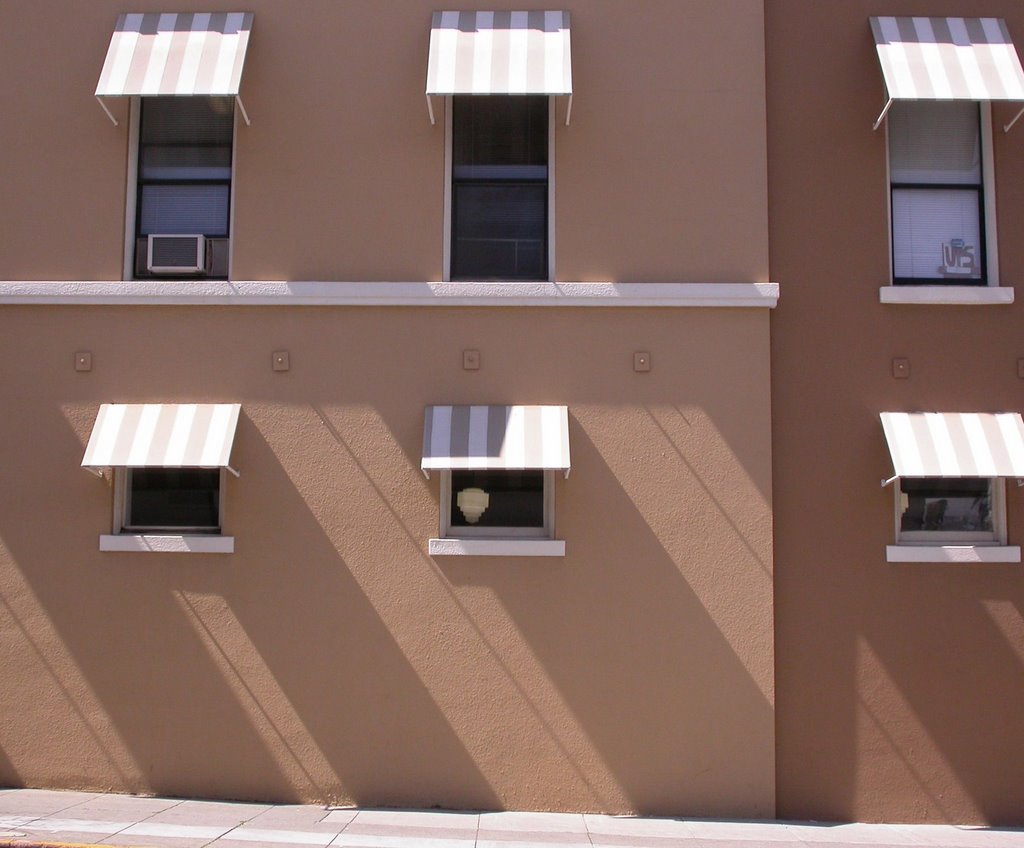
Reno, Nevada


Waiting for the bus

Budget motel

4:30AM

Jazz Club

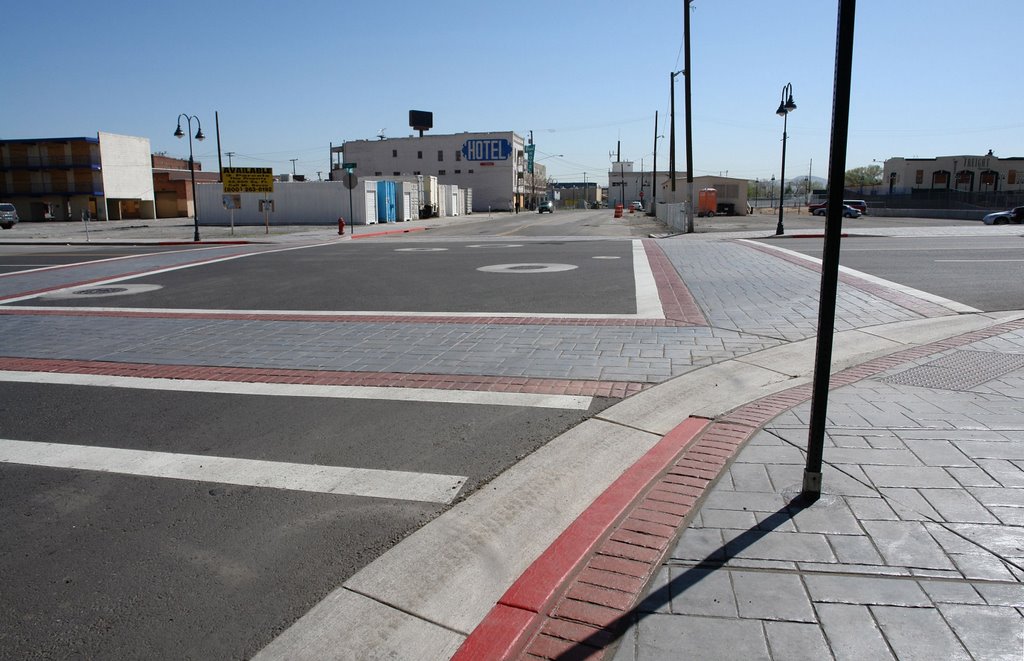
Intersection

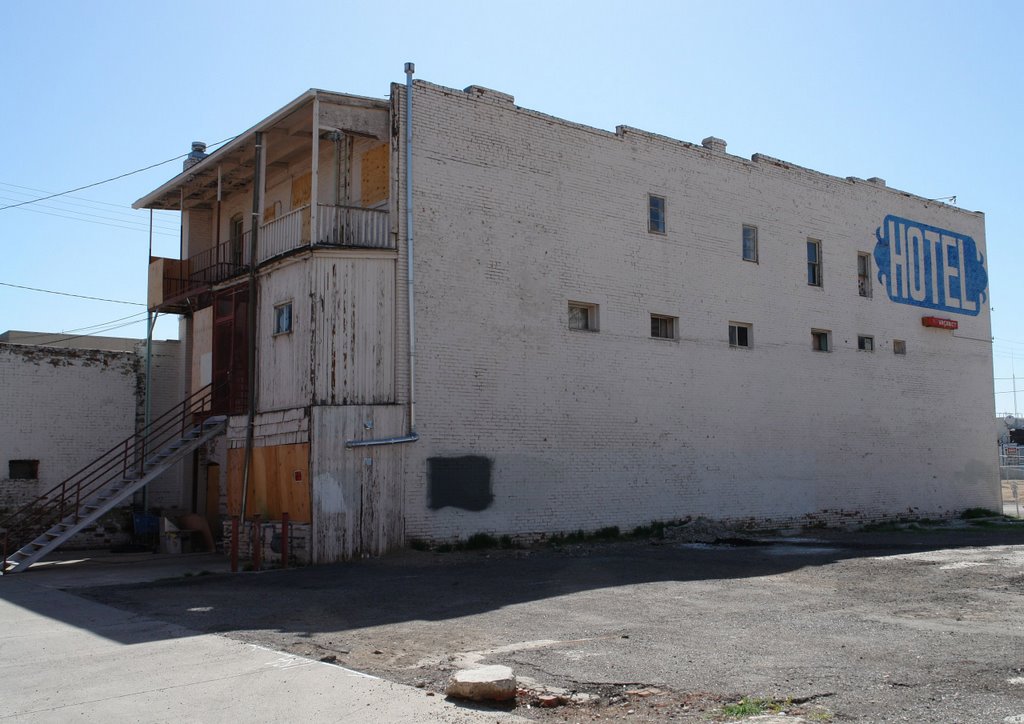
Abandoned Hotel

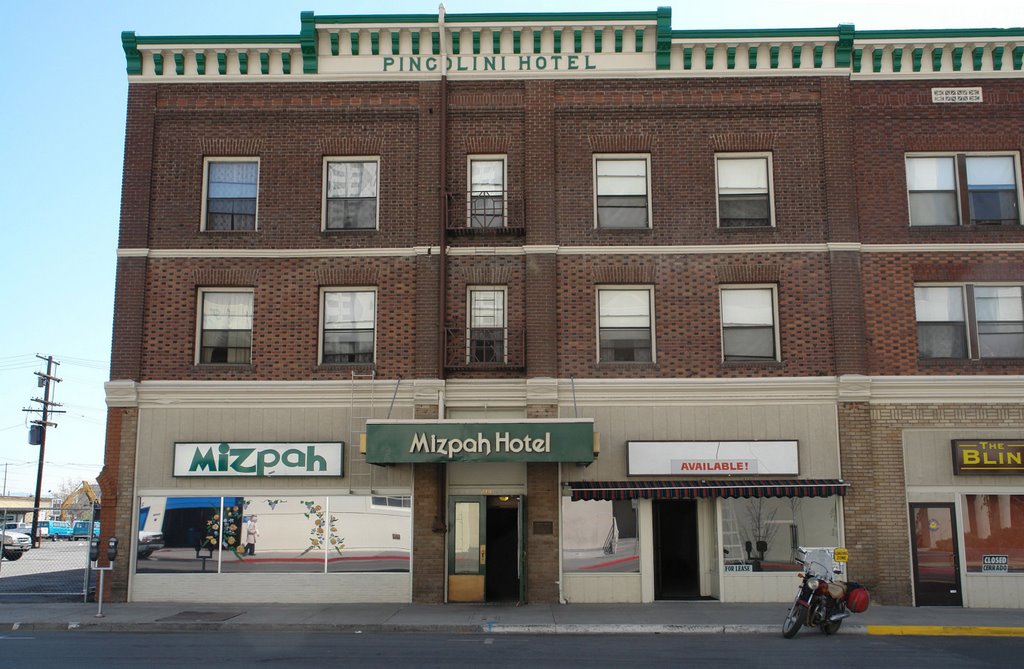
Hotel With Two Names

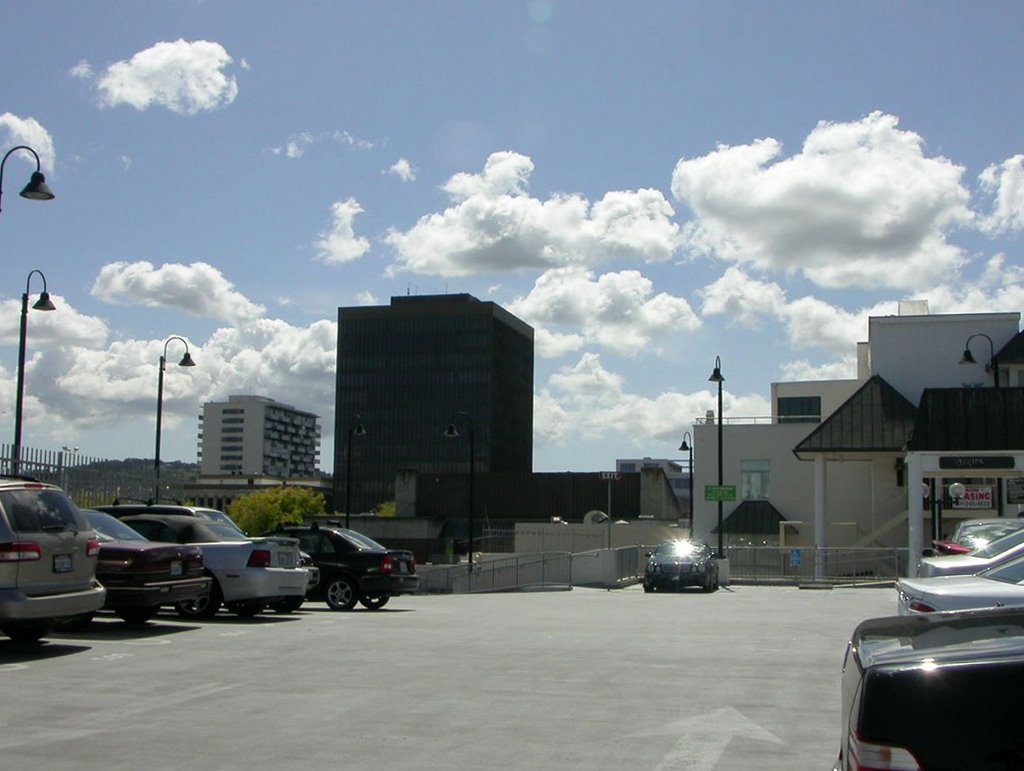
Downtown

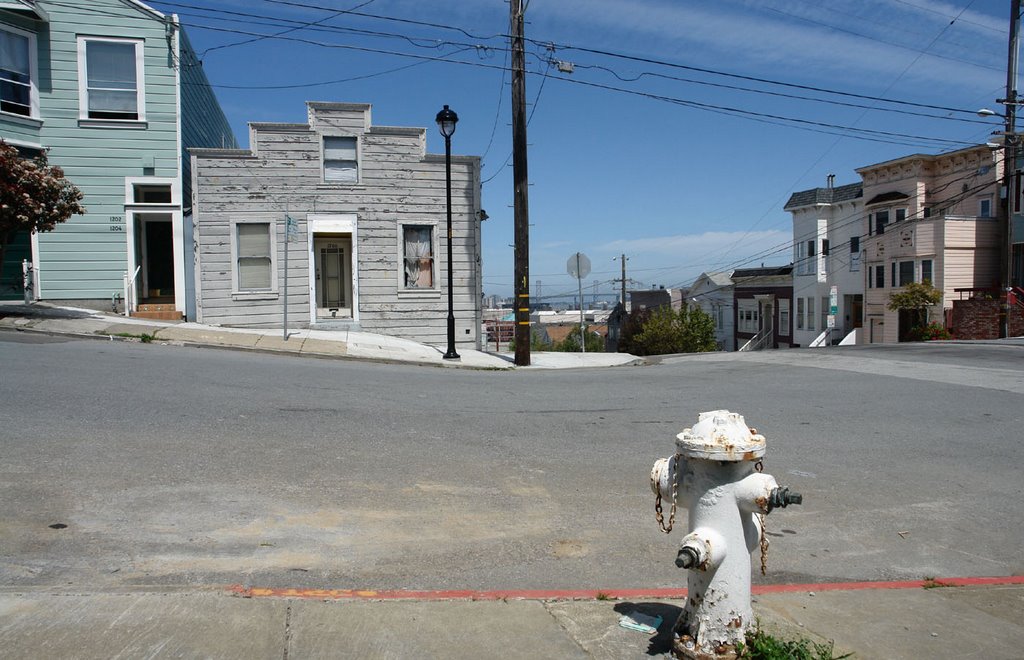
Spring Day - San Francisco


Steep Hill


Skyline


Freeway


Eighteenth Street

Thursday, April 27, 2006

Gillette


Looking at it today, one can marvel at its fine workmanship and detail. As an instrument of singular and utilitarian purpose, it was well ahead of its competition at the time. It was designed so that the user did not need to unscrew and take apart the head from the stem in order to change blades. You simply turned the base of the milled stem, and the head that held the blade would open like twin doors to expose the cavity into which the blade would fit perfectly.

It was made entirely of metal, and in certain respects it was as finely wrought as an expensive Zeiss camera. For example, a milled ring just below the head was engraved (engraved, not simply stamped) with odd numbers from 1 to 9, with dots in between to indicate the even numbers, and each number or dot provided a definite click-stop. What this ring did was raise and lower four platens within the head. The platens were there to press up against the inserted blade. The idea was to allow the thin flexible blade to expose more or less of its sharp shaving edge to fit the user's needs, a lower number on the ring giving a closer shave.

I have owned this gem (and indeed its fine construction is more like that of a piece of jewelry than a shaving razor) for a half-century. It was made in the U.S.A. Beneath the head is stamped this information along with the maker's logo—a diamond with the name "Gillette" run through by an arrow—and the then ubiquitous "REG.U.S.PAT.OFF". On the inside of the blade-holder are the words ""PAT.NOS.ON PKG".

Compare this work of art with the colorful monstrosities of today, with their multiple thin metal blades embedded in a plastic shaving head, and with their ribbed and rubbery stems that are meant to provide an ergonomic fit.

This is just another example of oldtime American ingenuity and quality that one can hardly find these days.

Wednesday, April 26, 2006

Other Blogs

After randomly scanning other people's blogs, I came up with a few surprises.  There are bloggers who submit just a few postings, and then fade away, never to return.  There are others who blog for a while, take a sabbatical for some months or a year or more, and then return.  There are blogs that are purely commercial in nature.  There are blogs that are just filled with plain unvarnished gibberish.  Within the vast panoply of blogs from all over the world, you can find some that are worth paying a return visit to.

Tuesday, April 25, 2006

Gas

The top story in the news today is the high price of gasoline, and what the voters want the government to do about it.  Some people say that there is price gouging going on, others disagree. Some say that the run-up in oil and gas prices is cyclical and unavoidable, like fluctuations in the stock market, others say the greedy oil companies are to blame for the current spike in prices.

Today the President has taken a small step toward easing the tension by suspending deliveries to the nation's strategic petroleum reserves. That brought oil prices down a smidgen, but a barrel of crude is still well above $72.

The fact is simply this: we could and should years ago have foreseen what is happening today, and our leaders could have started a program to temper our reliance on fossil fuels by developing alternative sources of fuel.  We are the only country to have the know-how to send men to the moon, so why is it so difficult to get our scientists to figure out other economical means to propel our economy?  

Brazil has never sent anyone to the moon (as yet, though there is one Brazilian astronaut up there in space), but there are now more Brazilian cars running on 'flex-fuel' (a combination of ethanol and gasoline) than on straight gasoline.

If the Brazilians can do it, how about us?

*          *          *          *          *

Monday, April 24, 2006

Cookbooks

When we visit Costco, my wife and I would head first for the book section, where the latest bestsellers are usually on display, in multiple stacks ten or more deep. Costco's book section is not the ideal place to browse. People with loaded shopping carts tend also to be browsing there, or at the adjacent tables filled with boxes of DVDs and music CDs. There can be a lot of reaching across and bumping against the carts or against other people. And if the carts have bawling toddlers sitting in them alongside the boxes of laundry detergent, bathroom tissue, and gallon plastic bottles of cranberry juice, it makes the browsing experience even less agreeable.

The paperback of Dan Brown's "The Da Vinci Code" is out, and there are stacks and stacks of them. This novel has been one of the biggest sellers over the past several years, and now that the movie will hit the multiplexes, sales will surely mount even higher.

The Costco book stacks are typically arranged in some kind of order. First come the new hardbacks at one end of the table, with no discrimination between fiction and non-fiction, then further along come the paperbacks, then the reference books and Bibles, travel guides, health and self-help works, and, at the far end, the cookbooks.

Ah, yes, the cookbooks. Hundreds of them in at least a score of titles, big ones, little ones, heavy ones, light ones, spiral-bound ones, ring-bound ones. Cuisines from all over the world are featured. This is especially true here in the Bay Area, with its multiethnic, multicultural population.

Cookbooks are fascinating things. I suppose that is because food is always fascinating, and so is its preparation. Not only is there such a variety of cuisines, but there are so many ways of preparing them, so many recipes, so many hints and shortcuts.

Personally I never buy a cookbook that does not have color photos in them. I understand that the professional photographers who illustrate the cookbooks must resort to tricks to make their pictures look good, like spraying artificial (and inedible) gloss on a roast to make it appear fresh and mouthwatering. Still, for me any cookbook without pictures is not worth buying. I need to see, in full color, what the final dish looks like. I'm a visual kind of guy, and if the dish has no eye appeal, that does it for me.

We have too many cookbooks at home, far too many. I would guess that we have some thirty or forty cookbooks, including some very old ones. (We also have family recipes collected over the years and kept in ring binders. Some of these recipes are generations old, and there are no pictures attached.) We do not need to buy any more cookbooks. But from time to time we do.

The sad truth is that we get suckered by the pictures in the cookbooks, or by one or two of the recipes in them.

There's no way in God's green earth that we will ever try even a minute fraction of all the recipes in those cookbooks in our lifetime.

When I do refer to a cookbook, it is one that my wife's sister wrote that I tend to favor. My wife's sister is a culinary professional, and the owner of a fine restaurant on Long Island. She has written many cookbooks.

The reason I like her cookbook is that it has easy recipes. Simple ingredients, brief instructions. And the resulting dish is always delicious.

Thursday, April 20, 2006

Sunny San Francisco


Took some pictures, it being such a fine day. The air was brisk but the sun kept things warm.

Tuesday, April 18, 2006

Remember

Today is the centenary of the Great San Francisco Earthquake and Fire.  Brrrrr!

Travel Scenes


Helsinki, Finland


Copenhagen, Denmark


St. Petersburg, Russia


Tallinn, Estonia


Stockholm, Sweden

Monday, April 17, 2006

More Street Photography


It was such a glorious day today (after all that rain these past weeks) that I took the opportunity to take some pictures. Here they are.

1. Intersection 2.Monolith 3.Rooftop 4. Frankenstein


Sunday, April 16, 2006

Easter

We have had a strange late winter and early spring in northern California.  Back in February we had sunny skies and temperatures in the mid-seventies, really gorgeous days when the first buds began to emerge.  Then came the storms and biting cold in March, high winds and record-breaking periods of rain.  In the Sacramento and San Joaquin rivers, the waters rose to flood levels, threatening the dykes.  In Marin County, heavy rains caused mudslides, and a hillside engulfed a house, killing a seventy-three-year-old man.  The vagaries of nature can have tragic consequences.

In two days' time it will be the centennial celebration here in San Francisco of the Great Earthquake and Fire of 1906.  The Fine Arts Museums of San Francisco are having photo exhibitions of that terrible event, and the newspaper has over the past week published articles about what happened a hundred years ago. Tonight the National Geographic television channel will have a program about the quake. The newspaper's media critic has said that the program is poorly done, but I plan to watch it anyhow, after our Easter dinner.  Everyone knows that it is only a matter of time before California will again suffer a devastating earthquake.  But we live every day trying not to think about it.

*          *          *          *          *          *

Easter Sunday, and the skies are overcast.  Last night it rained again, quite heavily just before dawn.  The air is still chilly.  Fallen wisteria blossoms cover the wet deck outside the kitchen.

*          *          *          *          *          *

On National Public Radio a couple of days ago I listened to reviews of a couple of Korean movies that sound interesting.  Here's what the New York Times' critic says about one of them, called The President's Last Bang:

"A head of state, notorious for his womanizing, is gunned down during a night of carousing by his director of central intelligence. In Hollywood this scenario would be a screenwriter's fantasy. In South Korea it's a true story, which Im Sang-soo has transformed into a curious, gripping movie that is part tense political thriller, part chaotic and bloody black comedy. In 1979 Park Chung Hee, who had ruled South Korea since 1961, was assassinated by the director of the Korean Central Intelligence Agency. Park, a sometimes brutally authoritarian leader who had overseen his country's economic modernization, is portrayed in the film (by Song Jae-ho) as a sour old man living in a cocoon of elaborate protocol, tight security and self-indulgence - more like a crime boss than a head of state."

I've added the movie to my watch list.

Thursday, April 13, 2006

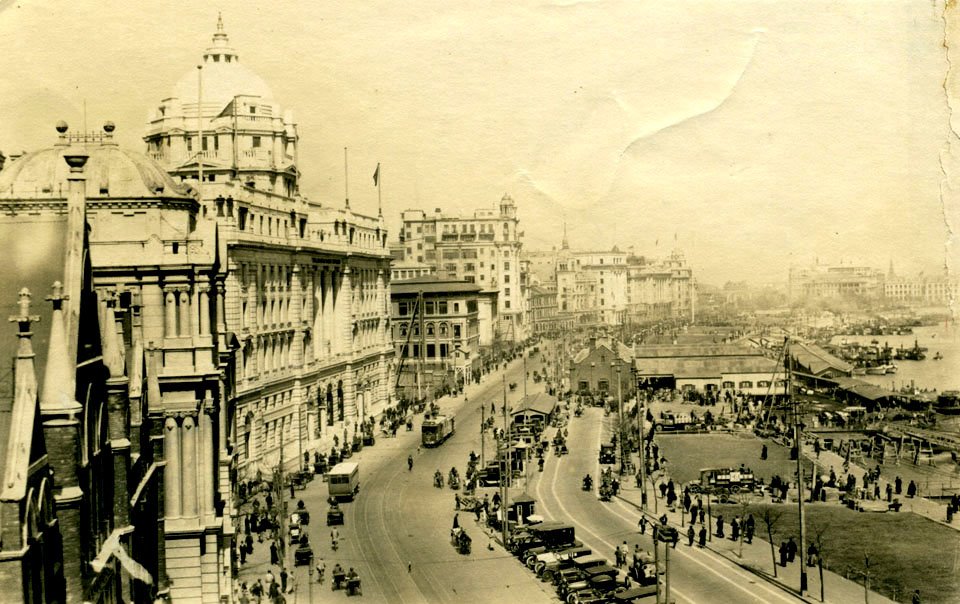
Shanghai 1930s


This is the famous Bund as it looked seventy-some years ago. The old colonial-style buildings are still standing today, many of them, and except for the widened esplanade on the waterfront and the extreme makeover of Pudong across the Huangpo River, this part of Shanghai has been left pretty much as it was back then.

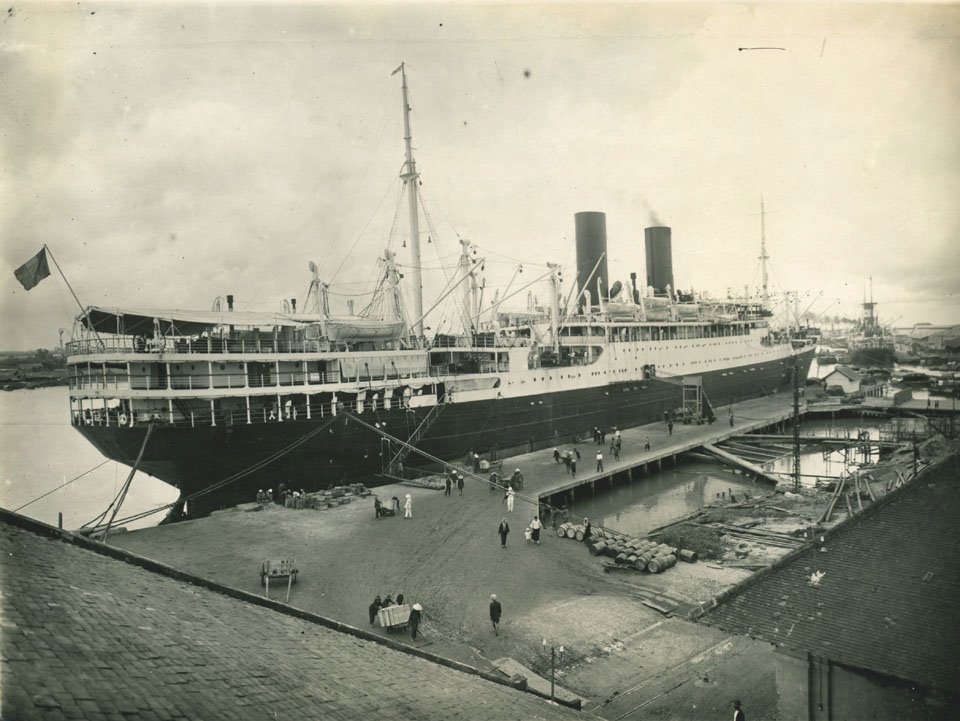
Saigon 1930s


More photos from the Traveler. This time the pictures are of Saigon. (Click on images to enlarge.)

Formula

Sometimes our recipes can be much improved if we adjust the proportions of certain ingredients.  I find that reducing the hubris and adding more of the humilitas will improve the dish immeasurably in most cases.

Wednesday, April 12, 2006

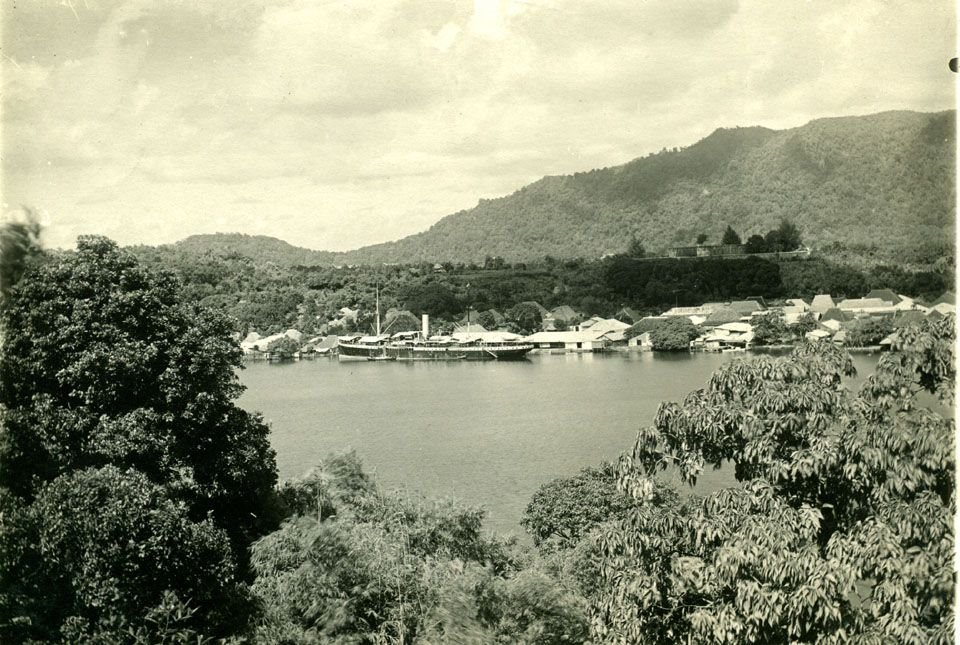
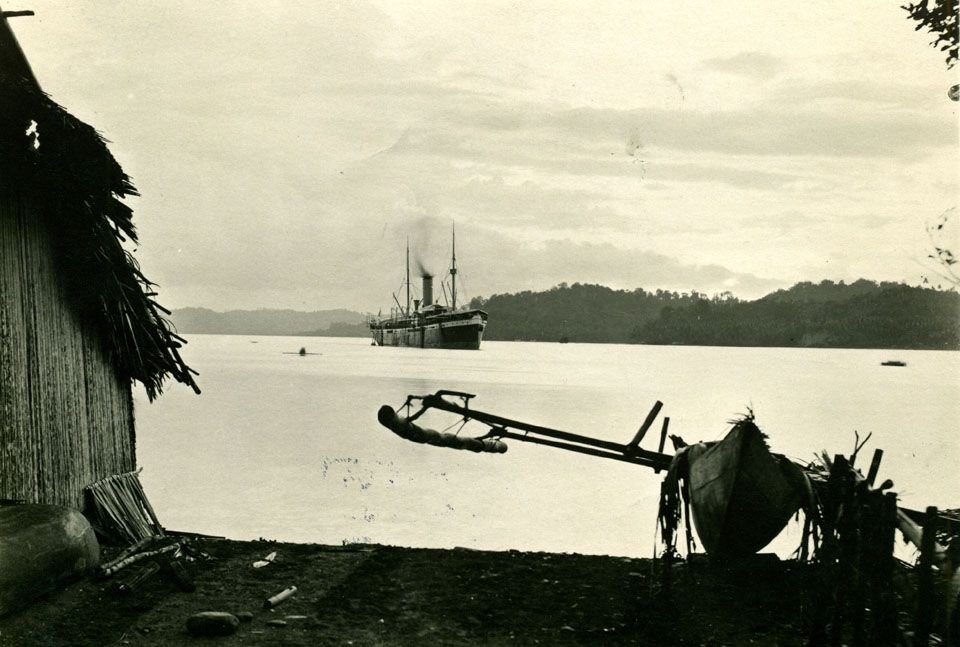
Moluccas 1930s


Banda Bay, Moluccas


Anchorage, Banda

Batjan Roads, North Moluccas


Ambon, Moluccas


These photographs were taken by a traveler who made many trips to Asia in the years before the Second World War. It was a time when most travel was by steamship. For the more remote Spice Islands, then part of the Netherlands East Indies, such travel would typically have been on a tramp steamer or freighter, such as those you see in the pictures.


(Click on the pictures to enlarge them.)

The Joy of Blogging

I began 'The Daily Muse' seven months ago. Told some family members and friends about it after there was enough material to make it worth their trouble to check it out.

Some of the people contacted have been kind enough to offer feedback, for which I am grateful. Once in a while a stranger might pay a visit to the 'Muse' and leave a comment. I soon learned to separate the wheat from the chaff, the automatically-generated comments intended by their originators to turn a new blogger into a prospective customer for their products or services.

Need to learn some HTML if I am to give the blog a smarter look, to get away from this rather humdrum format, but with so many things occupying my time these days, learning a new language goes way down the list.

It can be a very personal business, this blogging, as you may have noted. If you have checked other blogs at random, you will see some very hairy intimate stuff out there.

But the way I think about it, blogging is just a way besides e-mail to stay in touch with friends who have access to the Internet. Its anonymity is a great blessing. And even though inviting visitors to view my blog removes its anonymity, I do not find that discouraging in the least. If some readers choose to pass along this blog address to others who may find it of interest, they have my blessing to do so.

And no, I'm not selling anything.

Monday, April 10, 2006

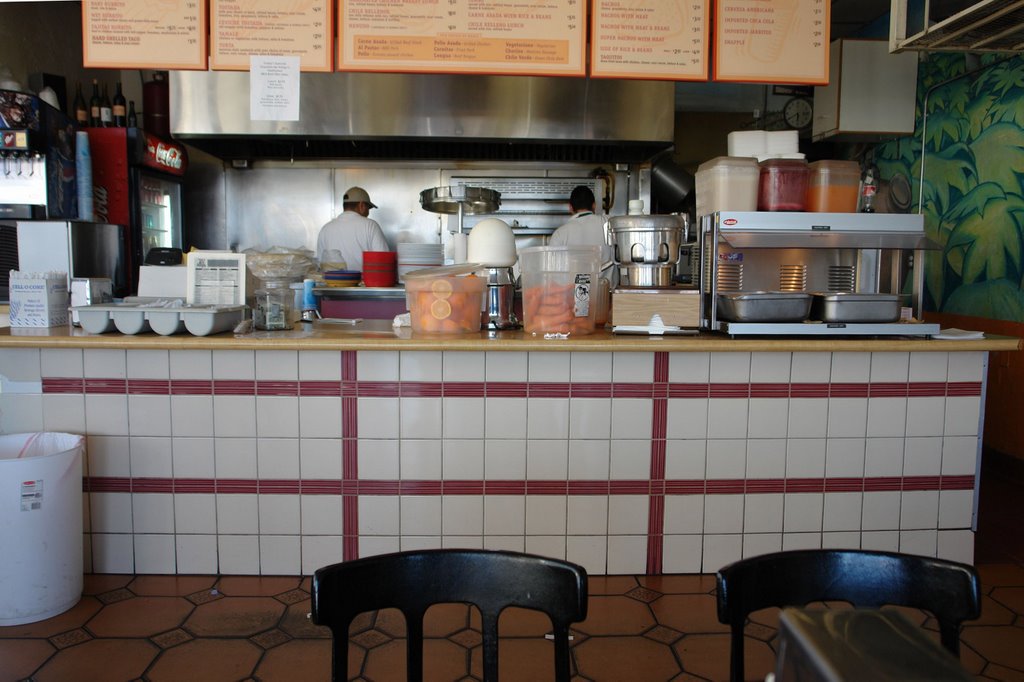
'Street' Photography


Nothing much to write about today, except that the weather has been simply gorgeous, even though the forecast says rain later this evening. You can click on the pictures to enlarge them - the upper one is titled "3:15PM", and the lower is "Taqueria."

Saturday, April 08, 2006

Reunions


The posting on March 28 to celebrate my wife's birthday attracted heartfelt responses from her friends around the world.  It happens that these good friends are classmates of hers from way, way back, when they all attended a revered high school in Hong Kong.

Over the years, my wife and I have attended reunions in different parts of the world organized by the remarkably loyal graduates of this fine institution.  I use the term 'remarkably loyal' advisedly, for I personally know of no other group of alumnae (or alumni, for that matter) who share a love for their alma mater in as devoted a manner as these women do.  

They hold worldwide reunions every few years in cities where there are sufficient numbers of them to form effective working committees.  All of these reunions have been successes on a grand scale, and each time they attract hundreds of alumnae from all corners of the globe.

Equally remarkable in terms of loyalty are the husbands of these lovely women.  The menfolk are as much a part of the frequent school reunions as their spouses, and unreservedly they share each other's enthusiasm for those events. Even, in some cases, to the point of becoming teary-eyed when the women sing their school song.

In a few weeks' time we will join a number of my wife's classmates and their husbands on a week-long cruise to Alaska.  The last time we had the benefit of their company was about a year ago, on a cruise to the Mexican Riviera. This time will be even better.

Thursday, April 06, 2006

Shakespeare

This paragraph from a book I've been reading will serve to illustrate how many of our clichés the English-speaking world owes to William Shakespeare.

"No one in any tongue has ever made greater play of his language.  He coined some 2,000 words—an astonishing number—and gave us countless phrases.  As a phrasemaker there has never been anyone to match him.  Among his inventions: one fell swoop, in my mind's eye, more in sorrow than in anger, to be in a pickle, bag and baggage, vanish into thin air, budge an inch, play fast and loose, go down the primrose path, the milk of human kindness, remembrance of things past, the sound and the fury, to thine own self be true, to be or not to be, cold comfort, to beggar all description, salad days, flesh and blood, foul play, tower of strength, to be cruel to be kind, and on and on and on and on.  And on.  He was so wildly prolific that he could put two catchphrases in one sentence, as in Hamlet's observation: 'Though I am native here and to the manner born, it is a custom more honored in the breach than the observance.'  He could even mix metaphors and get away with it, as when he wrote: 'Or to take arms against a sea of troubles.' "

— Bill Bryson, The Mother Tongue — English and How It Got That Way , Harper Collins, New York, 1990, pp 64-65

Wednesday, April 05, 2006

My father

My father, were he alive today, would have been ninety-two years old.  He was born on this date in 1914.  He died at the very young age of forty-two.  God grant that his soul, and the souls of all the faithful departed, rest in eternal peace.

Saturday, April 01, 2006

Tea-bags

Consider the lowly tea-bag. Whoever thought up its design deserves admission into the hall of fame for ingenuous inventions.

The little bag itself is made out of a type of porous paper, much like the rice paper that as kids we used to build our balsa wood model airplanes with. This bag is made in such a way that it has two compartments, not exactly mutually exclusive, but separated by a neat double fold at the base. The finely crushed tea leaves, enough to produce one cup of strong, and two cups of weak, tea, are contained in equal measures within the two compartments, which were designed to allow water to flow through, and thus offer the leaves greater exposure to the hot liquid, so as to produce a richer brew.

The bag is folded over neatly at the top, neatly as in the manner of a gift parcel, and the fold is held by a tiny metal staple. (I am sure that you could not find a staple gun in the stationery store that handles such tiny staples.) Besides holding the bag close, this staple also encloses a short cotton thread. At the opposite end of the thread is a small printed label, in the case of the yellow Lipton's tea-bag the label is on a lightweight card, and in the case of some Chinese tea-bags it might be thinner paper. This label is held to the thread by another staple, so two staples per each two-compartment tea-bag.

The yellow Lipton label bears the words "Lipton", "Yellow Label Tea", "Finest Blend", and "Quality No.1", quite a lot of advertising in a ¾ inch by ¾ inch area.

But that's not what is really remarkable about the tea-bag label. Where at the top it is attached to the thread that is attached to the tea-bag by a staple, at the bottom the same string is neatly secured in a tiny slit cut into the label, so that when you pick up the tea-bag, the thread, which measures about 3 ½ inches in length, does not fall free, but acts as a secure belt around the bag, running from pole to pole like a meridian of longitude. You then gently take the thread out of the slit, hold it at the label end, with the tea-bag dangling like a pendulum, and place the bag in a tea-cup.

Now we come to the true ingenuity of the design. I repeat, whoever thought up the tea-bag must be one of the world's great inventors, to share space in the pantheon with Leonardo, Edison, Bell and their ilk. That little slit at the base of the tea-bag label serves a dual purpose. We have already described the first.

How often we have run into a situation like this — we take a tea-bag and place it in a cup, with the thread and label hanging over the cup's rim, we then pour hot, preferably boiling, water into the cup, and suddenly the weight of the water drives the string and the label into the cup. It then becomes a messy business to extricate the hot, wet thread and soggy label from the quickly brewing tea. Nobody wants to add milk and sugar to tea with a label floating in it.

Now, this is how the tiny slit in the label comes into play.

Before you add the hot water, you wind the thread through the ear of the tea-cup, once, to anchor it, and then you slip the thread back into the little slit in the label, and voilá, the label and thread remain firmly secured and will not be sucked in when you pour hot water into the tea-cup.

You see what I mean by ingenuity. This humble tea-bag has it in spades.

Tuesday, March 28, 2006

My Wife

Today is my wife's birthday.  I love my wife.  It's as simple as that.  We began dating when she was seventeen and I eighteen, and we were married when she was twenty-one, and I had just turned twenty-three.  We have been married, oh, many, many years. Let's just say that we will be celebrating our golden anniversary in a few years' time. Let's just say that we hope to be celebrating many, many more birthdays and anniversaries. Let's just say that life is good, and we are looking ahead to much more of it.  Let's say also that love makes life all the more wonderful.

Sunday, March 26, 2006

Memorabilia

How I Store My Memories

Through the years I have kept journals, diaries, and other paper-based records (and I'm not even counting tax returns and such).  I also have many thousands of photographs and color slides dating from the time I bought my first box camera as a teenager, and reels of eight-millimeter and the later super-eight-millimeter movie film, which began after our son was born.  Then there came the various gauges of videotapes, most of which had their creation after our first granddaughter came into the world.

My garage has boxes upon boxes of all manner of memorabilia collected over seven decades or so.  Physical storage space is now at a premium.

So I have been trying diligently to convert what I can of this material to digital storage.  With the aid of complex electronic hardware and sophisticated software I have managed to capture a good deal, in bits and pieces, over the past several years, with the hope that one day our great-grandchildren and their progeny will know something of their heritage through these long-ago images and writings.

It's a legacy project that will likely occupy the remainder of my sentient life, and whether I will succeed in achieving its completion, only the good Lord knows.  

As always, it is a matter of time, for this is a very time-consuming effort we speak of here.

I want to take this opportunity make an observation about time.

During our working lives, those of us who are now retired used to look forward during the workweek to the approach of Friday and the weekend.  Wednesday was 'hump day', remember? And Monday was the day most working people hated, so much so that we believed (I think it's still a pretty common belief today) that you would not want to buy a car that was made on a Monday, because the autoworker would not be in the best of shape at the start of the workweek.

Well, here's my observation.  Now that we are retired, Fridays come at us with much greater frequency.  I kid you not.  Just look at the newspaper delivered to your front door (which, by the way, is becoming skinnier and very much less interesting nowadays, but that's a whole 'nother story).  

Every couple of days, it's the Friday paper — another Friday has arrived!  There are more Fridays than other days of the week?  Or have the other days simply disappeared from the calendar?

Where has the time gone?

Thursday, March 23, 2006

Photography

Photography today is so much simpler with these digital cameras.  You get instant results, that's the big thing.  No longer having to deliver the finished film cartridge to the drugstore or photofinisher, order the required number of prints to be made, and then go back down to pick up the finished product some days later; all these steps are now history with the digital revolution.

There are also the many ways now that allow you to share the photos via the Internet — by e-mailing them to friends and family, or by putting them up on a website for all to see.  Is it any wonder that film, superb as it was, and still is for some applications, is quickly disappearing from the scene?  It won't be long, is my guess, before fine-grain black-and-white film will be as hard to come by as regular 8mm movie film.

Commercial movies are still made on film, though. I remember reading that Spielberg has been trying hard to push for multiplex theater owners to switch to digital projectors, but there is resistance because of the high initial outlay required to make the conversion.

No question in my mind that the cinema business will end up in the digital realm before long.  Already there's a lot of digital special effects in films.  For example, most crowd scenes are easily computer-generated.  No need these days to pay and to provide catering services for all those extras from central casting.  A small team of computer artists can fill the screen with a cast of thousands with a few clicks of the mouse.  Well, maybe more than just a few clicks.

But to get back to amateur photography and the sharing of images online.  It's really easy to do, and any average computer newbie can handle it.  A broadband Internet connection helps, as it would take a long time to upload pictures, especially large ones, with a dial-up service.

For posting your photos online, you don't need a fancy superduper multimegapixel camera.  A run-of-the-mill 3 or 4 megapixel camera will do the job.  That's what I've been using most of the time.


Wednesday, March 22, 2006

Toothsomeness

I'm on a roll today.  Two postings.  Making up for the days when I offered none.

My tooth problems have come to a head, in a manner of speaking.  I have decided to take the plunge, cross the Rubicon, and burn my bridges.  Of upper incisors and molars, only one remains in fair working condition—the rest are a hodgepodge of artifacts held together by the skill of past dentists and craftsmen, and by sheer luck assisted by a Herculean effort of will.

Today I visited my dentist and gave him the green light to remove what needs to be removed, and install in their place new dentures to allow this wearer a fuller enjoyment of food than had been possible these past several weeks.

So my dentist had a young technician take the necessary moulds, and in a couple of weeks I shall be the possessor of the brightest smile that my bathroom mirror, assuming that it will have been reinstalled by then, will reflect.

The actual plier job will not take place for some time yet, but I am facing the prospect with grim determination along with a giddy insouciance now that the decision has been made.  

Or at least, that's what I am hoping.

Equinox Missed

The vernal equinox passed two days ago without my even noticing it.  Must be this unseasonably cold weather we've been having, that and the intermittent rains.  

The passing of the seasons was important in the lives of our ancestors, who had to contend with decisions about the tilling and the sowing and the harvesting of crops.  So they looked to the skies and to their primitive — although in many cases mightily accurate — calendars to determine the best times to do all those things.

In urban societies in the developed world there is no longer that focus on the sun, moon, and stars to manage our lives.  Instead we must now consider school breaks, summer vacations, holidays, which may or may not coincide with parenting schedules, child rearing, health, and even personal preferences, in deciding the hows, whens, and wheres of the things that we need or want to do.

Boy, I wish the weather would warm up quickly.

*          *          *          *          *

The current issue of Time has a story about Mel Gibson's new movie "Apocalypto" which is about the Maya of southern Mexico and Guatemala.  Having visited that part of the world, and knowing a little bit of the history there from my reading, and from conversing with the natives I have met, I am really looking forward to seeing it, despite Mel's well-known passion for gore.

Monday, March 20, 2006

Schumann & Chocolate

This afternoon, by accident, I combined two of life's great pleasures into a sensual moment of aural and oral bliss.  The second movement of the Schumann Piano Concerto was beginning on my stereo system as I unwrapped a piece of dark chocolate of an unknown brand.  I placed the square of chocolate on my tongue just as the lilting orchestral notes of the second subject filled my listening room.

My usual method of eating chocolate is to bite immediately into it, breaking it up into smaller pieces in the mouth, letting the pieces slowly, languorously, melt against the palate, then allowing the tongue, almost involuntarily, to push the bits this way and that with a delicious randomness, while the slow melting occasioned by the warmth of the oral cavity coats its lining with the bittersweet flavor of the cacao bean.  It is the process of this melting in the heat of one's mouth, and the sweet involvement of the tongue mashing the chocolate bits against the teeth that produces what I believe is one of life's sublime enjoyments.

But today I departed from the usual routine, thanks to the Schumann.  The interplay of soloist and orchestra gave me reason to shift the morsel in my mouth rather than bite down into it.  Thus the square of chocolate remained relatively intact, and its hard edges began to soften, ever so slowly, as I allowed it to perch upon my tongue, subjecting it to just the smallest amount of movement, licking only when I felt it might fall against the gums or lower teeth.

Thus did that square of chocolate last through a good part of the andantino grazioso, enhacing one's enjoyment of it in a way that it would be wrong of me to further describe.

You just have to try it for yourself.

Saturday, March 18, 2006

Care & Maintenance

From around fifty-five to sixty, it purrs along pretty well. Except for a few minor problems here and there, the parts are functioning as they should, and the overall performance meets requirements, so long as there is enough fuel and a minimum of ballast.

From sixty to sixty-five, a few unexpected problems may crop up. These may be minor or major, depending on how the unit has been used. There may be a bit of wobble, a tendency to lurch unexpectedly at times, and some of the lines may be clogged. If careful flushing of the lines does not correct the problem, it may be necessary to replace them, as some owners have had to do. It is not an easy job, this replacement of lines, but it needs to be done. Once the lines are clear, you can expect smooth sailing up to about seventy-five or so. Still, careful monitoring is advised after the replacement, and the fuel intake needs to be kept leaner and lighter.

Sixty-five to seventy produces some added hazards. The electrical system may malfunction, if the unit has not been maintained in optimum condition with regular checkups. The fuel intake has to be closely watched. The unit's equilibrium is largely dependent on the quality of its suspension, combined with its overall weight. Backfiring can occur unexpectedly, but in many cases this may be unavoidable.

At about seventy some units will experience rattling and shaking, and if the owners are not especially heedful, accidents may occur. Some connectors may malfunction, giving rise to the possibility in extreme cases that they must be replaced. But it is quite possible for the unit to operate with impaired connectors for some time, provided that other parts of the unit are sound.

From seventy to seventy-five, the instrument panel in some units may begin to display signs of malfunction. This may at the beginning show itself in minor ways, perhaps in the flickering of one or several of the warning lights. Unfortunately in time these minor glitches may progress and acquire major significance. Regular monitoring must be used to see that the unit is not subjected to rust or mildew, and that there is no immediate danger of breakage of any of the crucial parts.

Beyond seventy-five, depending on how the unit was maintained, the owner may either see an increase in the number and severity of malfunctioning parts, or, it is devoutly to be hoped, a smooth and trouble-free journey to its destination.

China Depot

Went with my wife to the local Home Depot.  Twenty years ago I would have enjoyed wandering around looking at mitre saws and plumbing fixtures and different grades of plywood.  Alas, these days the home improvement bug no longer bites.  Furthermore, quality American-made tools are getting to be harder and harder to find, and much more expensive, than their brand-name equivalents that are now mostly made in China.

This is especially true of the lighting fixtures.  I never saw so many shiny floor and desk lamps, and at such outrageously low prices.  You can just about get a brand new desk lamp for the price you'd pay to replace a bulb on your old one.  How the heck do they manage that?  Is it any wonder that our trade imbalance with the People's Republic of China is what it is?

Okay, so the small print on the box says the item was designed in the U.S., and then manufactured in China.  But how long do you think it will be before the design labs will also be relocated across the Pacific?

I used to work with a guy who remembered how we shipped American 'oil for the lamps of China' (the title of a 1934 novel by Alice Tisdale Hobart, which was made into a 1935 movie starring Pat O'Brien).  A mere 70+ years ago.

Thursday, March 16, 2006

Death of a Friend

Been away from this blog for the better part of a week.  The remodelling project is getting to be wearying, but at least the end of one important part of it is in sight.  To paraphrase Mr Churchill, it may not be the beginning of the end, but it sure looks like the end of the beginning.  

*          *          *          *          *

Woke up early this morning to go to our friend's memorial Mass on the other side of the Bay.  It was held at 10:00 a.m. in the Catholic Church in the retirement community where a number of his, and our, friends reside.  The church was nearly full.  The deceased's family members and close relatives made up a sizeable proportion of the crowd. Both he and his wife come from relatively large extended families, and it seemed that anyone who could make it to the Mass had made it a point to be there. There were infants and teenagers, young married people and older married people, and more retired personages than one can count

One group in the church that stood out was the community bowling club, to which the deceased had belonged for years.  These folks were all in white outfits (flannels, I think they call them), which was the color of the hair of most of them.  They sat in a close group at one side of the altar, visible to all those attending, and I have to say that their being there as a uniformed contingent gave the service a poignant edge.

The man's son delivered a moving eulogy at the Mass, and later, in a community hall that had been set up for the reception, he also showed family pictures projected onto a large screen which illustrated his parents' lives from their first meeting.  The presentation was accompanied by a compendium of songs that the deceased loved.  The couple had been married for 47 years.  The passing of a friend is ever a reason for sorrow, but a little comfort can be gained from the knowledge that he suffers no more.  

At the reception, family and friends had prepared the usual round of crudités, chips and dips, and all sorts of beverages.  What was worth noting was that these same relatives and friends had also prepared a unique appetizer in the shape of a crunchy half-moon filled with meat and potatoes and then deep-fried.  This delicious item is called a chilicote, and we learned from one of the ladies involved in the preparation, that a total of one thousand of them were made for the occasion.  Certainly they turned out to be a big hit, particularly for those who had never sampled this delicacy before.  And for those who had, the chilicote proved to be as irresistible as ever.

Saturday, March 11, 2006

Tile and Tooth Problems

We're having a respite from the rains today, but the forecast is for more rain tonight, and even thunderstorms like we had yesterday. The sunny skies this morning made it possible for me to take my walk. It was quite cold, though, cold enough that I wore my thermal underwear for the first time in several years.

The workmen are here again, redoing the tiles in the bathroom. The job the first tile guy had done turned out to be unsatisfactory, so the entire job had to be broken up and carted off. What a waste of time and material.

The pounding on the walls was more severe this time around, because a sledgehammer had to be used to break up the tile and then the remnants chipped off the non-porous backing material.

Instead of the two weeks that the contractor had estimated, we are now into four weeks, and counting. They are working this weekend to finish up as quickly as possible. The rains had not been helpful at all, as the tiler and his associate needed to work outside to get tiles cut on that special saw they use. A messy business at best. The dust is again all around, and the house will require another thorough cleaning when the job's finished.

And to make matters worse, my tooth problem is still with me, and the earliest appointment I could make with the dentist is Thursday.

Yesterday we learned that an old friend of ours had passed away after a long battle with emphysema. The memorial service will also be this Thursday, and a long distance away from the dentist's office. We'll see what happens.


Friday, March 10, 2006

Buying time

Well, yes, in a manner of speaking, you can buy time.

One way to buy time is when you put money in the parking meter. And, as with anything else, with the passage of time, it gets ever more expensive to do that.

In our area, it was actually for many years quite cheap to buy time. Up until about ten or so years ago, before the traffic people re-calibrated or, in some cases, replaced the parking meters in the downtown shopping area, a penny would get you six minutes, and a dime was good for an hour's worth of parking. This was when the parking meters in the great City of San Francisco were charging 25 cents for a quarter hour, or a dollar an hour.

These days the downtown parking meters in our suburb don't even take pennies anymore. You must have nickels, dimes, or quarters. But they are still cheaper than in San Francisco, where I discovered yesterday to my surprise that 25 cents will now get you only ten minutes of parking in the Richmond district — which equates to a buck fifty an hour.

That is if you are lucky enough to find an empty parking spot, which in the Richmond district is a job that requires circling around in your car and burning expensive fossil fuel for almost as long a time as you can realistically expect to park.

And the sign on the meter tells you that you are still liable to get ticketed if the meter happens to be broken. How about that for making you feel welcome in the City?

Wednesday, March 08, 2006

Why We Like Movies


This will be stating the obvious, but what the heck.  

Ever since we were children, we loved stories.  We grew up on stories of one kind or another — starting with fairy tales and other nursery stories, proceeding to romantic stories, stories of chivalry and derring-do, love stories, war stories, the whole shebang.

As we became adults we would seek escape from the travails of the workaday world through stories. With maturity came greater sophistication in our choice of stories and story-tellers.  Novels about crime, revenge, the battle between good and evil, the foibles of the human condition, and above all, love, in all its variations. Plot, characterization, setting, all these elements became important to our enjoyment of a good story, as did of course the skill and the reputation of the storyteller.

We got our stories from books and from the movies, and later from television.  But I think it was the movies that really revolutionized storytelling.  Nowadays it's pretty common to hear someone say, when asked if they read such-and-such a best-selling novel, "No, I'm waiting for the movie."

Sound is a very important element in movies, and nowadays we could not imagine a movie without it, whether it be a simple ingredient such as voice-over narration, or a more elaborate musical background to accompany the images.  Moviemakers nowadays use sound as part of the storytelling process, not just to embellish the story line as they used to do in the early days of cinema.  Sound, and especially musical sound, adds dramatic effect to a movie in a way that images alone seldom can.

So the silent 'movies' became the 'talkies', and their wide-screen multi-channel surround-sound descendents continue to attract us in our theaters and in our homes, with stories that never seem to get old, no matter how many times they have been retold.  

Sunday, March 05, 2006

Oscars

The 78th Academy Awards ceremony is over, and I'm very glad that "Crash" won for Best Picture, and not the hot favorite "Brokeback Mountain".  I thought Jon Stewart did a fair-to-middling job as the host of the show, though to my mind, there are few people who can do it with the panache of a Billy Crystal.

I'm also happy that "Wallace and Gromit – The Curse of the Werewolf" won in the animation category.  I always enjoyed the Aardvark productions, starting with their very first efforts.

But for me the best news at the event was the award for Best Documentary to "The March of the Penguins".  If you have not yet seen this delightful film, created under the most difficult of conditions, about the annual migration of the Emperor Penguins to their very hostile mating grounds in Antarctica, I would simply say to you that you must see it.  It's not just for kids, though they will be the ones who will enjoy it the most.  Their parents and grandparents will love it as well.

My wife is not a great one for watching nature documentaries, but I think that with "Penguins" getting an Oscar, I can persuade her to see it now.  I'd be quite willing to see it again with her.

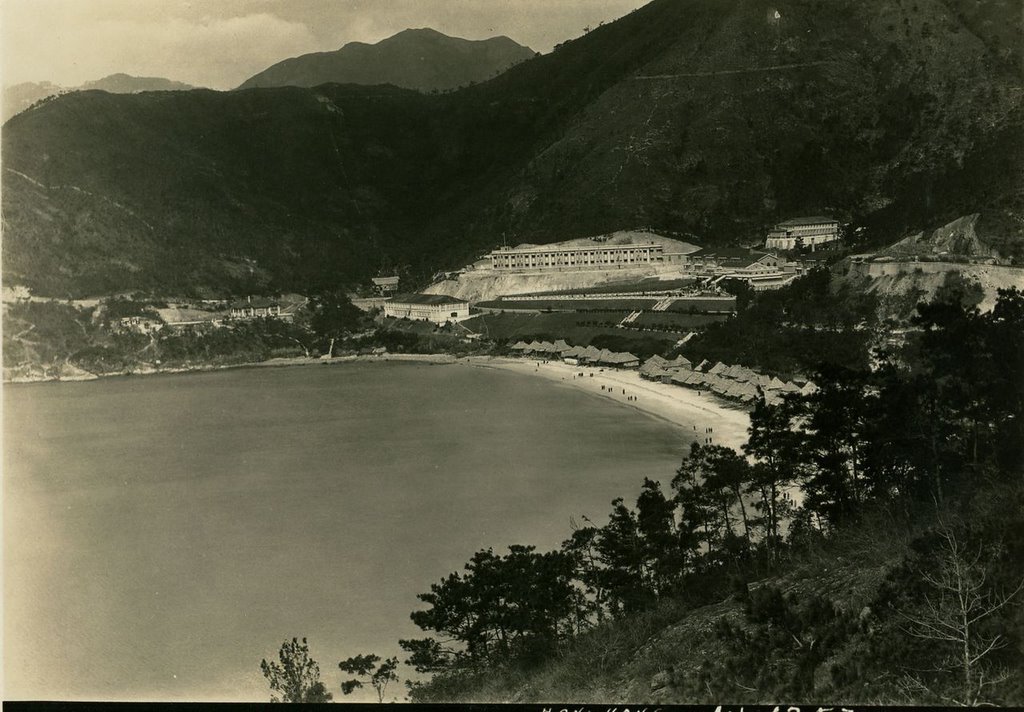
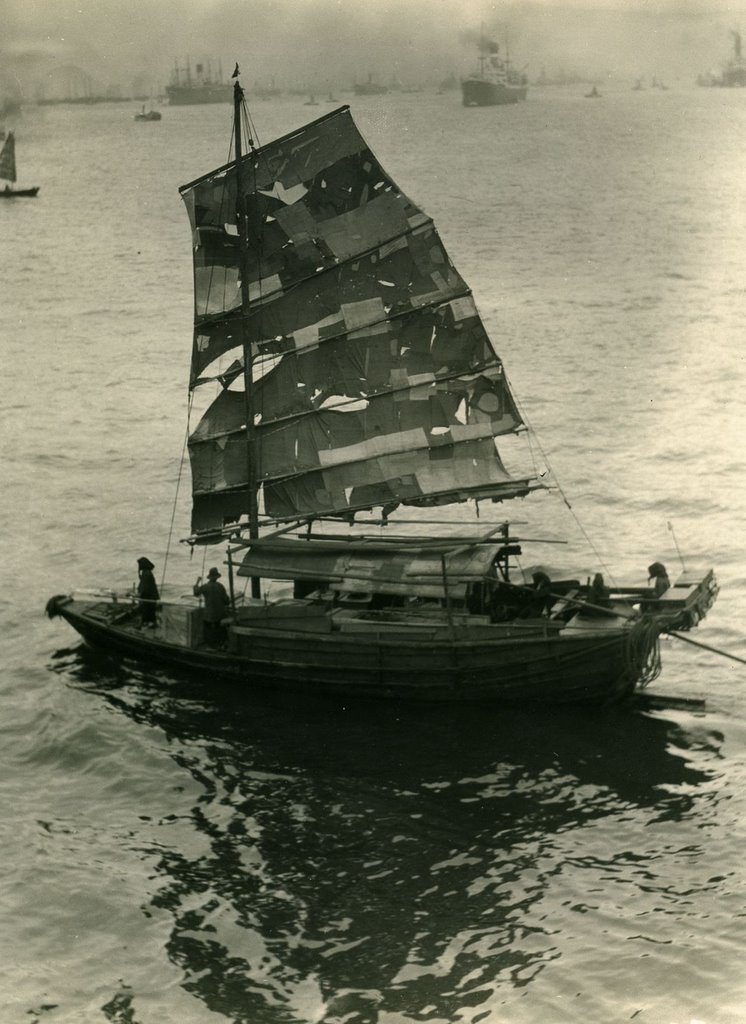
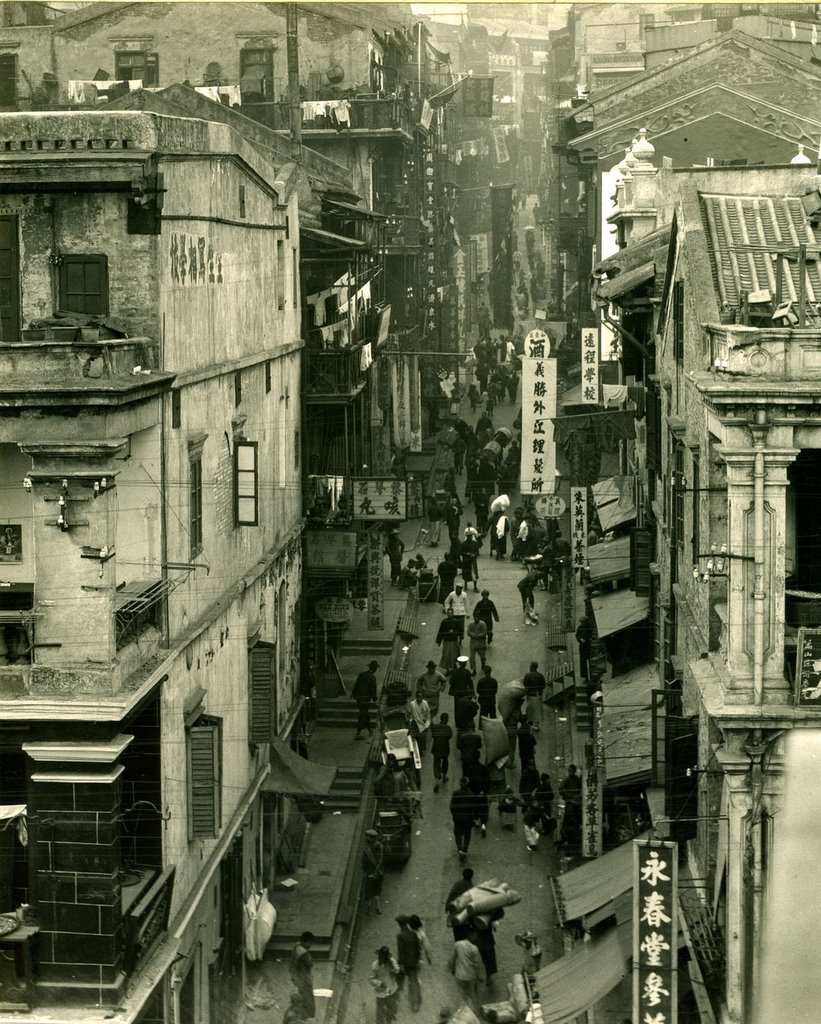
Scenes of Old Hong Kong


Wednesday, March 01, 2006

Another Day Another Doctor

Another little problem creeps up on me, requiring a visit to the ophthalmologist (that's one of the big words I know with four consecutive consonants).

At the office, a modern one in a glass-fronted medical building in the heart of downtown, the receptionists are several, and all are busy. Not efficiently busy, but busily busy with businesslike busyness.

The office has eight doctors, of which it appears four are partners, and the other four are not. The partners are middle-aged Anglo and Jewish males, the non-partners are younger Asian women. The receptionists and billing clerks are mainly Latina and Asian women in their twenties and thirties. Please do not read anything into the demographics of this office, which is a real money-maker with its attached optical shop selling designer frames and specialty lenses. At least they have not yet, I don't think, outsourced anything to South Asia.

One of the receptionists eventually takes my medical insurance identification card for photocopying, and tells me to take a seat. Over there. I do. The magazines on the large coffee table in the reception area are the current crop. I pick up the March issue of the National Geographic. Immediately after I settle into a chair to look at Viktor Yushchenko's dioxin-damaged face, and start reading about the problems in the Ukraine, a pregnant nurse calls out my name and asks for my glasses.

I put the magazine down, get up, hand her my glasses, and blindly follow her vague waddle into one of the inner exam rooms.

Soon a Chinese woman doctor comes in to do the refraction (which, incidentally, my insurance does not cover, and has to be paid for in cash or plastic before I leave).

Hands me a black plastic paddle. Cover your left eye. Can you read this?

Yes.

Now, cover your right eye. What's the smallest text you can read?

E-Z-P-O.

Swings the swivelling multi-lensed machine over my face. I position my eyes at the eyepieces. She clicks once. That's one. Clicks again. That's two.

No response.

She tries again. One, two. Which one is clearer?

Two.

Another two clicks: One and two, which one's better?

One.

Again, one, two.

And so it goes for about fifteen sets of one-two's, until I tell her that there's no difference between one and two.

Turns out my eyesight has not changed since last year.
Eyedrops to dilate the pupils, then she sends me out to the waiting area. It takes about twenty minutes for the drops to do their stuff.

Eventually I am summoned back to be examined by one of the partner doctors. Gives me the glaucoma test, the bright white light lasering into my eye while I try to focus without blinking, on the tip of his nose.

I tell him about the little bump I see on my right eyeball, near the tearduct. He checks it out.

Is it bothering you? he asks.

Not really.

He does not think it's anything to worry about. If it gets bigger or starts bothering me, then I am to see him again. Shakes my hand, leads me to the payment desk. Latina clerk takes my credit card.

I go out into the street. The day is sunny and seems extra brilliant. But that's only because my pupils are still dilated from those eyedrops.