Monday, August 28, 2006

Vacation Photos Link

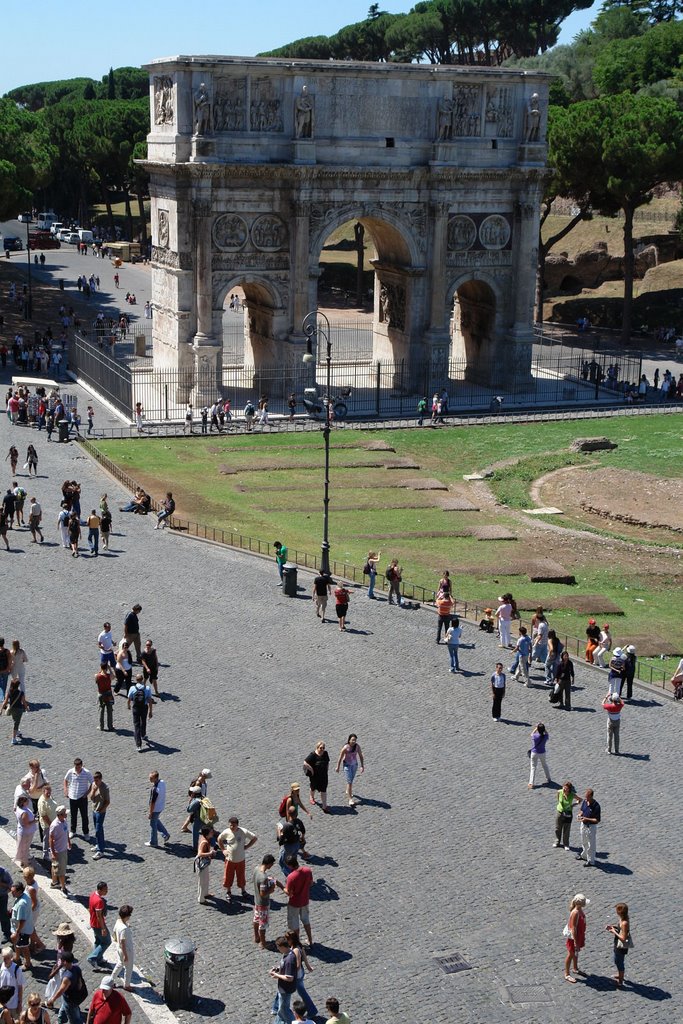
Rome Arch of Constantine

Here's a link to some photos taken on our cruise in the Eastern Mediterranean. You can click either on the photo above, or on the line below.

http://www.flickr.com/photos/79222656@N00/


Saturday, August 26, 2006

Party Time

Tonight our club's big party will take place. So ...

SOUND, sound the clarion, fill the fife!
To all the sensual world proclaim,
One crowded hour of glorious life
Is worth an age without a name.


-- Sir Walter Scott -1771–1832

Friday, August 25, 2006

Photographing Time

Excuse me if I might've covered this topic before.

My interest in photography goes back a long, long way. I think, looking back, that what might have prompted that interest was an older cousin of mine, who owned a fancy camera. It was a Zeiss Contax II with a 50mm Sonnar f/2 lens. A fine piece of mechanical and optical engineering that even in the modern world of whizbang electronic digital autofocus auto-exposure ultrazoom gizmos deserves a second look. (My apologies, I often get carried away talking about stuff like that.)

But it's also possible that this interest in photography comes from a subconscious desire on my part to keep time at bay. Maybe I hoped to just capture pieces of it, if that were feasible, since it is unstoppable. By preserving those moments, some to be cherished in later years, others ordinary, trite or easily forgotten, that mark our brief passage through this world.

I love taking pictures of any kind. Stills, movies, anything that you can turn a lens on. There is beauty in our world, even in the smallest things visible to the eye.

Like art, photography provides the means to imprison that beauty for the future.

Wednesday, August 23, 2006

Rome II


August 10. The hotel breakfast room was on the top floor, reachable by a convoluted combination of elevators and staircases. Bright and cheery, with sheer white drapes over the tall windows, the room looked as if it had once been the hotel roof, and subsequently enclosed when an annex was added to the building. The breakfast offered was continental, but substantial. There was a fine selection of juices, cereals, fruits, eggs, and cold meats, and excellent breads and pastries.

Even at this early hour, in this air-conditioned room, you could sense the heat of the day.

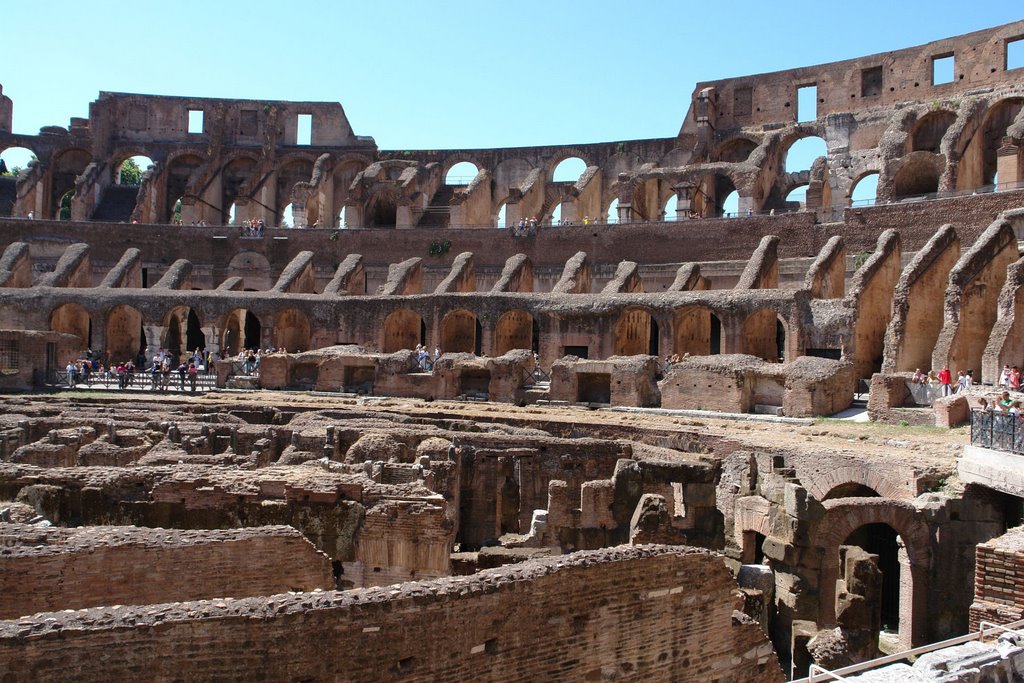
At a tabacchi stand in the Stazione Termini we bought day passes for the Metro. A short subway ride and we were out in the sunshine right across from the Colosseum. Actors dressed as centurions and soldiers of ancient Rome posed for photographs alongside smiling tourists. The line waiting to get into the massive structure (colossal is the right word for it) wound around to the back, a full 90 degrees, which happened also to be about the temperature in Fahrenheit. In the shade.

The ruins are impressive up close. It does not take much of an imagination to visualize the caged wild animals in those underground passages, the gladiators and Christian prisoners, the nets and tridents, short swords and shields, the heavy gates and portcullises, the crowds, the cries, and the blood. Ave, Caesar, morituri te salutamus. Hail, Caesar, we who are about to die salute thee.

The Colosseum, like so many other monuments in today's Rome, including the Vatican itself, has become a tourism moneymaker on a grand scale. Nothing wrong with that, but for those who yearn for a less frenzied appraisal of the glories of a bygone time, this commercialization may strike a sour note. I guess mass tourism can be blamed for that. And for the graffiti. Another word of Italian origin that is now in the English language.

When we had seen what we wanted of the Colosseum and the Arch of Constantine, we decided to forego the passage through the Via Sacra and the Forum in the blistering heat, and descended once again into the depths of the Metropolitano. At the Ottaviano-S.Pietro stop we came out into the sunlight, and there in the distance against the blue sky could be seen several of the statues atop the colonnade of St. Peter's Square. We lingered over lunch at a Tuscan restaurant, where we noted that the clientele was made up mainly of local people, a sure sign of good Italian food. I must acknowledge, though, that I've had melanzana alla parmigiana just as good in a Palo Alto ristorante.

A short walk after that hearty meal, and then we were in the Piazza di San Pietro itself, one of the most beautiful public squares in the world, and there it was, the glorious façade of the Basilica with its great dome towering over all.

The younger ones in our group did make it up to the very top of the duomo, but we older folk who had made that very same hike twenty-two years before decided instead to take it easy inside the crowded basilica.
Set apart by a red velvet cordon and monitored by a young Latin American attendant in a dark suit, a chapel on one side of the massive nave now prepared for 5:30PM Mass. The priest officiated in Latin, and the familiar words brought back poignant memories of my time as an altar-boy.

The kids joined us after their descent from the upper reaches of the immense dome, and sat with us through the remainder of the Mass. That they found us in that crowd is something of a major achievement.

Rome I


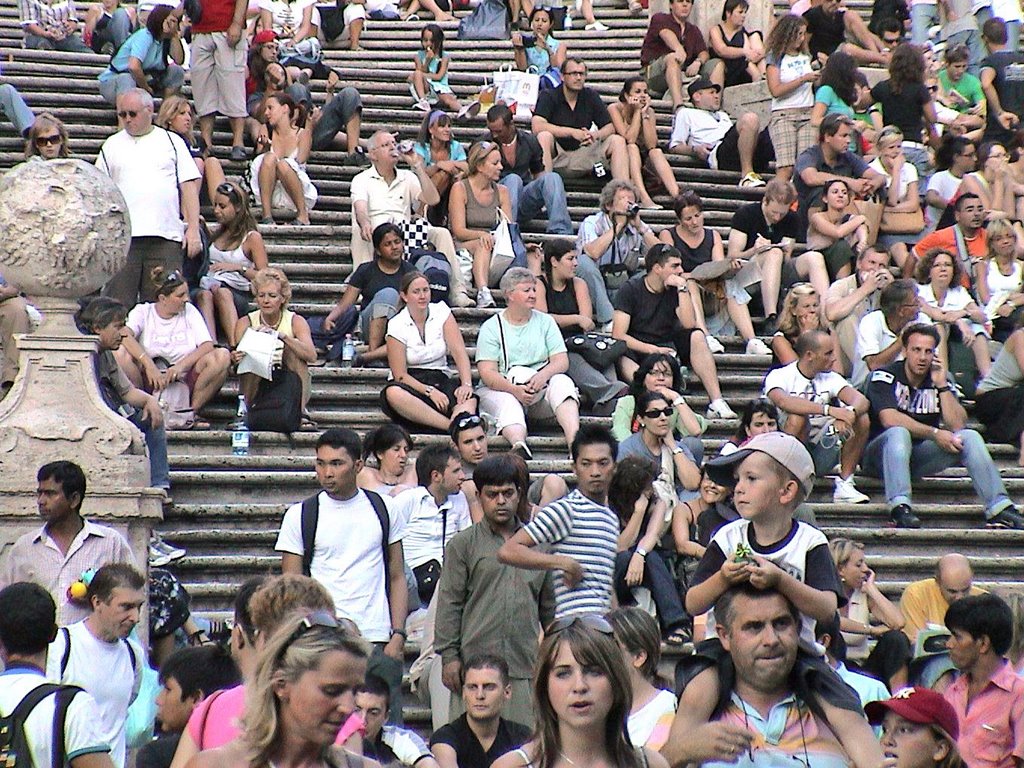
Rome - Spanish Steps

August 9. We had to get up very early to prepare for disembarkation. As with most cruises, the staterooms must be evacuated by early morning so that the room stewards can get them ready for the subsequent crop of passengers for the sailing later that day.

The van was waiting there at the pier, as promised. The drive from Civitavecchia to Rome took about an hour, as traffic was light going towards the Eternal City. Most of the cars on the autostrada were headed in the opposite direction, towards the beaches. It was August, and almost all of Italy goes on vacation in August. And almost all Italian vacationers head for the beaches. Or sometimes for the lakes up north in Lombardy and Piedmont.

In Rome our driver took us around to all the major sights, the Piazza Navona, the Pantheon, Castel Sant'Angelo, the Borghese Gardens, the Pincio and the Janiculum Hills, the Trevi fountain, the Spanish Steps, The Colosseum and the Forum, passing by the long lines waiting to get into the Vatican museums, before ending up for a leisurely lunch in the Trastevere. Even a passing thundershower did not dampen our high spirits as we dined outdoors under an awning.


In the afternoon, we decided to try for the Vatican once more, and as luck would have it, the lines had thinned out by then, and we were able to enter and spend a couple of crowded hours in the museums and the Sistine Chapel.

It was a highly concentrated expedition on our first day in the city, and by around four o'clock we were, as our driver noted, tutti stanchi, worn out and quite ready to check in at our hotel near the Stazione Termini.

Tuesday, August 22, 2006

Malta & Messina

It may be a long, long time from May to December, but September is just around the corner, and the days are getting shorter and cooler around here. And just ten days ago we were sweltering in a Roman August.

* * * * *

So let's now get back to my travel diary.

August 7.

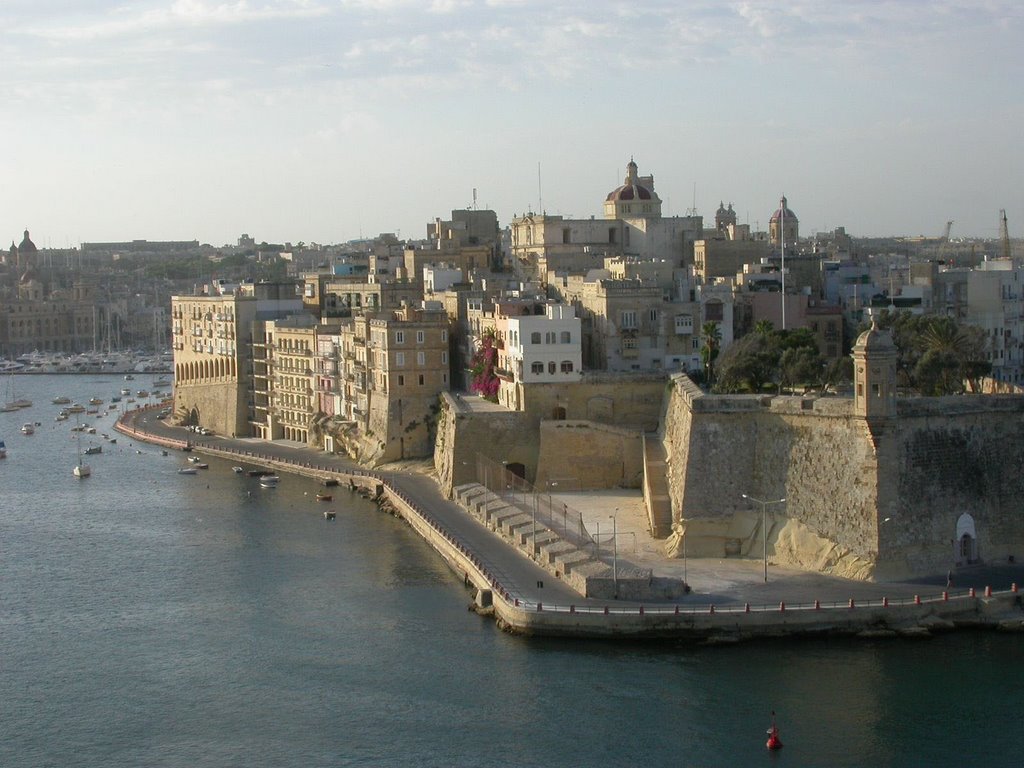
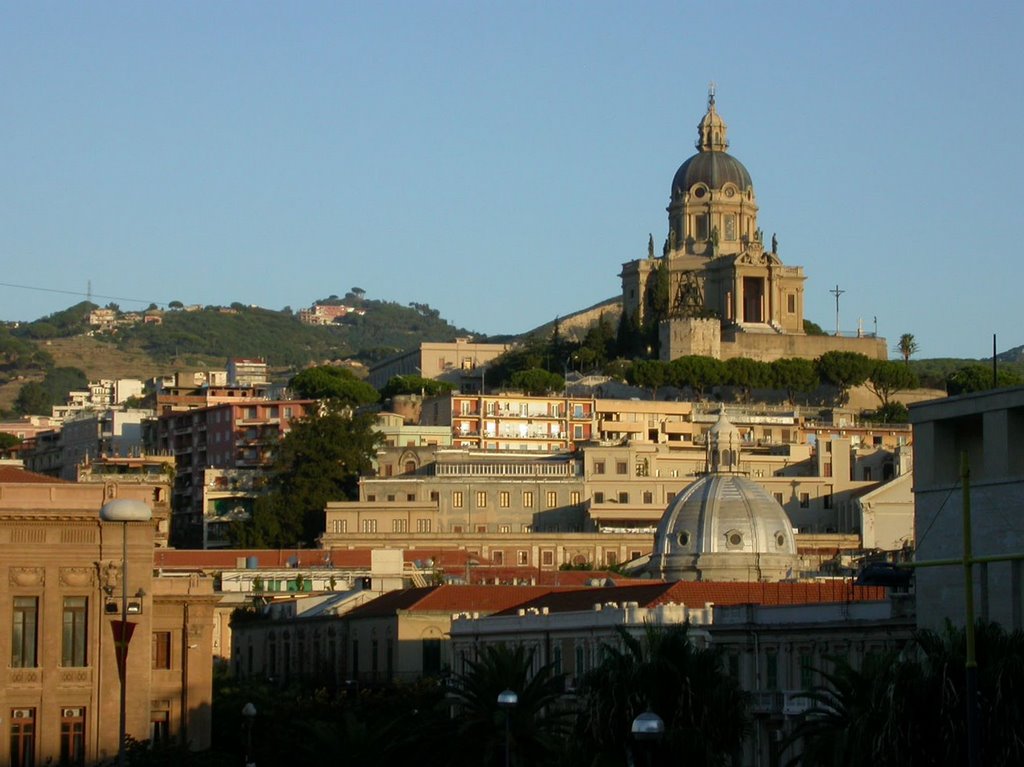
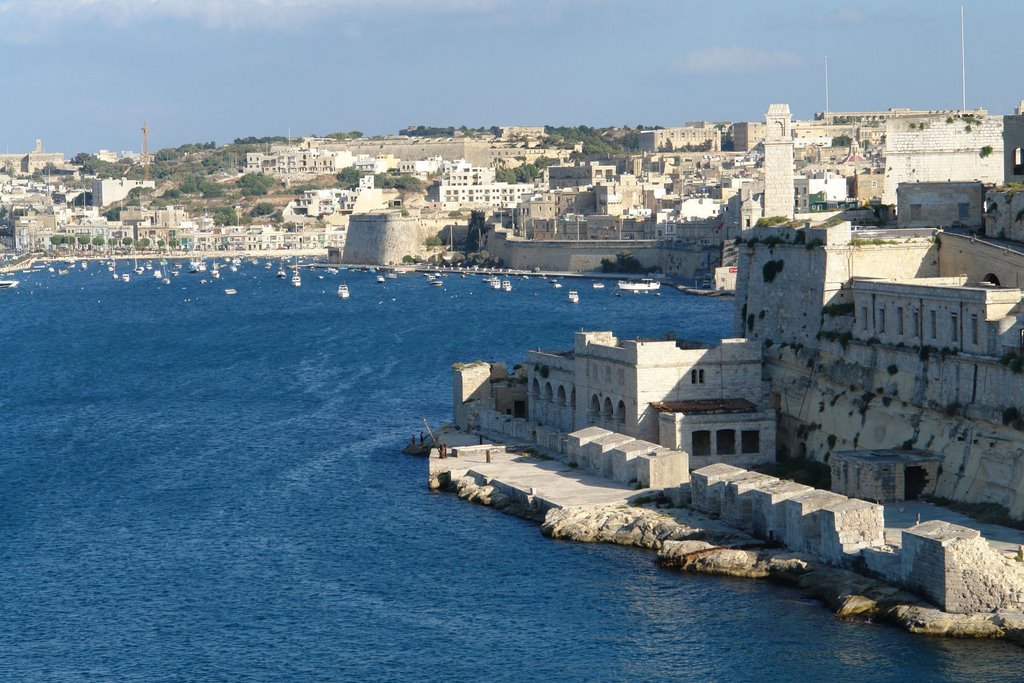
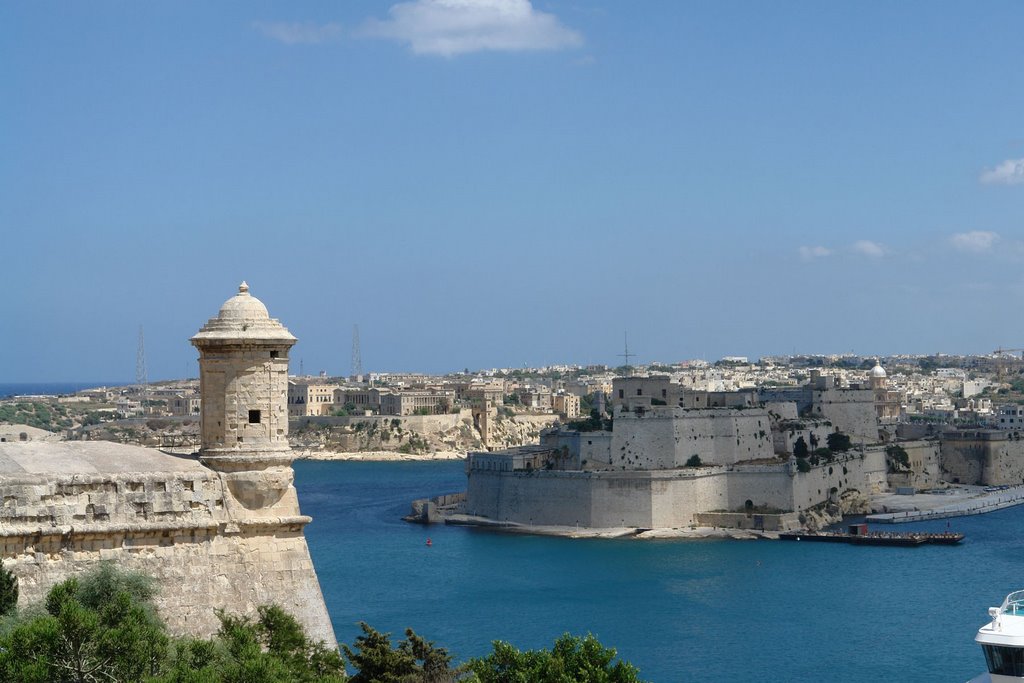
Entering Malta's Grand Harbour on a clear bright morning is an experience not to be fogotten. The city looks like it is hewn from solid rock, and much of it is. The walls and battlements are imposingly medieval and robust.

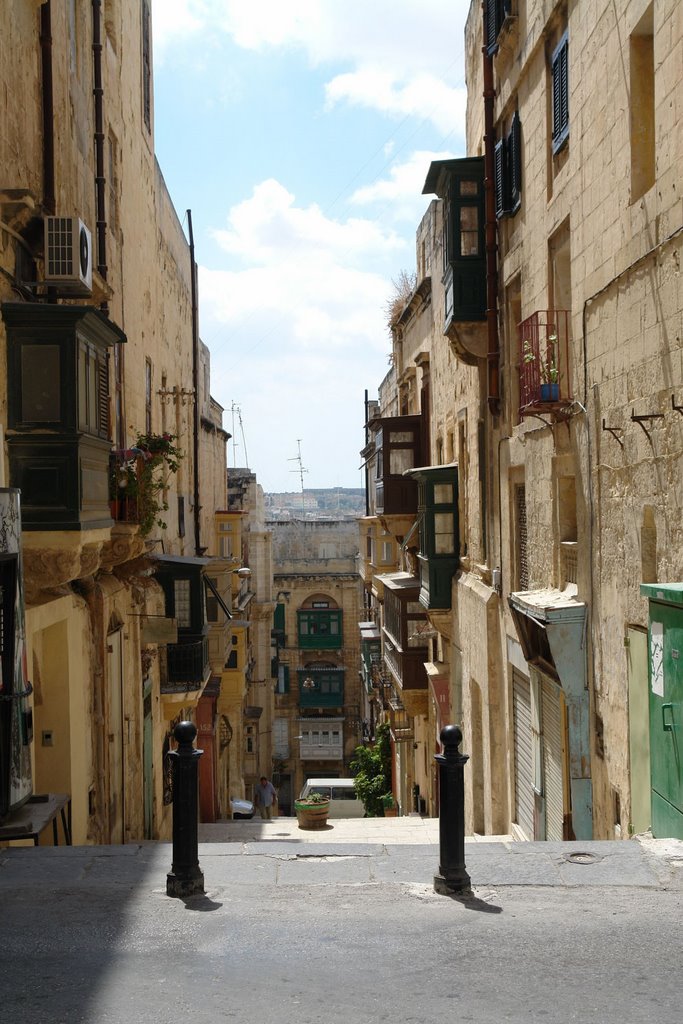
Valletta, Malta is a very small place, and the passengers from one large cruise ship like ours will be quite enough to fill its narrow streets, like a school of fish in a tiny aquarium. The architecture here is Mediterranean. Green-painted bay windows protrude from the houses, much like the ones in southern Spain or Morocco. In the floor of the great Co-Cathedral of Saint John of Malta lie the ornate and colorful sepulchres of the Knights Hospitaller (a.k.a the Knights of Rhodes, Knights of Malta, Cavaliers of Malta, and the Order of St. John of Jerusalem). Inside the Cathedral are two paintings by Caravaggio, which for themselves are worth braving the crowds in order to view. No pictures or videos allowed. Officious guards bark their admonitions at unwary tourists who do not see the posted Verboten sign.

Malta was once a British possession, and signs of the British presence are everywhere. The Maltese language is impenetrable. Some of their words have a lot of x's in them, and sound quite Arabic. Malta has some nice glass products, paperweights and such. Not quite Venetian, but charming nonetheless.

The weather continues to be glorious.

* * * * *

August 8.

Messina, Sicily. Ashore at 9.00AM, and found a telcom provider, where I made a call to Rome to be assured that the car will be there when we arrive tomorrow at Civitavecchia.

The dock is right by the city's municipal government building, and a short walk to the downtown and the Duomo, where at the noon hour crowds assemble in the piazza to watch the show in the belltower. There, on the stroke of twelve, a rampant gilded lion holding a banner begins to roar, several times; then a gilded rooster crows from the ledge one level down; below that a procession of gilded saints move past a seated image of the Almighty, each bowing in turn; while in a window a level below a house rises from the waves. I have no idea what the story is behind the show, and plan to research Wikipedia later to find out.

There are three cruise ships in Messina harbor. American voices are most prominent among the tourists buying shoes.

Sicilians are friendly and helpful. Romans less so.

Saturday, August 19, 2006

Kusadasi & Ephesus

What can I tell you about Ephesus. Here are some of the best-preserved ruins of ancient Rome. Great slabs of marble everywhere, including some of the streets. It must, in its time, have been a truly remarkable city. The guide tells our group that it was a seaport back then, but today the sea is a long distance away from Ephesus. We are led through the usual points of interest: the baths, the public toilets, the brothel sign, the magnificent façade of the Library of Celsius, and finally the amphitheater.

By this hour of the morning the sun is beating down mercilessly on the sweating polyglot tourists with their layers of sunscreen and wide-brimmed headcoverings. There is no shade except in the shadows cast by the columns — Ionic, Doric, Corinthian, whatever — or the occasional marble arch or lintel. Tour groups of twenty or thirty people gather around their guides, absorbing historical anecdotes in a half-dozen languages, and drinking bottled water. Each guide waves a plastic sign with a number to lead his or her group onward to the next station. Sometimes two or three groups are within earshot of each other, causing some confusion.

The Turkish tourism authorities have, in this writer's opinion, not yet attained the sophistication of their Greek counterparts in their efforts to promote tourism. There was a long wait to get through the electrically-operated turnstiles at the site, due to a power failure. They had to get an emergency generator started up to allow the throngs into the place. Each tourist was given one ticket, which served for admission but, more important, as the prepaid pass to the restrooms at the conclusion of the tour. Marble-lined W.C.s manned by unshaven old men with a bad attitude.

Kusadasi is a shopper's town. In Turkey they will try to sell you a carpet every chance they get. It seems everybody has a brother or uncle or cousin who owns a carpet factory, who can offer you a handmade carpet of the highest quality at a fraction of what you might have to pay at home. A visit to a carpet showroom is mandatory at the end of a Turkish tour. And if not carpets, then leather goods, or jewelry.

As I said, Kusadasi is a shopper's town.

Thursday, August 17, 2006

Vacation


I thought I might start this account of our trip from the ending instead of the beginning. Reason is that a large part of the emotional excitement came at the end—if excitement it can truly be called.

I'm referring to the news, on the day prior to our return home from Rome, of the heightened airport security measures resulting from the discovery of a terrorist plot in Britain to blow up planes bound for the U.S.

Throughout the morning, the television in our hotel room kept up an alarming drumbeat of updates about new airport security requirements. No liquids, gels, or pastes of any kind would be allowed on carry-on luggage. Clear plastic bags would be used to carry passports and wallets on board. Anything else had to be placed in checked luggage. And calling the airline to reconfirm our flight or to seek updates required holding times of thirty minutes and more.

But later on, out there at the sweltering Colosseum the long lines of tourists waiting to get inside the famous landmark seemed remarkably nonchalant, as did the throngs sitting on every available Spanish Step in the golden glow of the late afternoon sun. Were any of these people thinking about terrorist plots or airline flight cancellations and delays? Not so far as any casual observer could tell.

Rome in August is typically empty of Romans, and filled instead with sweating sightseers from all corners of the globe. The sign 'chiuso per ferie' (closed for vacation) appears on one out of every two shops and restaurants in the Eternal City. Even His Holiness the Pope has gone off to the coolness of the Castel Gandolfo in the Alban Hills.

Rome was hot, hot, hot. But so were most of the other places we had visited during the previous ten days, starting from Civitavecchia.

Out floating hotel took us past the volcanic island of Stromboli and the Aeolian Isles, and then from the Tyrrhenian to the Ionian Sea through the Strait of Messina, past the Gulf of Taranto, and round the heel of the Italian boot into the Adriatic. By the third morning we were docked outside the ancient city of Dubrovnik, on the Dalmatian coast of Croatia.

All these seas are of course parts of the Mediterranean as any Italian schoolchild knows, and in color they share the various shades of deep blue for which this part of the world has been known from time immemorial. The "wine-dark sea" of the poets.

The Placa in Dubrovnik is just another shopping street, full of souvenir and t-shirt vendors, only more picturesque than most because of its stone achitecture and flagstone paving. Nowadays to walk along the city walls, you have to pay admission, something we had not done back in 1985 when we last visited, and when the place was still a part of the undisassembled Yugoslavia. Most of the damage from the war has been repaired, but here and there are signs of the recent conflict— a bullet hole in a marble wall, a patch on a tile roof.

In the evening, from the ship's rail, I watched the last busload of tourists return from a day-long side trip into Bosnia. Most of the weary passengers waved cheery goodbyes to the tour guide and her driver and trudged towards the gangway, but one elderly couple remained for several long minutes to have their picture taken beside the bus with the guide and driver. There were hugs and lingering farewells. It must have been, I assumed, a very memorable and edifying day for the visitors, who seemed reluctant to have it end. Then the smiling guide gave a final wave, signalled to the driver, and both boarded the bus. After the elderly couple had come aboard the ship, the gangway was pulled up. The ship then edged slowly away from the pier. And into the sunset.

Next stop on our itinerary was the Greek island of Corfu, or Kerkyra, full of the charm of its checkered past, its Venetian history, its stately mansions, and the open air cafes in the pleasant Spianada park. The sound of the cicadas filled the fragrant air with its steady hum. Tourists from the cruise ship scoured the shops, buying everything from jewelry to olive oil soap to plaster statues of Apollo. Many of our ship's passengers came from Spain, having boarded at Barcelona. Their lisping Castilian could be heard in Corfu's sidewalk cafés and coffee bars. They seemed to be quite at home here.

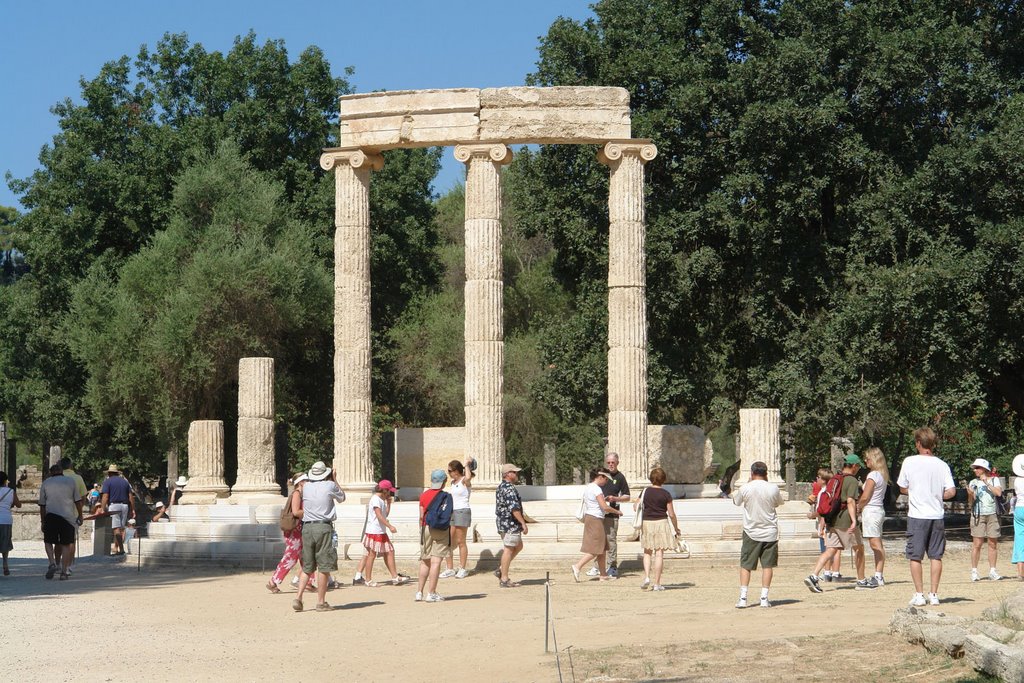
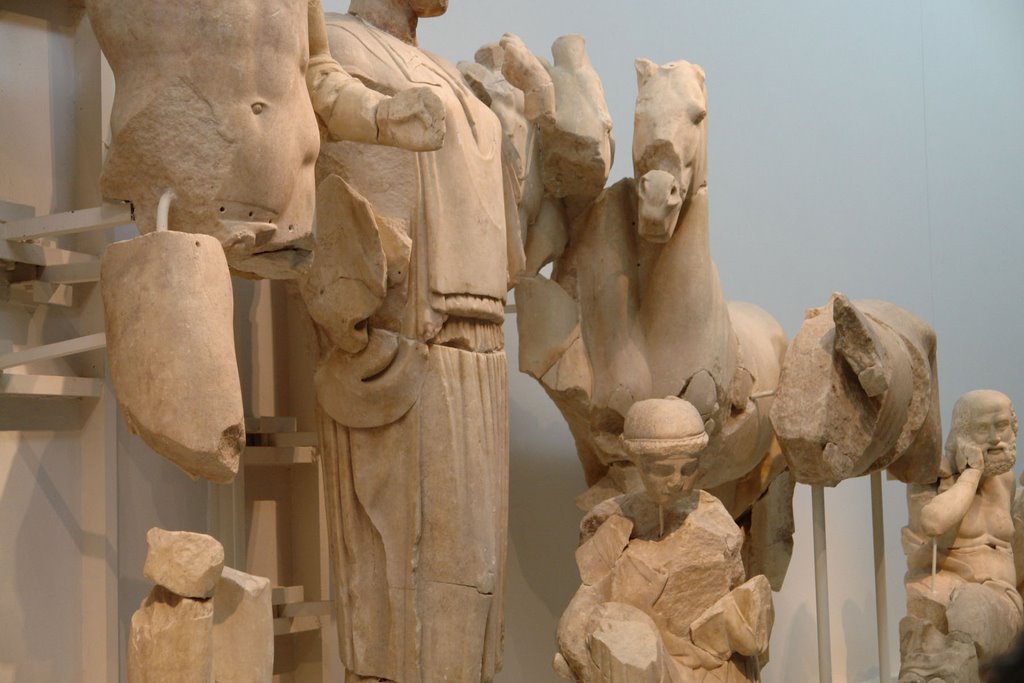
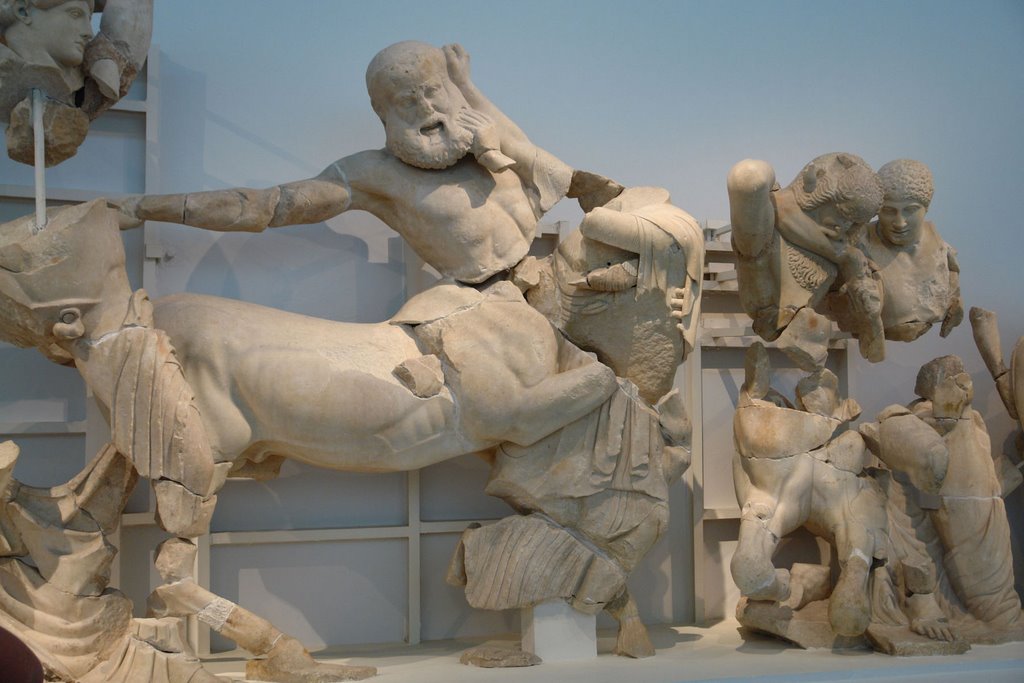
I had never heard of the Greek port of Katákolon until just before we left home on this trip. Now I know it as a small and pleasant village on the Ionian coast, not all that touristy just yet but slowly getting there, and the starting point for cruise line passengers up to the ancient city of Olympia. Olympia's ruins and the museum we had visited once before on a land tour, but for the kids it was exciting to see where the Olympic Games began.

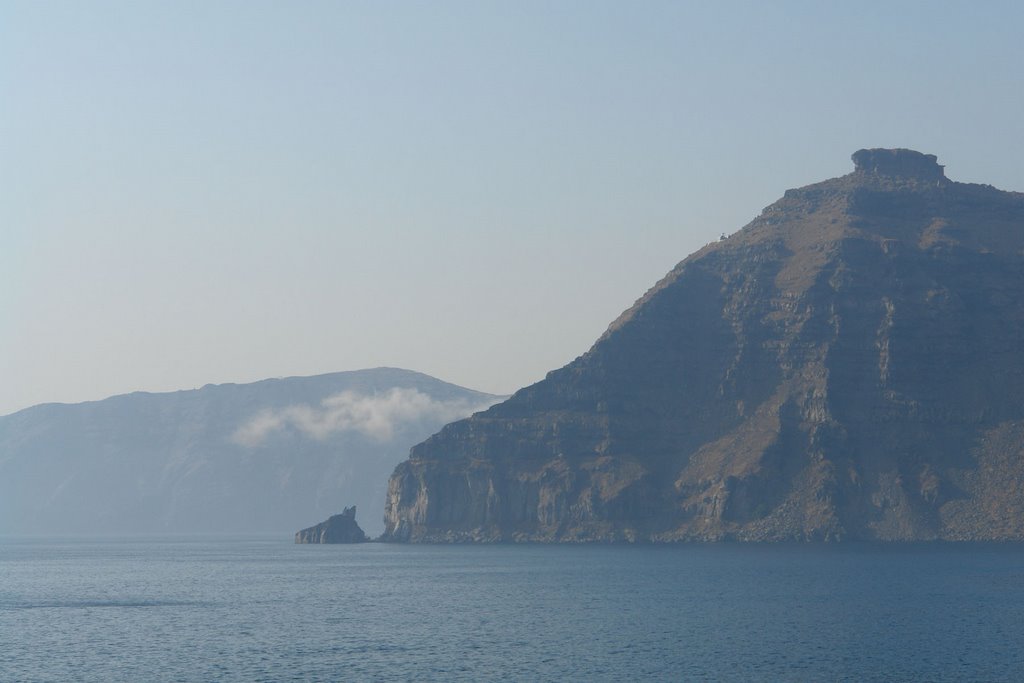
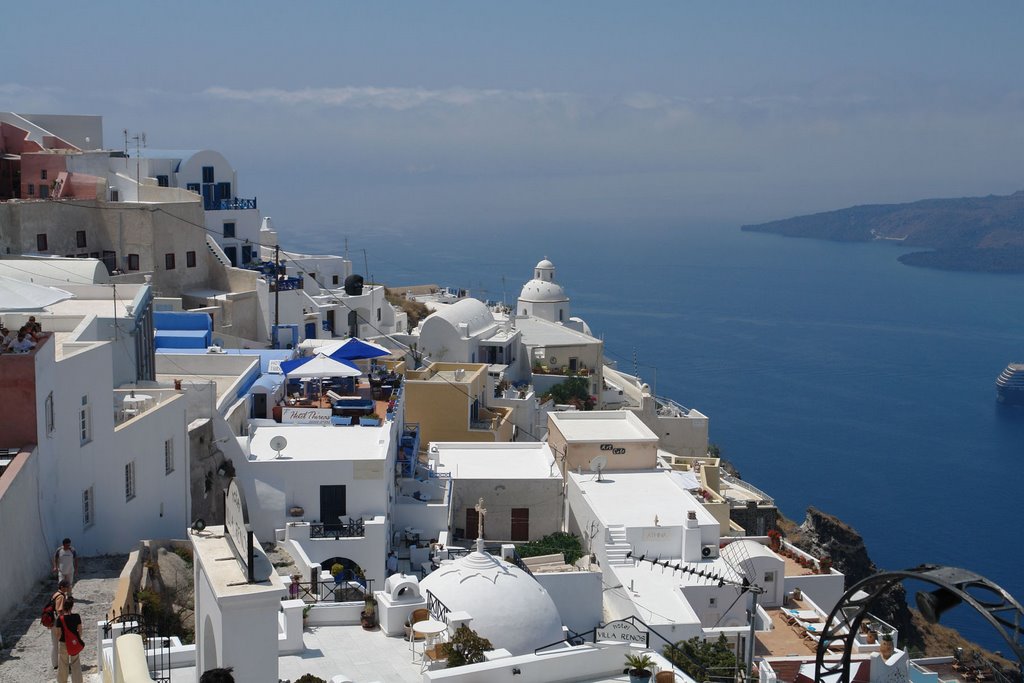
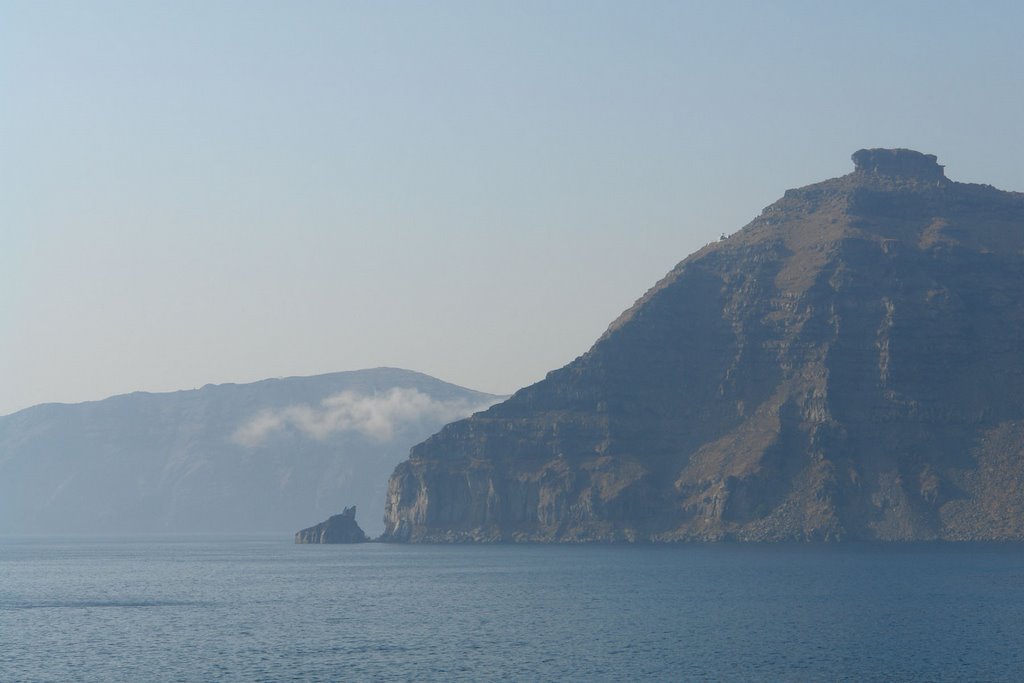
To arrive in the bay (actually the volcano's caldera) of Santorini in the morning is worth getting up early to witness. The bay is too deep for the ship to drop anchor, so it just sort of casually sits there in the middle, while a fleet of tenders come out from the base of the cliff to ferry passengers ashore. Then there's a funicular ride, or else a donkey ride, up the face of mountain to the volcano's rim and the town of Fira, from where you can take some of those spectacular photos that might end up on travel brochures and calendars — white cubist houses and blue church domes, and a sea of such beauty that one cares not to remember that it was created millenia ago by one of the mightiest cataclysms in that part of the world.

In the town itself we find the mandatory souvenir shops, and some excellent restaurants, along the narrow pedestrian streets. But farther away from the center the buzzing scooters, all-terrain vehicles, and cars, coupled with the traffic cop's shrill brass whistle, all combine with the crowds in the streets to produce noise pollution of Olympian proportions on an otherwise placid Aegean island.

The next morning we arrived in Kusadasi, Turkey, the jumping off point for a visit to the fabulous Roman ruins of Ephesus.

Well, now, let's save the rest of this travel diary for another day.

Wednesday, July 26, 2006

Respite

After a week of some of the hottest temperatures ever experienced in the Bay Area, there are signs this morning that the blessed fog is coming back to cool things down.

There's much to be done to get ready for our next trip, which begins Friday. Packing is for me the least agreeable part of travel. My track record in this regard is far from exemplary — I have left out stuff that I shouldn't, while including items that never leave the suitcase. I've tried making lists — they don't help much. One suggested solution is to unpack, and then repack, but that's not a foolproof remedy.

This will be our granddaughters' first visit to Europe, and they are really excited about it. The older one starts college this fall. She may not be traveling very much once classes begin.

My sister and her family are vacationing in France. They have been trading residences for the last several years with French families, and they really enjoy that kind of vacation. Were my wife and I a little bit younger, we might be willing to try it as well.

* * * * *

The home video I made of our cruise to Alaska with my wife's schoolmates has now reached most of them. They've been kind enough to email us with compliments. The editing part was difficult, if only because there were so many scenes that had to be left on the 'cutting room floor' that I had wanted to retain.

But there is just so much your viewers can absorb without being bored. Nice scenery is pleasant to watch, especially when accompanied by suitable music, but for the final version to be worth watching, heavy trimming is always the best solution. Amateur filmmakers like myself can often get carried away with including too many pretty scenes one after the other.
Thankfully, the charming subjects of this video effort, and the valuable help I got from every one of them, kept up the level of interest and so made the project a success.

* * * * *
Today is my brother's birthday. He is in Texas babysitting his grandchildren while his physician daughter and her husband attend a conference.


Tuesday, July 18, 2006

Bird Story

A couple of years ago we received as a gift from friends a pretty bird feeder of wood and acrylic. It had a spacious bin, which when filled would dispense enough birdseed out its bottom onto a wooden tray fixed to the base. Threaded through this base was a wood dowel that projected horizontally on two sides to give the birds secure perches where they could gorge their birdie stomachs in relative safety. The feeder was hung using a bent wire coathanger from a 2x6 beam above the deck, which kept the feeding birds beyond the reach of our cat.

The feeder withstood the elements well, surviving a stormy winter with hardly any damage, though a bit of mold and mildew needed to be cleaned out in the spring.

The following summer, while we were out of town, some large creature, perhaps a woodpecker or a squirrel, ate away at the wooden base, and in a matter of weeks the rim of the base had been completely eaten away, and the birdseed kept spilling over the edge.

We never discovered who the culprit was who demolished the beautiful feeder.

Our next bird feeder was plastic, and was in the form of a transparent upright tube, from which projected six little perches beside round windows through which the birds could feed. This was not as easy to fill as the wooden feeder, as the screw-on lid at the top was only about two inches wide, and spillage resulted. Also it did not hold as much birdseed as its predecessor, thus requiring a higher level of maintenance than before. Besides, it was lighter in weight and swayed a lot in the wind, though this did not seem to bother the birds, who must have enjoyed the seesaw ride as they fed.

The next winter we forgot to take the feeder down before a storm. It flew away in a high wind and ended up broken into pieces in the bushes far below.

Our newest feeder is also plastic, in the shape of a gazebo. It too is lightweight, but it seems to be rugged enough, and it can be quickly replaced if it is damaged beyond hope of repair.

I can see the birds feeding from my kitchen window. I delight in watching them, never mind that they leave their calling cards on the rail of the deck. Most of the birds that show up to feed are tiny ones, finches and sparrows mainly, but once in a while we get some big guys, like bluejays and robins, who have a hard time finding a clawhold on the narrow platform holding the birdseed. They are heavier, and the bird feeder tilts at a sharp angle when they land there, spilling seed.

What I enjoy watching particularly is the way a tiny bird approaches the feeder. It comes sailing across the backyard from the far end, from beyond the live oaks, the fig tree, the jacaranda, and the nearby Brazilian pepper tree, heading straight in the direction of the feeder. I would estimate its airspeed at about 30 m.p.h., maybe more. A tiny grey bullet.

It does not land on the feeder tray right away. First it settles on a bougainvillea branch, or on a vine-like wisteria twig, within a foot or two of the feeder. From there it hops onto the feeding tray. It pecks a number of times, looks up, looks around, pecks a bit more. Repeats the process a few times. And then, like a shot, it takes off again.

It heads back in the direction from whence it came. Its flight is not as straight as before. On its outward journey, it rises, dips, rises, and dips. It's as though, having taken on an added load of fuel, it requires a bit more wing effort and lift to stay airborne, and in a straight line.

Monday, July 17, 2006

EBay


Nearly five years ago I signed up for an eBay account.  Mainly I was interested in picking up vintage cameras and other photographica for my collection.  Then as my positive feedback counter grew with a succession of good deals, I began to seek out other things to bid on — computer software and hardware, mainly — and also to get rid of some items that I no longer needed, but that somebody out there might find useful.

With experience I developed some skill in putting together the right words to attract prospective bidders, made decent digital photos of the items up for auction, and for a period of about a year, managed to clean out from my closet a substantial amount of useful, and often pristine, items to make room for the stuff I had been successful in bidding on.

I became something of an expert packer, using bubble wrap or plastic 'popcorn' to insulate fragile items, made sure that the shipping cartons were securely wrapped with sturdy adhesive tape, and did all I could to ship them out quickly to keep the buyers happy.  For my efforts I garnered a neat blue star in recognition of the couple hundred favorable feedback comments I received from sellers and buyers alike.

The most tiresome part of the process of selling on eBay was having to ship the items to the winning bidders.  It meant I had to take the parcels down to the post office, or in some cases, to the local parcel service.  The lines at our local post office were often long, and if the parcel had to go overseas (or even to Canada) it required a customs declaration form to be completed, and sometimes insurance coverage as well.  A couple of times I miscalculated the weight of the parcel, and ended up paying somewhat more than I had charged the buyer.  For one buyer in Japan, the cost of shipment by express airmail came to equal the declared value of the item itself.

Nevertheless, during the time that I was more or less an active trader, I enjoyed the experience, and relished building a pretty good reputation among the eBay community.

Now, if only I could find an easy way to flog some of my unwanted books, without having to list them one by one on eBay.  Maybe our local library might be willing to take them, you think?

Sunday, July 16, 2006

Matches


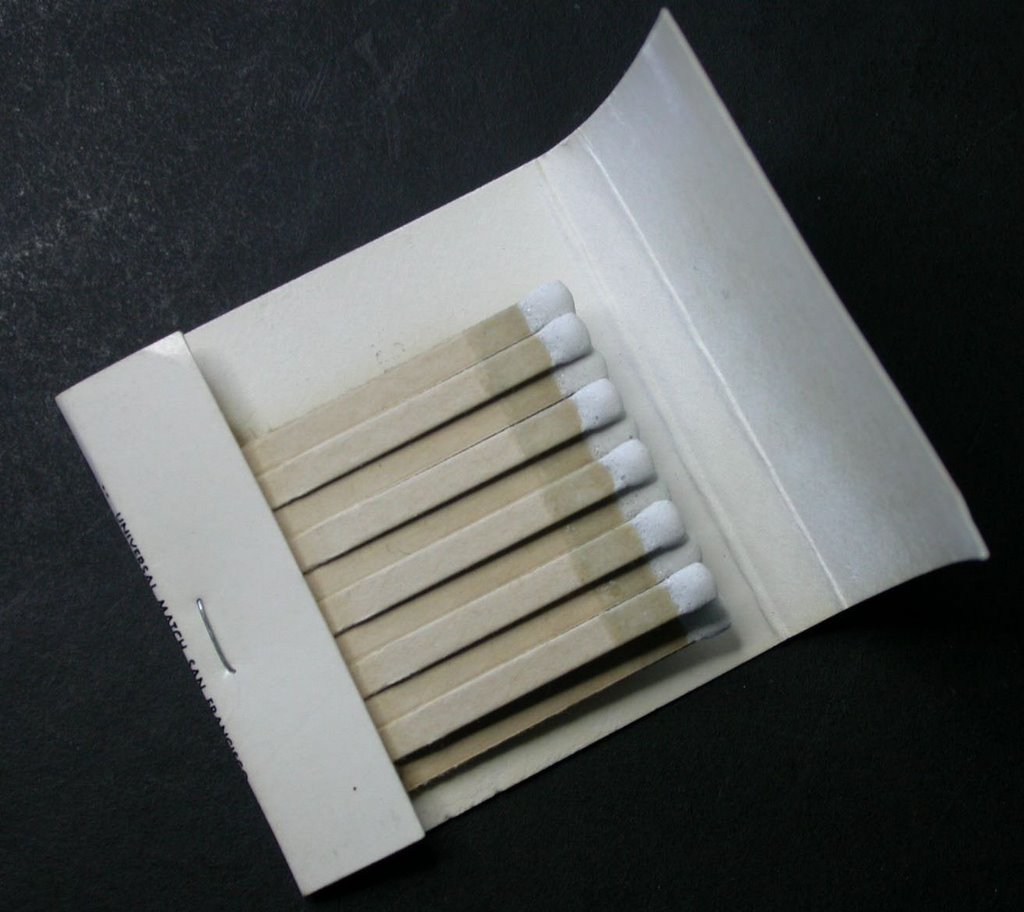
Ever take the time to examine a book of paper matches? Here is another example of a simple object which most of us take for granted, yet which displays a great deal of ingenuity in its design.


It is made up of two parts: a rectangular piece of heavy paper or card, folded in three places. The lower fold encloses two square pieces of card, each of which has been given thirteen equal and parallel incisions. The cuts are not through the entire card, so that the base is intact, and forms the matrix of the resulting fifteen matches on each card.

In the manufacturing process the fifteen matches on each card are offset ever so slightly, and this offset, in a fashion similar to the arrangement of the fifty stars of the American flag, produces two rows of matches on each card, one of eight, and one of seven. Thus in the normal 30-match matchbook, when viewed from the top of the striking tips of the matches, will show an arrangement of 7-8-7-8. (Our flag of course has 6-5-6-5-6-5-6-5-6 stars displayed.)

The two cards of fifteen matches each are held in the lower fold of the matchbook cover by means of a small metal staple the size of the staples that hold a tea-bag's thread to its label and to the bag itself, as I have outlined in a previous posting. (One generally does not pay much attention to tiny staples such as these, but they are ubiqitous, if we only bothered to look. We are indeed a staple-bound society.)

We were advised as children never to play with matches, and that is surely good advice. But we all subsequently learned how to peel off a match from a matchbook, strike its volatile head against the black sandpapery strip along the lower edge of its cover, and cause the phosphorus-impregnated head to flare into flame.

I must regrettably admit that in my time I have held that flame to the end of more than a few cigarettes and briar pipes. So much so that in the course of my travels I have collected matchbooks and matchboxes from all corners of the globe. They have become nostalgic items, like the immigration stamps on my passport.

Saturday, July 08, 2006

"Foreign Correspondent"

Warm, gorgeous weather this week. Summer reading continues with Alan Furst's "Foreign Correspondent". Just about halfway through book. Tough to put down. Way the man writes makes you care about the characters. Italian emigrés in 1930s France. Settings are authentic, well-researched. Author has lived in France, knows Paris well, all the arrondissements, the bistros "Chez this" and "Mére that". Highly recommend. A while since I had a good page-turner keep me up into the small hours.

* * * * * *

And added to the enjoyment of a darn good read -- the heady perfume of star jasmine carried into the room on a light summer breeze.

Wednesday, July 05, 2006

The Poor Thing

It comes every morning, poor thing, looking thinner and thinner.  Its plastic raincoat barely covers its meager form as it lies there at the front door, begging to be picked up. Over the past several years it has gone from a robust, healthy creature filled with joy and hope and laughter, to this impoverished and skimpy shell of a being, barely able to hold up its head against the terrible forces arrayed against it.  Whatever sustains it, including the hefty price I contribute towards its upkeep and survival, has been steadily diminishing over time.  One can see the deterioration, even daily it would seem.  

It is very sad.

It is the San Francisco Chronicle, our newspaper.

Tuesday, July 04, 2006

Carthage, Tunisia


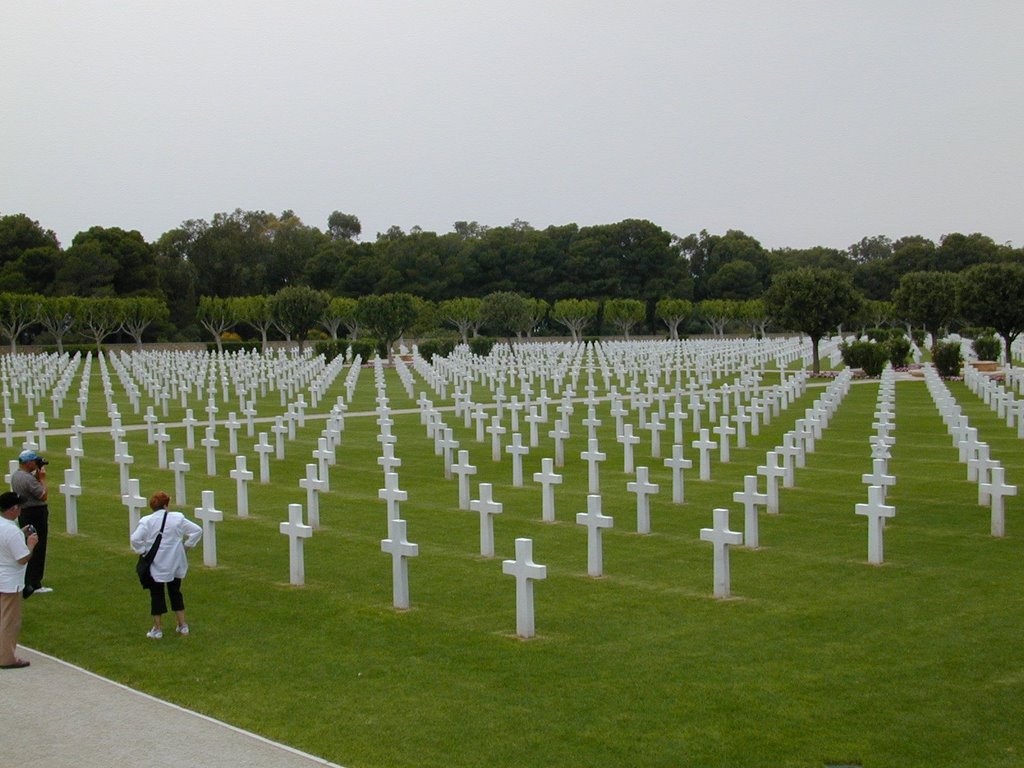
This is a photo of the American Military Cemetery in Carthage, Tunisia. We visited there in 2000.

User's Guides


So who looks at user's guides and operating manuals anyway?

Some of my friends have videocasette recorders that they bought a decade or more ago. Somehow they managed to get them hooked up to their television sets. Mainly their VCRs are used to play rented VHS movies, which are nowadays obsolescent (if not actually extinct). They have never figured out how to record a program off the air. If they know they will not be able to watch a favorite program at its scheduled broadcast, they will ask a friend, or a savvy younger family member, to do the recording for them on another machine.

In one case I know of, the LCD display on the VCR blinks steadily at 12:00 because the owner never figured out how to set the correct time, and had never once looked at the manual since it came out of the box.

But then who am I to talk?

I may have a shade more knowledge than the average guy of my generation about electronic gizmos such as digital cameras and camcorders and home computers, but there are other electronic appliances around the house whose many-faceted features I have not mastered. And the odds are that I probably never will.

Take our fancy-schmantsy microwave oven, for instance. We use it to warm leftovers, to cook a bowl of oatmeal for breakfast, and once in a while to defrost frozen meat. Need a cup of hot water? Just nuke it in the microwave for a minute or two. These are the things most people use that sophisticated time-saver for.

But this hi-tech machine has at least a half-dozen other buttons that we never use, or don't know when to, or even understand why they are there: "Sensor Reheat", "Combination Roast", "Sensor Beverage", "Sensor Popcorn", "Sensor Cook", "Time Defrost", "Temp Cook/Hold (probe)", "Start Delay (reminder)".

"Sensor Popcorn?" Heck, we never eat popcorn. And what is "Combination Roast"? Can you actually roast meat along with potatoes, green beans, and carrots in combination in the microwave oven? Is that what that button is for?

And then on our regular oven, what is the difference between "Convection Bake", "Convection Broil", and "Pure Convection Broil"? And how do they differ from the plain "Bake" and "Broil" buttons next to them?

And take the cell phone. It's now a miniature computer, radio, camera, telephone directory, wireless Internet connection, calculator, dental appointment reminder, alarm, and God-knows-what-else all rolled up into a piece of plastic and metal not much bigger than a box of kitchen matches. You can spend a couple of days and still not figure out all its complicated features.

And the list goes on and on.

Who on earth has the time to read manuals these days?

Have a wonderful Fourth of July!

Monday, July 03, 2006

Coincidences

We may call them coincidences, or strange accidents, or even (Heaven forbid) the wild imaginings of a confused mind, but I have a suspicion that there may be more to them than meets the eye. Lately, to my increasing chagrin, these incidents have been happening with greater regularity.

Of course you don't know what what I'm talking about. How could you? I have not yet described these remarkable, oh, let's just call them flukes, for want of a better word.

Here's one recent example.

I am reading the newspaper, and my eye happens to fall on a word, an unusual proper name, Gilhooly, in a letter to the editor. A short time later, or sometimes even immediately afterwards, this same unusual name comes to my attention from another source, in an entirely unrelated context, and in reference to a completely different person or thing. In the Gilhooly example, this word showed up on my car radio that very same afternoon. The second Gilhooly appearance had absolutely no connection in any way with the first. There was also no remote possibility that there might have been an inadvertent transference in my memory from one Gilhooly to the other. It was very uncanny.
Or take last Saturday.

I was thinking about making cheese toast for lunch. (I happen to make very good cheese toast — sharp cheddar, Colman's English mustard, a pinch of baking soda, a little flour and sweetened condensed milk, one egg; all these mixed well into a paste and spread thickly on slices of sourdough bread, and then baked for six or seven minutes under the broiler of an oven.)

I got all the ingredients together and began the process. The TV was on. And suddenly it was there on the TV screen — a commercial for California cheddar cheese.

Such strange coincidences have been happening with surprising regularity of late.

Makes one wonder. What can it all mean, assuming there is some meaning?

Maybe I should quit watching Krzysztof Kieślowski movies or reading José Saramago's books?


Sunday, July 02, 2006

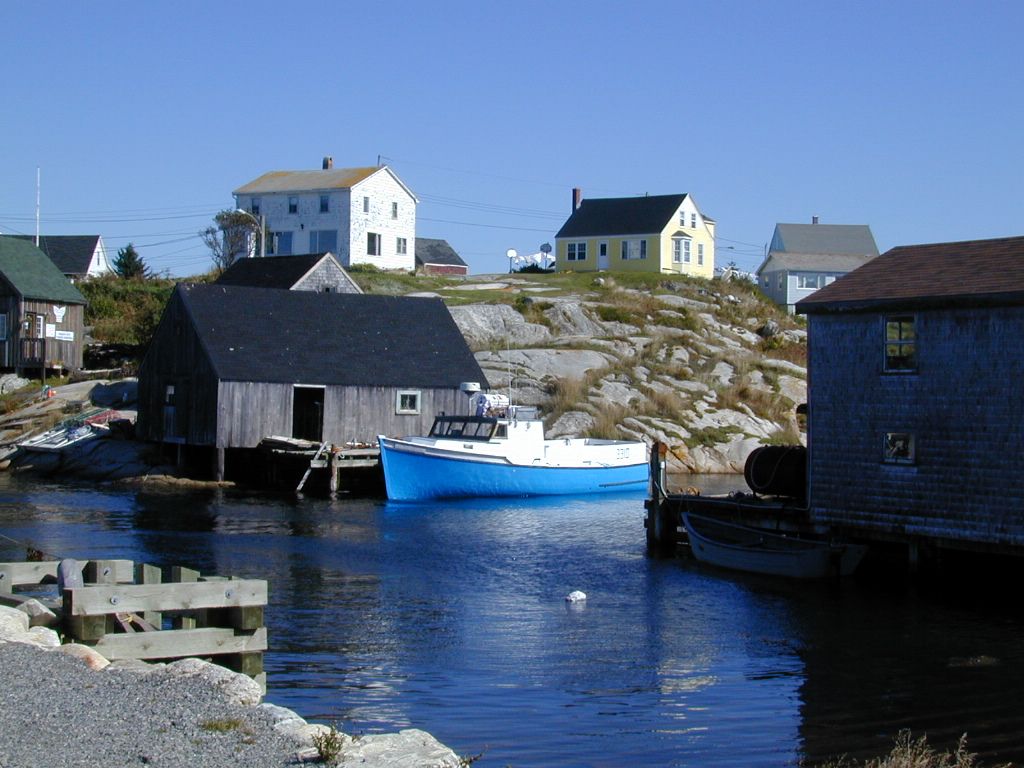
Peggy's Cove, Nova Scotia

Mondello, Sicily

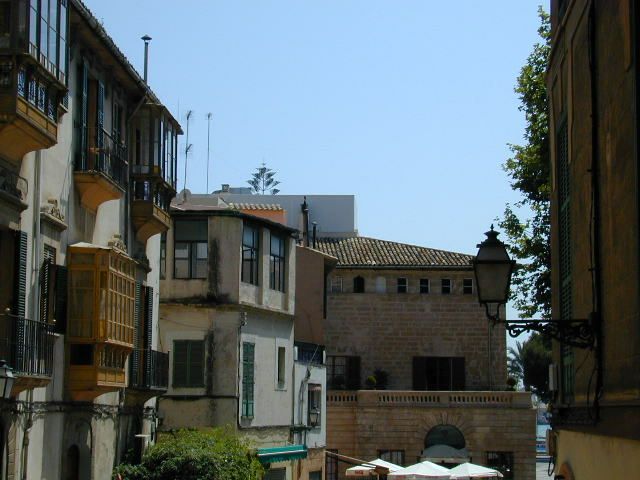
Palma de Mallorca, Spain

Peggy's Cove, Nova Scotia

Saturday, July 01, 2006

Viva, Portugal!

Well, what d'you know!  Portugal just beat England, with Ronaldo's penalty kick, and Portugal have entered the semi-finals of the World Cup.  

Viva, Portugal!

Thursday, June 29, 2006

Istanbul 1995


Friday May 19

The sound and light show at the Blue Mosque could be heard from the roof terrace of the Ramis Restaurant where the four of us had dinner. The restaurant is a short walk from the Valide Sultan Hotel, which was built only a few months ago. Our rooms smell of fresh paint still. The rates are very reasonable, especially when compared to the smaller and less attractive Alp Guest House where we had stopped on first arriving in Istanbul. The whole area behind the Blue Mosque abounds in cheap bed-and-breakfast places that seem to cater more to the younger backpacking crowd.
/>
Saturday May 20

At five in the morning the loudspeakers from the minaret of the mosque blare out the call to prayer. We had breakfast at the hotel — toast, cereal, hard-boiled eggs. Then we went out to the square between the Sultanahmet and Ayasofya mosques. From there we followed the tramlines on Divan Yolu Caddesi to the covered market, spotting a few likely restaurants along the way, for future reference.

The bazaar has 18 entrances and 4000 shops — a veritable nightmare for non-shoppers like me, and a paradise for shoppers like my wife. After an hour or two of braving the crowds we went downhill in the general direction of the Bosphorus and the Galata Bridge, and lo and behold, we found ourselves at the entrance to the Misr Casesi, the Egyptian Spice Bazaar, through which we wandered, buying some dried fruit and spices, and meeting some Portuguese tourists. The bazaar opens out onto the waterfront with the New Mosque to one side and the Galata Bridge right in front.

All around are tourists galore, alongside shoeshine boys, and sellers of punch in colorful traditional garb.

A bright day, warm and a bit hazy. We walked to the ferry piers, but not knowing the language or their destinations, did not venture aboard any of the ferries.

We took a taxi back to the Blue Mosque, which upon first entering would have been much more impressive were it not for the major flooring construction that required the area beneath the huge dome to be cordoned off. From there we walked to Topkapi Sarayi ($5 admission) and spent the better part of several hours touring the museum. We were charmed by Turkish kids wanting to practise their English on us.

Wednesday, June 28, 2006

Homage to E.H.

It is night.  The cat makes its rounds through the stillness of the night.  It pads across the deck on its white paws, not caring what anyone thinks of its leaving paw marks on the clean, not-well-lighted wood of the deck.

The cat scratches the glass of the window.  It seeks the food it needs to sustain its nocturnal rounds, as it does very day.  It has come for the food in good times and in bad.  These are good times.  Later it will be bad.

The cat finds its food in the dish set outside the door.  It eats hungrily, for it has had nothing to eat since the previous night.  It is a medium size cat.  Its calico pelt hides it well in the places where it spends the nighttime hours.  There are enemies out there in the dark.

It eats its fill, and then leaves.  No one knows where it goes.  Night after night it comes, eats, and leaves.  Not shoots and leaves, señor.  It eats proper cat food.  Sometimes the food comes in cans.  Other times it comes in large paper bags with the picture of a happy kitten printed on the outside.

The cat has not eaten all of the food.  Its stomach is filled, and it leaves, and leaves part of the leavings as leftovers in the dish which has been set out to feed it.

The stillness of the night is wounded by sounds of quarreling animals.  Perhaps the animals are mating, for it is spring, and animals in the wild often mate in the spring.  As they also drink from it.

In the darkness, a family of beasts arrives.  They have snarling faces with white burglar masks over their dark eyes.  There are three of them, two large, one small.  They eat the leftover cat food in the dish.  They drink the water.  Their tails are bushy and have stripes.  They have very long claws that can tear a can open.  One does not confront beasts such as these.  Not in the night.  Not unless one has a firearm.

The cat does not appear the next night.  Or the next. Or the one after that.

The food that has been set out night after night for the cat is eaten.  It is eaten by the family of bandit beasts, who leave their paw marks and spilled food across the formerly clean, not-well-lighted deck.  No more food is put out for the missing cat.

One wonders about the cat.  Has it, too, become cat food?

Monday, June 26, 2006

Politician-speak

Politician on TV (really, cross my heart!):
"Nobody doesn't think that nothing shouldn't be done."
(I can't remember what the topic was.)

Friday, June 23, 2006

Italia, con amore

My wife's cousin in New York just returned from a vacation in Italy. She had some wonderful stories to tell, about the travails of traveling with her elderly aunt, about World Cup fever and inattentive waiters and cooks who forgot their hungry customers' orders because they were glued to the kitchen television set, and about some kindly British ladies on the bus who were so solicitous of the two of them.

They visited Tuscany and Umbria, Rome and Naples, and acknowledged that the Italians are much, much warmer towards foreign visitors than are the French. Senza dubbio!

In Florence, the lady in question was determined to visit the Church of Santa Croce. But a sign posted on the door said that the church was closed due to an historic event. She assumed that Italy was playing in an important World Cup match, and so no one would be expected to be in the church. Only later did she discover that the "historic event" was just a soccer match between two local teams.

Bella Italia.

Wednesday, June 21, 2006

Heat

A sweltering day.  Not a cloud in the sky.  No fog in the City as I drove in, intending to visit the Monet exhibition at the Palace of the Legion of Honor. Got stuck in traffic as I exited the freeway onto Bryant and then headed up Third Street.  It was lunchtime; maybe that was the reason for the crush.  Cars to the left and right of me tried to cut into my lane.  I let them in, and they got stuck in the "Keep Clear" zone at the intersection as the traffic lights turned red. The lights were slow to turn green all the way towards Market Street. Not a good day to come into San Francisco.

Financial District today has a whole different breed of office workers compared to when I was working; they dress so differently now, especially the young women who display such a surplus of epidermis.  How do they get away with it?  And those tattoos!  

Decided not to try to find parking downtown, and drove up Pine Street all the way to The Richmond.  Had lunch at an Indonesian café on Clement Street.  Did some shopping there, then decided to head home, and forego seeing the Monets. It was much too hot.  The plastic bottle of ice water that I had brought with me was hot by the time I got in the car again.  

No pictures today, not much accomplished on the Day of the Solstice.

The Magic Half-Hour

Do not go to a Chinese restaurant between 3:15PM and 3:45PM even if there is an "OPEN FOR BUSINESS" sign in the window. This is the restaurant staff's lunch half-hour, and in Chinese restaurants the staff lunch is a ritual that any prospective customer would be wise not to interrupt.

It is the one time in their busy day when the staff can sit, relax, and chat while downing heaping bowls of rice and enormous platters of appetizing meats and vegetables that do not show up in the regular menu. It is also their main meal of the day, which explains why the portions are generous - they tend to be larger by far than the platters served at $300 twelve-course wor choi banquets - and are unlikely to be laced with sodium glutamates, whether mono- or di-, with which the paying customer's meal is typically impregnated, often in total disregard of earnest pleas of "No MSG, please."

Knowledgeable diners stay away during that critical half-hour. Our advice is intended for other diners who, because they may be less culturally aware (or may be inconveniently hungry), could wander into a Chinese restaurant only to discover to their chagrin that the "OPEN" sign really means the following:

'Yeah, we're open because our sign says so, but it is hardly convenient at this time for us to leave what we are doing, namely, enjoying this delicious meal with our fellow staff members, who, though we love them dearly, are not above picking the choicest pieces from these dishes, while one or another of us waitpersons is gone, having been designated to be the one to do the job because you the thoughtless customer happen to catch his or her eye, and because our job description requires that he or she attend to your needs by getting up off of this here table and walking over to take your order, then to write it down in shorthand and then to bring it in to the glowering duty cook standing there by the door of the kitchen sucking his teeth, whose turn it is to fire up the wok which has been on high alert since we started eating, a cook, by the way, who it behooves us to be considerate of, since he not only stir-fries for you the customer but also for us the employees of this establishment for whom this half-hour meal is by custom and tradition the high point of our daily labors, breaking up as it happily does our busy day by separating the hectic lunchtime crowds from the equally hectic dinnertime crowds, two groups which, if you were not the inconsiderate character that you appear to be, you would have had to elbow and jostle while standing in line to get a table because this establishment has such a reputation for good food, having been favorably written up by the food editor of the local newspaper, that it does not even take reservations nowadays, so that it would be highly unlikely for you to be seated even after a half-hour's wait, and all we are asking at this time is for you to leave us in peace for just another, say, twenty minutes or so of our very own to allow us to finish this meal, which if we were to abandon even for a minute to see to your needs would be stone cold by the time we resumed and is it really so much to ask that you to show some thoughtfulness for just a few more moments so we can chew and swallow our food and not have to rush around like chickens without heads and thereby risk an attack of indigestion, and for us to be adequately nourished before returning to setting tables, wrapping won tons, and plucking the tails off of bean sprouts, until the dinnertime clientele descends upon us again, which will be sooner than you might suppose, and usually around six o'clock. In short, if you would be kind enough to stroll around the block for let's say fifteen minutes, it would be much appreciated by our by then well-fed staff who should be ready to attend to your needs when you return."


Tuesday, June 20, 2006

Teepee

Should the end of the roll of bathroom tissue (a.k.a. toilet paper) hang over the front or the rear of the roll?  Is there a right or a wrong way? And does it matter?  Will the world end if we insert the roll one way or the other?  Gimme a break.

All I can say is that most decent hotels seem to prefer the front overhang.  Not only that, but any observant new guest in any decent hotel will note that the end of the roll is folded over so that it comes to a neat point. Cruise ships do the same thing.  

Speaking of toilets, jetliners and cruise ships have this in common — theirs are flushed using a powerful hydraulic sucking action, with just a minimum use of water.  Unlike their land-based cousins, ship and plane toilets must use as little precious water as possible.

First time air travelers are usually startled by the loud swoosh of air that follows the push of a button or lever beside the toilet.  And pleased by how the Teflon-coated bowl is so efficiently cleaned in this way.

Monday, June 19, 2006

Comics

I wish I had kept all those comic books from my growing-up years!  

My earliest were issues of the pre- and during WWII era superheroes: Superman, Green Lantern, Hawkman, The Human Torch, The Flash, The Sandman, and all the rest of the bunch that made up the 'Justice Society of America' (I don't recall that Batman was ever inducted into the Society). All of those comic books of mine perished during the war, though many of the characters survived into the Fifties, and some are with us today and even more famous than they ever were.  

Other pre-war comic book heroes were the fish-faced Submariner, the space cowboys Buck Rogers and Flash Gordon, Red Ryder, Smilin'Jack, The Phantom, Mandrake the Magician, and a host of others.  During the forties, while the U.S. was at war, Captain America and Bucky came along to fight the good fight, as did the Blackhawks, a band of blue-uniformed airmen in special twin-engined planes with terrific firepower, and Terry and the Pirates, and Daredevil, and Airboy, who flew a special plane that flapped its wings.

All for ten cents an issue.

Each issue contained 64 pages, the last of which usually featured an ad for Charles Atlas' 'Dynamic Tension', a body-building method that turned ninety-eight-pound weaklings into he-men after having sand kicked in their faces by a beach bully.

I really liked Flash Gordon, especially when Alex Raymond started drawing the strip after the war.  The strip had a cast of unforgettable characters — the beautiful Dale, the bearded scientist and Flash Gordon's sidekick Dr. Zarkov, and of course the evil Emperor Ming of the planet Mongo, who had slinky Oriental temptresses in his palace always ready to seduce Flash away from the beautiful Dale.  (Some insidious racism here, but comics in those days were not drawn to be politically correct.)

Alex Raymond also drew the fabulous strip Rip Kirby, a special agent who was suave and smoked a pipe, and who battled evil communist spies and other evildoers.

After the war there appeared the whole Captain Marvel family of superheroes (kid-next-door Billy Batson was transformed into red-suited Captain Marvel by the simple expedient of uttering the magic word "Shazam!").  There was also Mary Marvel for the girls, and even an Uncle Marvel (if memory serves), and the evil Doctor Sivana, a skeletal bald guy with thick glasses who was continually hatching evil schemes in his lab.  

Also around that time came other superheroes with special skills.  Plastic Man could flatten himself as thin as a sheet of paper to slip through the bottoms of doors, or shape his flexible torso into telephone booths or trash cans, though colored red like his outfit, with black and white stripes around the midsection. All that transmogrification just to catch an unwary criminal.  Similarly, Spider Man could attach his web to buildings and swing himself across an urban landscape like a red-and-blue suited chimp to land on a bad guy.  And the gorgeous Wonder Woman could deflect bullets with her magic wristbands, or lasso a plane with a magic rope.  The plane she flew in was transparent, presumably made of some special kind of glass or plastic.

Another classy comic book character that I came to admire was The Spirit, drawn by the talented Will Eisner.  The Spirit was a masked crime-fighter in a rumpled blue suit, white shirt and red tie, who lived in an underground hideaway under a cemetery.  He had a lot of femme fatales to deal with, but it was the Police Commissioner Dolan's daughter Ellen who remained his true love.

I resumed my interest in comic books in the late-Forties, and had quite a collection by then.  The science fiction ones from the EC group, like Weird Science and Weird Fantasy, were followed by the horror ones from the same shop, like Tales from the Crypt. Added to them were the Crime Does Not Pay and Crime and Punishment comic books, which were gory enough for their time, though nothing as bad as some of the graphic novels of today.  And then to improve my mind, I also collected the Classic Comix, such as A Tale of Two Cities, The Count of Monte Cristo, and The Corsican Brothers.

I wonder how much my old comic book collection would fetch today if I could put it out on auction on eBay.

Various Shortenings

I really have no idea how it all started, but I have some vague sense that some years after my retirement was when I first noticed it. Having many hobbies to keep me busy, I did not pay much attention to this strange phenomenon at first, dismissing it as a quirk of my perception.  One's mind does tend to play tricks, you see.  As does one's memory.

It became a bit more noticeable as time went on.  When I reached the age of sixty, I discovered that indeed the seasons had become shorter, and so likewise did the year.  I noticed this because no sooner had the vernal equinox passed, and we were in glorious springtime, than the summer solstice came hurrying along, bringing with it the heat and the roses and all the summer duties and social obligations.  Before you could do much about anything, the autumnal equinox hovered near, schools had resumed, more chores began to pile up, and several holidays came along in rapid succession. And then it was winter, and the end of another year.

Soon after my sixty-fifth birthday I was conscious that the months had started to shorten, each of them, not least the month of February, which now seemed shorter than ever. It was my perception that no sooner had I finished paying the household bills than a whole set of fresh ones would show up in the mail, and from the same people!  It made no difference that I had chosen to settle some of the accounts online to save a bit of postage — the online payment notices were now coming in by electronic mail with greater frequency and efficiency.  Even the bank statements arrived with punctilio, delivered by a postal service not hitherto noted for speed.

Not long afterwards, the weeks began to shorten.  (I think I may have, in a previous posting, mentioned this oddity, when I remarked that Fridays now seemed to follow Wednesdays.) Week followed week with an almost indecent alacrity, as though impatient to get me to take out the garbage and the recyclables, even though there were no more Thursdays.

Now I find that the hours are shortening as well.  I may get up at dawn, do what a newly risen human being has to do daily, such as check the e-mail and gargle, and in a few short minutes I look at the clock and it's nearly ten.  I read the papers, what little there is of it these days, with the print media's fortunes spiraling downward into oblivion, and now a glance at the clock tells me it's lunch time already.  A short walk, if I'm so inclined, and a drive to pick up a few items at the supermarket, and it's time for the News Hour with Jim Lehrer, a program I try never to miss.  Even the News Hour has become shorter now.  They may tell you that it is because they must allow time for their public broadcasting member stations to seek pledges from their viewers.  They may say that.  

But I know better.

*          *          *          *          *          *
It is with heavy heart that I report the passing of a good friend in Jerusalem.  This was a kind and generous man, a devoted husband, father, and grandfather.  May he have eternal rest.

Wednesday, June 14, 2006

Food Court

Yesterday I had to take my car in for service.  Having about an hour to kill, and it being close to lunchtime, a nearby shopping mall was where I headed to get a bite to eat.  This particular shopping mall is a large one that boasts — along with six or seven shoe stores and numerous apparel stores whose target clientele seems to be under the age of thirty — a spacious 'food court'.

In this court are purveyors of various cuisines, among them Chinese, Thai, Italian, Mexican, Filipino, and meat-and-potatoes American.  Their prices are all within the same approximate range.  A quick survey of what each steam table has on display does not awaken my appetite.  This may be because, having just returned from a leisurely cruise in which food was ever-present and in great variety, I do not find at all appealing the food court's offerings. To paraphrase the guy in the television commercial for a certain cruise line, a week or so ago I was treated like royalty; and now I am reduced to having to choose between nondescript pizza, pancit, and pad thai noodles.

No matter. The twenty or so tables in the center of the court are filled with customers.  The tables are not assigned to specific establishments.  They are shared by all of them.

Finally I settle on Burger King, ordering a fish sandwich and a diet soda.  The young fellow behind the counter is courteous enough to let me know that for about the same outlay I could have the combo meal, which would include french fries.  And also qualify for a senior discount of twenty-five cents.  (No, not twenty-five percent, just twenty-five cents.)

The seating area in the Burger King, located at an intersection within the mall, is open to the pedestrian areas on two adjacent sides.  A table at one of the openings offers a fine view of the comings and goings of the mall's customers.  It is here that I eat my fishburger and fries, all the while making notes in my little journal (from which I am adapting this piece), as I watch the people go by.

An elderly Latino couple, the man nattily dressed in a dark shirt and trousers, a brown necktie, a tweed cap; the woman beside him, presumably his wife, is short and plump, cheery, ebullient, chatting away at him and glancing up at him from time to time, though seemingly he pays her no heed.  The man carries a cane.  He and his wife both limp on the left foot. They limp along in unison, one short, one tall; one talkative, one silent.

The mall is well represented by seniors of the Filipino community, a large percentage of them male.  They come because the food court has decent homestyle old country fare.  Almost all the tables near the Filipino food counter are occupied by elderly Filipino men.  They all wear baseball caps.  Most of the caps bear the San Francisco Giants logo.

A Caucasian woman walks by.  She is large, has a mottled red face, a very large bust in a green blouse, and ankles that look swollen.  She walks with a kind of shuffle.

A couple comes.  They are short and barrel-chested, and I suppose they are Latino.  At first I take them for husband and wife, but as they approach I see that they are probably mother and son.  The son is blind, wears a felt hat, and has an telescoping aluminum walking stick, which he holds in the crook of his left arm, while his right arm is held by his mother as she guides him forward.

Now another family comes along, a Chinese family of four.  Ahead is an old man in a wheel-chair, pushed by a young woman who may be his granddaughter.  Behind her walk a man and a woman whom I assume are the children of the wheel-chair-bound man.  They appear quite devoted to both their father and their daughter.

A band of teenagers passes noisily by.  Four of them are wearing those ridiculous shorts, the seats of which are so low down that they are at a level with their calves.  The fifth wears trousers of an ungainly and baggy appearance, again with the low seats, except that the trouser legs are bunched up accordion-like around his ankles, practically hiding his outsized tennis shoes.  They all wear T-shirts which are much too big for them.  On their heads are baseball caps, some worn backwards so that the bills cover their necks.

Next comes a Muslim woman with a white head scarf, and a long dark brown dress.  She pushes a large-eyed child in a stroller.  The woman is plump and pretty.  Her derriere is, however, rather too abundant for her small frame.

A soldier in green-gray fatigues but no cap strides through.  He is tall, trim, and smart-looking.  His hair is cut very short all around, except at the top.  He could be a reservist home on furlough from the Middle East.

A young man, Filipino, crosses over to the Burger King.  He walks with a languid gait, almost a swagger, as though time means nothing to him.  His sunglasses are on top of his head.  He has a gold bracelet on one wrist.

A young couple, Latino, walk by, holding the hands of a young boy between them.  The woman is attractive.  She wears a bandanna tied at the back of her head, pirate-style, and a tight-fitting sweatshirt and blue jeans which show off her fine figure.  (I'm sorry, I do not recall what the man and the boy were wearing.)

Monday, June 12, 2006

Serenade to Alaska

It has been almost a week since our return from Vancouver and our Alaska cruise, and I'm only now getting around to posting here again.  Just getting our mail sorted out, the bills paid, and the laundry done has taken some considerable time, as did other duties of a pleasanter nature, such as attending our granddaughter's high school graduation ceremony.

On this cruise, our group of over thirty people might have seemed too large to be really wieldy, but in the event, it really wasn't, and everyone in this contingent of friends connected well and often.  We were blessed with fine weather, sunny and warm most days except for a sprinkle or two when we got to Ketchikan.

The massiveness of the Hubbard Glacier has to be seen to be fully appreciated.  Mere photographs cannot do it justice.  The captain guided our floating city to within a harpoon shot of the glacier's mighty rim, close enough for the sights and sounds of the calving ice to be recorded by a thousand digital cameras, many of whose electronic flashes sparkled needlessly in the bright sunshine, as their owners crowded along the ship's rails and clicked and clicked.

The towns we visited, including the state capital of Juneau, are set into the edges of some of the state's most placid bays and fjords, and one could be forgiven for thinking that their citizens do nothing more than sell overpriced jewellery and oversized T-shirts and locally crafted gewgaws to the summer's flock of tourists. Russian products are much in evidence these days in Alaska.  Among them are brass samovars, religious icons, and even Soviet-era fur caps complete with tied-at-the-top ear flaps and the old hammer-and-sickle insignia.

The tourists came from all corners of the world.  We shared meals and conversations with our friends from Canada, Australia, Hong Kong, and the United States.   We sat and chatted at breakfast with strangers from New Zealand and Michigan and Wales.  We took an exhilarating journey from Skagway in an 1890's railroad car up through mountain passes and tunnels and rushing streams and waterfalls.  Our travel companions on this ride included a family from Indonesia.

We took group photos — oh, there must have been dozens of group photos in every one of the digital cameras that each member of the group brought along.  We captured video shots of one another at every opportunity, to be edited eventually into a suitable memento of our trip.

We are happy to learn that two members of our group who fell ill on this cruise are now fully recovered.  We look forward to seeing them again, together with all those with whom we shared this fun week.  And very soon.